

 English
 Français
 русский
 Español
 Português
 عربى

Electric Outdoor Louver with Adjustable Patio Window Control
Electric Outdoor Louver with Adjustable Patio Window Control
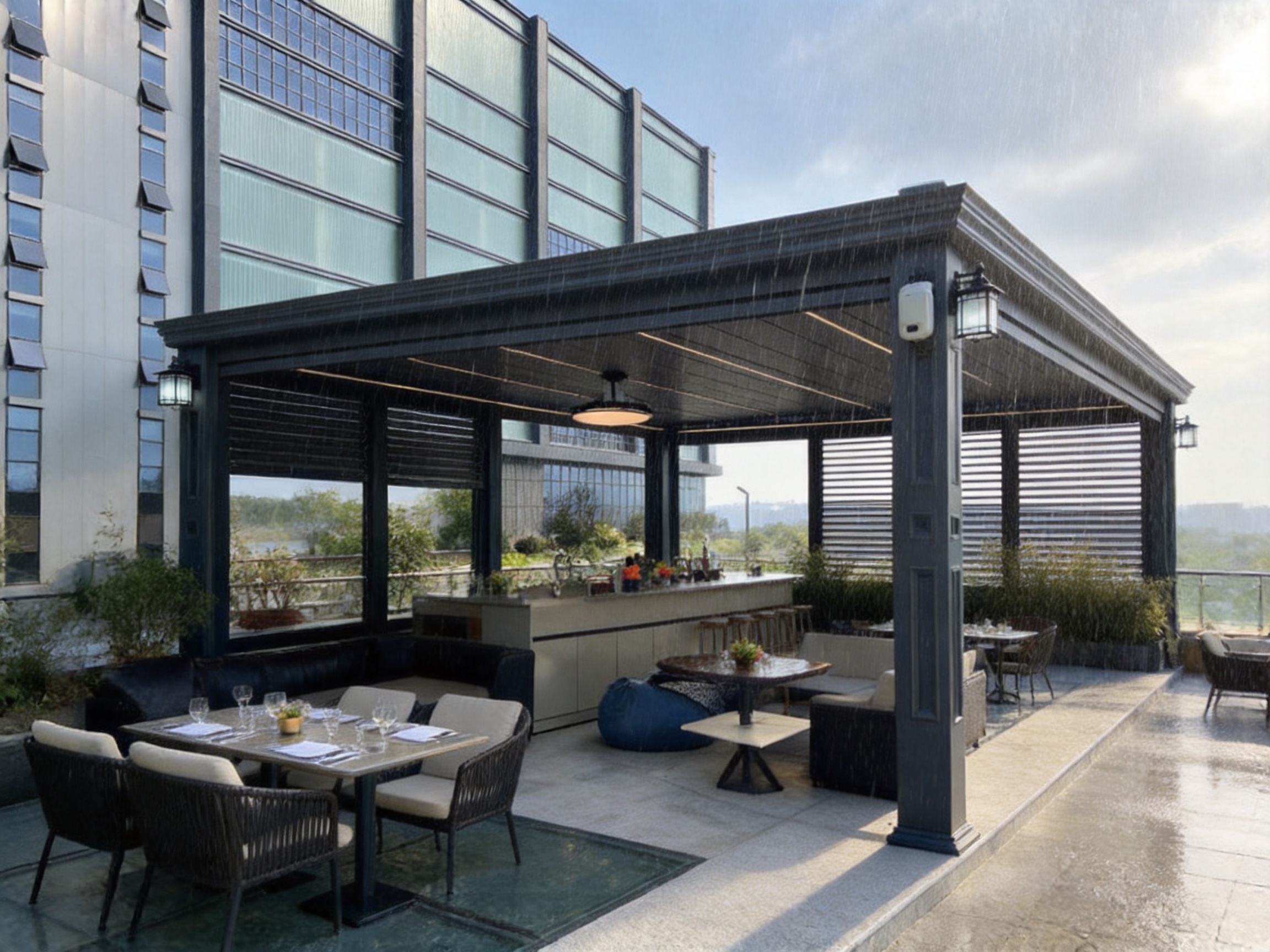
Modern outdoor architecture increasingly demands more than a fixed roof, a simple sunshade, or a conventional window. Homeowners, hospitality operators, architects, and commercial developers want outdoor areas that can adapt to changing sunlight, rain, wind, temperature, privacy requirements, and daily activities. The F125 Electric Outdoor Louver with Adjustable Patio Window Control is designed to meet these expectations through a combination of adjustable aluminum blades, electric operation, thermal protection, weather-resistant construction, and flexible installation.
Rather than treating an outdoor opening as a permanently exposed space, the F125 helps transform patios, terraces, balconies, poolside areas, outdoor kitchens, restaurants, and enclosed transition spaces into more controllable environments. Its rotating louver blades can be adjusted from 0 to 90 degrees, allowing users to manage daylight and shading according to the time of day and the intended use of the space. When closed, the blades form a protective barrier that helps reduce the impact of rain, wind, dust, excessive sunlight, and unwanted visibility.
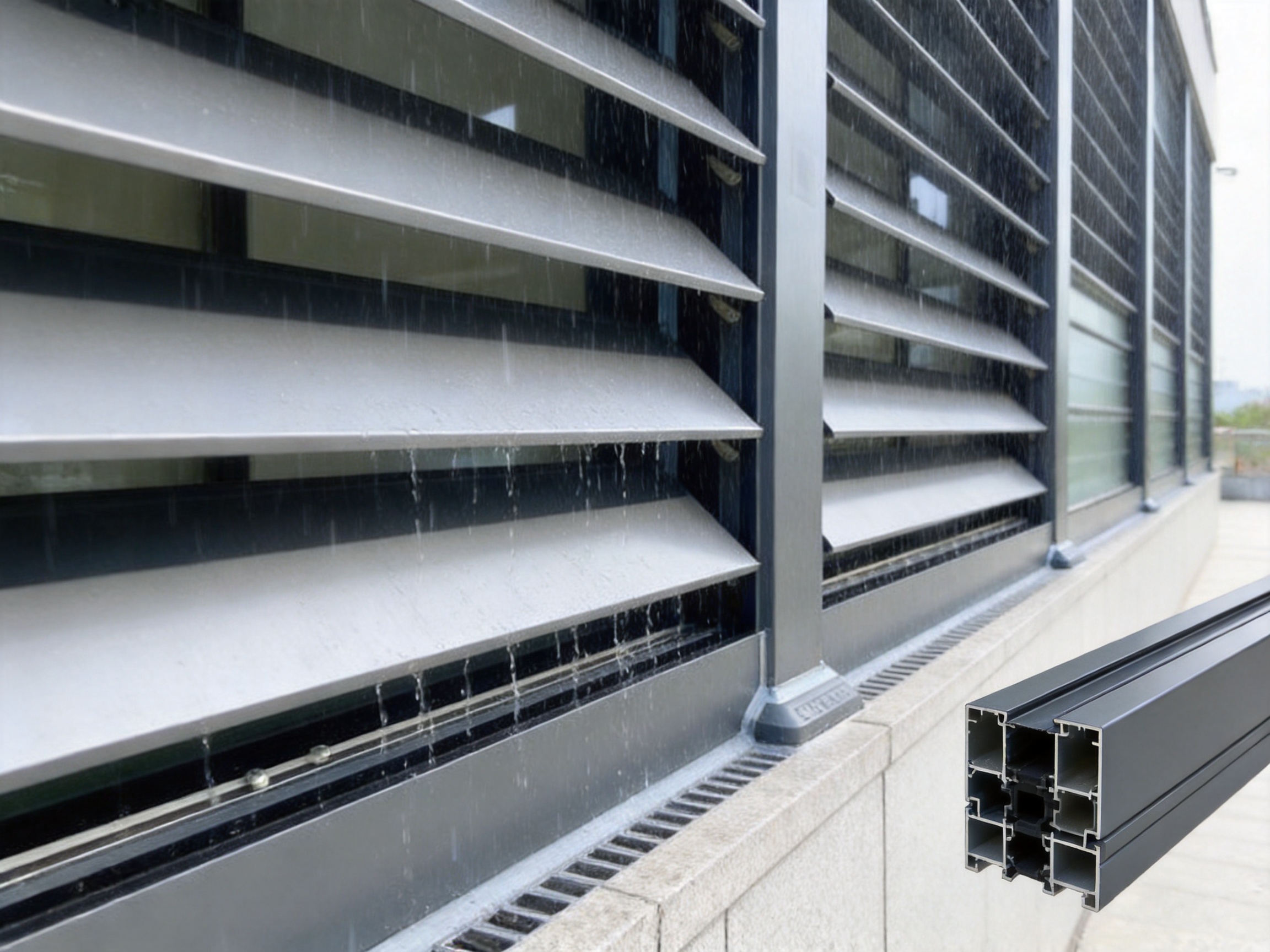
The system is manufactured from aluminum alloy 6063-T5 and uses a waterproof push-rod DC motor for electric adjustment. Its structure includes double-layer hollow blades, sealing strips, waterproof grooves, and reinforced upper, lower, and side rails. These details contribute to the product’s stability and make it suitable for demanding outdoor environments where durability, controlled movement, and low-maintenance operation are important.
For buyers comparing outdoor louver systems, the F125 offers a balanced combination of structural efficiency, architectural flexibility, electric convenience, and practical weather control. It is not merely a decorative shading product. It is an adjustable building component that can support comfort, energy management, privacy, and the effective use of outdoor space.
Product Overview and Core Design Concept
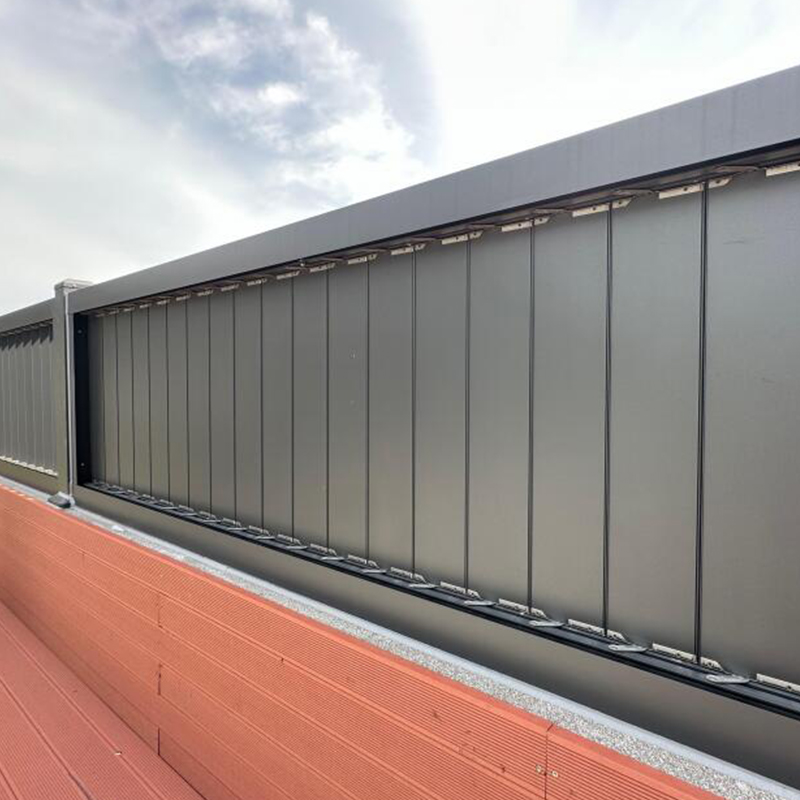
The F125 is an electric outdoor louver system developed for adjustable patio windows, exterior openings, facade applications, and other architectural areas where controllable ventilation and daylight are needed. The product category sits between a fixed louver, a traditional awning, a curtain-style outdoor screen, and a fully glazed enclosure. It provides the user with an adjustable barrier without eliminating the connection between interior and exterior spaces.
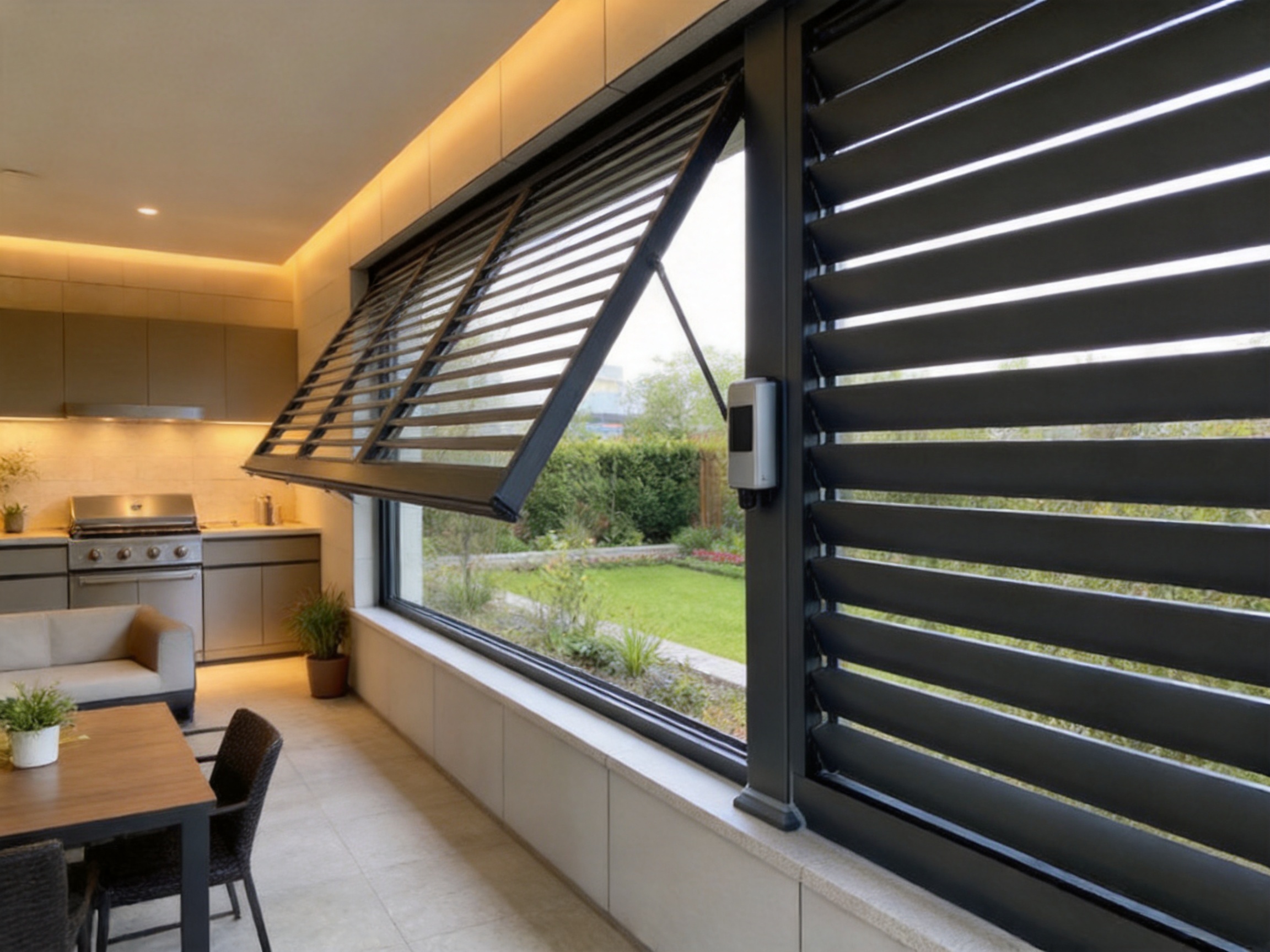
The central operating element is the horizontal louver blade. Each blade can rotate through a range of up to 90 degrees. In an open or partially open position, the louvers can admit daylight and support visual connection with the surrounding landscape. In a more closed position, they help reduce direct sunlight and glare. When fully closed, the blade arrangement creates a denser protective surface that improves privacy and helps prevent rain and dust from entering through the opening.
The system is designed around a practical engineering principle: outdoor comfort changes throughout the day, so the enclosure should also be able to change. A fixed roof may provide shade but can reduce daylight. A fixed wall may create privacy but eliminate airflow and views. A fabric shade may offer seasonal protection but can be more vulnerable to wind, moisture, and long-term exposure. Adjustable aluminum louvers provide a more adaptable solution by allowing the user to choose the desired degree of openness.
The F125 can be used as an independent patio window, as part of a larger outdoor living structure, or as an architectural infill element. It can be installed at the top of an opening or on a facade, depending on the project design. This flexibility makes it useful for residential and commercial applications with different proportions, access requirements, and visual styles.
Primary Technical Specifications
| Item | Specification |
| Product Model | F125 |
| Blade Specification | 125 × 13.6 × 1.0 mm |
| Side Rail Specification | 80 × 61 × 1.2 mm |
| Upper Rail Specification | 48 × 59 × 1.0 mm |
| Lower Rail Specification | 48 × 59 × 1.0 mm |
| Overall Material | Aluminum alloy 6063-T5 |
| Maximum Dimension per Set | Width up to 1500 mm; length up to 3000 mm |
| Motor | Waterproof push-rod DC motor |
| Control Mode | Electric or manual |
| Blade Rotation Range | 0–90 degrees |
| Installation Options | Top installation and facade installation |
The stated dimensions and operating range provide a clear starting point for design and quotation. Because actual performance depends on the installation environment, drainage arrangement, wind exposure, opening size, anchoring method, and local building conditions, project-specific engineering should be confirmed before production.
Adjustable Daylight and Shading Control
One of the most important advantages of the F125 is the ability to control daylight rather than simply block it. The 0–90-degree blade rotation range gives users several intermediate positions between fully open and fully closed. This allows the system to respond to changing solar conditions, occupancy, and activity inside the protected space.
In the morning, the blades may be positioned to admit soft natural light while limiting direct glare. Around midday, they can be rotated toward a more closed angle to reduce solar exposure and improve visual comfort. In the evening, the louvers can be opened again to restore views and create a more open atmosphere. This flexibility is valuable for patios, restaurants, garden rooms, and commercial terraces where the preferred environment changes throughout the day.
Adjustability also supports different user preferences. One person may want a bright patio with an open view, while another may prioritize shade and privacy. A fixed enclosure forces everyone to accept the same environmental condition. An adjustable louver allows the opening to be configured according to individual needs, seasonal conditions, and the activity taking place in the space.
Compared with fixed horizontal louvers, the F125 provides more control over the angle of incoming light. Compared with fabric curtains, it offers a more structured and consistent shading surface. Compared with conventional glass panels, it can reduce the need to rely entirely on transparent surfaces for weather protection. These differences give the system a practical advantage in spaces where daylight, privacy, and ventilation must be balanced.
Double-Layer Hollow Aluminum Blade Construction
The F125 uses double-layer hollow aluminum blades with sealing strips. This construction is important because the blades must remain light enough for reliable movement while also providing sufficient stiffness and resistance to outdoor conditions. A hollow profile can achieve an efficient relationship between material use and structural performance, especially when the shape is engineered to resist bending and twisting.
The double-layer design also contributes to thermal protection. Hollow internal spaces reduce direct heat transfer through the blade compared with a simple solid metal strip of similar external appearance. Sealing strips help close contact areas between adjacent blades and reduce open gaps when the louvers are fully closed. Together, these features support a more comfortable environment behind the system.
The blade profile is specified at 125 × 13.6 × 1.0 mm. This size gives the louver a substantial visual presence while maintaining a relatively clean architectural line. The blade form is suitable for both residential and commercial applications where the system must look integrated rather than temporary.
The sealing structure also improves the closing behavior of the louvers. When a system is used outdoors, small gaps can allow rain spray, dust, wind-driven debris, and unwanted light to pass through. No adjustable louver should be described as an absolute substitute for a sealed wall in every weather condition, but properly aligned blades and sealing strips can significantly improve protection when compared with open, fixed, or loosely fitted shading elements.
Aluminum Alloy for Outdoor Durability
Aluminum alloy 6063-T5 is used for the overall product structure. This material is widely valued in architectural applications because it combines low weight, corrosion resistance, formability, and a clean surface suitable for finishing. These qualities are particularly beneficial for outdoor louvers, where the frame and blades must be durable without placing excessive load on the surrounding building structure.
The relatively low density of aluminum simplifies handling, transportation, and installation compared with heavier structural materials. It also allows the system to maintain a refined appearance without requiring bulky sections. For retrofit projects, balconies, and facade openings, weight management can be an important consideration during design.
6063-series aluminum is commonly selected for extruded architectural profiles because it can be formed into complex sections with smooth lines and consistent dimensions. The T5 temper indicates that the alloy has been cooled from an elevated-temperature shaping process and artificially aged to achieve a useful level of mechanical performance. The result is a material that supports both aesthetic extrusion quality and practical outdoor service.
Material selection alone does not determine product life. Surface treatment, drainage, fastener selection, installation quality, maintenance, and exposure conditions also influence long-term performance. For this reason, the F125 should be installed according to the manufacturer’s technical guidance and cleaned periodically to prevent the accumulation of corrosive deposits, dust, and organic debris.
Waterproof Push-Rod DC Motor
The electric operating system uses a waterproof push-rod DC motor. A push-rod motor converts rotary motor movement into controlled linear movement, which is suitable for opening and closing a connected louver mechanism. The motor’s linear action can provide a direct and coordinated movement of the blades while maintaining a compact installation profile.
Water resistance is a critical requirement for outdoor motorized products. The motor is positioned in an environment that may experience humidity, rain, condensation, dust, and temperature changes. A waterproof design helps protect the operating mechanism and supports more dependable use than a motor designed only for dry indoor conditions.
Electric operation improves convenience for users who may otherwise need to reach, pull, or manually adjust a large number of blades. It is especially useful for high-level openings, wide patio windows, commercial installations, and structures where the louvers are integrated into a smart outdoor living system. With suitable control equipment, the motor can also support centralized operation or integration with automation systems.
The product supports both electric and manual control modes. Electric operation is suitable when convenience, accessibility, and coordinated adjustment are priorities. Manual control may be appropriate for simpler installations, areas with limited electrical infrastructure, or users who prefer a direct mechanical operating method. The availability of both options gives project designers more flexibility when planning different configurations.
As with all motorized outdoor systems, electrical installation should be completed by qualified personnel. Power supply requirements, control devices, wiring protection, drainage, and local electrical regulations must be reviewed for each project. The motor should not be treated as a replacement for proper weatherproofing or safe installation practice.
Weather Protection for Outdoor Living Areas
A major purpose of an outdoor louver system is to make exterior areas more usable in changing weather. The F125 includes waterproof grooves and sealing structures intended to help guide water and reduce uncontrolled entry when the blades are closed. The louvers can provide a protective layer against light rain, wind-driven moisture, dust, and excessive exposure to the elements.
Water management is influenced by more than the blade itself. The surrounding frame, side rails, upper and lower rails, installation slope, drainage outlets, connection details, and adjacent roof or wall structure all contribute to the result. A well-designed installation should direct water toward planned drainage paths instead of allowing it to collect inside the frame or against the building facade.
The side rails measure 80 × 61 × 1.2 mm, while the upper and lower rails measure 48 × 59 × 1.0 mm. These structural elements support the blades and help maintain alignment during operation. Accurate alignment is especially important for weather protection because uneven spacing can create unnecessary gaps and increase friction during movement.
When the blades are fully open, the system naturally prioritizes light, air, and visual openness. When the blades are partially closed, it provides directional shading and moderate screening. When fully closed, it offers the highest level of rain and privacy protection available from the louver arrangement. Users should choose the blade position based on actual conditions rather than expecting one setting to provide the same performance in every situation.
Thermal Comfort and Energy-Saving Potential
Outdoor louvers can contribute to passive solar management by controlling how much sunlight reaches a window, patio, wall, or enclosed transition area. The F125’s adjustable blades and hollow aluminum construction help reduce direct solar exposure when the system is configured for shading. This can improve perceived comfort and reduce heat gain in the protected area.
Lower heat gain may reduce the workload placed on air-conditioning equipment, particularly in spaces that connect directly to indoor rooms. The product is therefore relevant to energy-conscious building design, although its actual energy impact depends on orientation, glazing, insulation, local climate, operating habits, and the overall building envelope.
For west-facing openings, adjustable louvers can be especially useful because low afternoon sunlight may create glare and rapid heat accumulation. For south-facing or equatorial environments, the blades can be adjusted to manage strong overhead sunlight. In cooler seasons, users may choose a more open position to admit sunlight and support passive warming.
The F125 should be considered part of a broader environmental control strategy rather than a stand-alone energy solution. Its greatest benefit comes when the louvers are adjusted according to solar conditions and combined with appropriate glazing, insulation, ventilation, and building management practices.
Privacy, Noise, and Visual Security
Outdoor spaces are often exposed to neighboring buildings, roads, pedestrian paths, and public areas. The F125 helps users manage visibility by changing the angle of the blades. Partially closed blades can screen direct sightlines while still allowing some daylight. Fully closed blades offer a higher degree of visual privacy for residential patios, hotel terraces, poolside spaces, and outdoor dining areas.
Closed aluminum louvers may also reduce the perceived influence of external noise by adding another layer between the protected area and the surrounding environment. The system is not a certified acoustic wall unless tested and specified as such, but the physical barrier can help create a more sheltered atmosphere compared with a completely open patio.
Privacy control is particularly valuable in multi-unit housing and hospitality projects. Balconies and terraces can remain connected to the outdoors without exposing occupants to constant observation. Restaurants and hotels can use the louvers to create semi-private dining zones, while residential users can adjust the blades according to the time of day and surrounding activity.
Security benefits should be described realistically. Closed louvers can make a space less visually exposed, but they are not intended to replace certified doors, windows, locks, or security shutters. The product’s primary value is adjustable environmental and visual control.
Flexible Installation for Architectural Applications
The F125 supports both top installation and facade installation. This makes it suitable for different architectural arrangements, including patio windows, upper openings, balcony screens, pergola side elements, outdoor kitchens, restaurant terraces, and building facade applications.
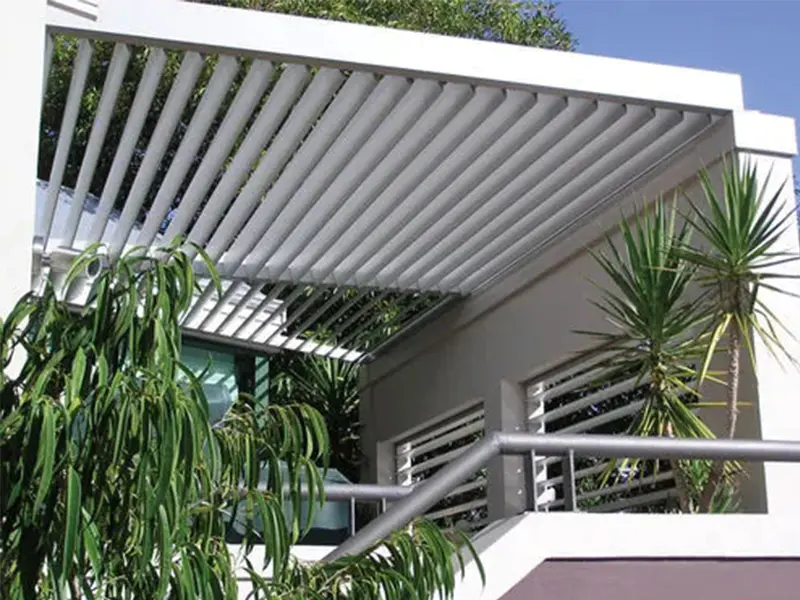
Top installation can be used where the louver system is positioned above an opening or beneath an overhead structure. This arrangement may be appropriate for skylight-like applications, horizontal shading zones, or patio structures that need controllable overhead protection. Facade installation places the system vertically or within an external wall plane, making it suitable for privacy screening, ventilation control, and adjustable window protection.
Installation flexibility gives architects more freedom to coordinate the louvers with existing building lines, columns, beams, glazing, and drainage. It also supports renovation projects where the product must be integrated into an established structure rather than installed as part of a completely new building.
Before installation, the supporting structure should be checked for adequate strength and dimensional accuracy. The opening must be measured carefully, and allowances should be made for frame alignment, motor access, drainage, maintenance, and electrical routing. Incorrect dimensions or inadequate support can affect both the appearance and operation of the system.
Comparison with Conventional Outdoor Shading Products
The F125 competes with several categories of outdoor shading products, including fixed louvers, fabric awnings, roller shades, external blinds, glass panels, and permanent walls. Each solution has a suitable application, but the F125 offers a distinct combination of structural strength and adjustability.
Compared with Fixed Louvers
Fixed louvers provide permanent screening and shading, but their performance cannot be changed when the sun angle, wind direction, or user preference changes. The F125 provides a 0–90-degree adjustment range, giving users greater control throughout the day. This makes it more adaptable for spaces that need both openness and protection.
Compared with Fabric Awnings
Fabric awnings can create attractive shade and may be available in many colors. However, they may require more careful management during heavy rain, high wind, and long periods of moisture exposure. The F125 uses extruded aluminum blades and structural rails, offering a more architectural and permanent solution for projects that prioritize rigidity, integrated appearance, and motorized adjustment.
Compared with Outdoor Roller Shades
Roller shades generally move vertically and can provide excellent solar screening, glare control, and privacy. They may be less effective when users want adjustable ventilation or a precise angle of daylight. Louver blades can be tilted to create a balance between air movement, visibility, and protection, while the aluminum construction provides a more solid visual and tactile appearance.
Compared with Glass Enclosures
Glass sliding doors and fixed glazing provide views and weather separation, but they can increase cost, weight, cleaning requirements, and solar heat gain. The F125 offers a lighter and more adjustable alternative for areas where complete transparent enclosure is not necessary. It can also provide ventilation and directional shading without relying entirely on mechanical cooling.
Compared with Permanent Walls
A permanent wall creates strong privacy and weather separation but eliminates flexibility and can make a patio feel enclosed. Adjustable louvers preserve a stronger connection to the outdoors. Users can open the blades when they want sunlight and views, then close them when privacy or protection becomes more important.
These comparisons do not mean that the F125 is the correct product for every project. The best selection depends on the desired level of weather sealing, structural requirements, budget, building regulations, view priorities, and maintenance expectations. The key advantage of the F125 is its balance between a solid architectural element and a controllable opening.
Manufacturing Strengths and Production Approach
Shanghai SUNC Intelligence Shade Technology Co., Ltd. specializes in the research, development, and manufacturing of aluminum-alloy outdoor shading systems. The company was established in 2008 and has developed experience in aluminum pergolas, louvered roof systems, zip screens, outdoor shading structures, and related architectural products.
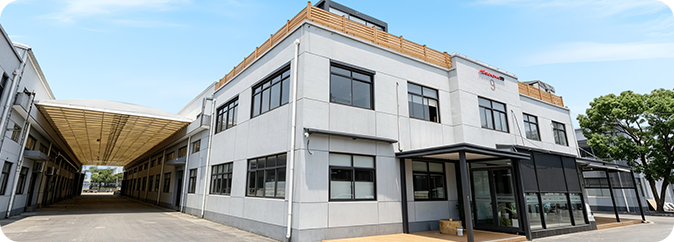
Its manufacturing operation includes an approximately 8,000-square-meter production base. The company reports more than 20 product types and annual production exceeding 100,000 aluminum pergola sets. It exports to more than 30 countries and regions, giving the organization experience with different design preferences, project requirements, and market conditions.
The company’s manufacturing approach is based on aluminum extrusion, component processing, assembly, product development, and project support. For an electric louver product, consistency is especially important. Blade dimensions, rail alignment, motor mounting, sealing interfaces, and surface quality all affect the final user experience. A stable production system helps reduce variation between units and supports more reliable installation.
The company also identifies high-strength 6063-T66 aluminum alloy as a material used in its broader product range. The F125 technical information specifies 6063-T5 for the overall material. These specifications should be understood according to the individual product and quotation rather than treated as interchangeable. Confirming the exact alloy temper, finish, hardware, and configuration before production is recommended for every project.
Research and Development
Research and development are important for products that combine moving parts, outdoor exposure, structural loads, and architectural appearance. The development process for a louver system typically involves profile design, blade rotation testing, motor coordination, sealing evaluation, frame integration, drainage planning, and installation review.
For the F125, the product concept addresses several practical requirements at once: controlled daylight, thermal protection, weather resistance, electric adjustment, manual flexibility, and multiple installation positions. Integrating these functions into one system requires attention to the relationship between the blade profile, rails, seals, motor force, control mechanism, and supporting structure.
Product development also benefits from feedback gathered through residential, commercial, hospitality, and outdoor kitchen projects. Different applications reveal different requirements. A home patio may prioritize quiet operation and appearance, while a restaurant may prioritize frequent daily use, privacy, and easy centralized control. A hotel may require consistent finishes and project coordination across multiple rooms or terraces.
Quality and Process Control
Quality control for aluminum louver systems should include incoming material inspection, profile dimensional checks, surface inspection, cutting accuracy, assembly verification, motor testing, blade alignment, and functional operation. Sealing components should be checked for correct placement, and drainage features should remain unobstructed during assembly.
Motorized units should be tested through repeated opening and closing cycles to confirm that the blade movement is smooth and that the motor does not encounter abnormal resistance. The frame should be examined for squareness and rigidity, since even a high-quality motor can operate poorly if the assembly is misaligned.
Manufacturing process control also supports customization. OEM and ODM capability allows dealers, contractors, and project owners to discuss dimensions, finishes, control systems, packaging, labels, and product configurations. Customization should be managed through approved technical drawings and documented specifications so that design intent is maintained from quotation to production.
Project Support and Customization
SUNC provides OEM/ODM customization, 3D rendering, and project optimization services. These services are useful when the louver system forms part of a larger architectural design rather than being purchased as a standard standalone item.
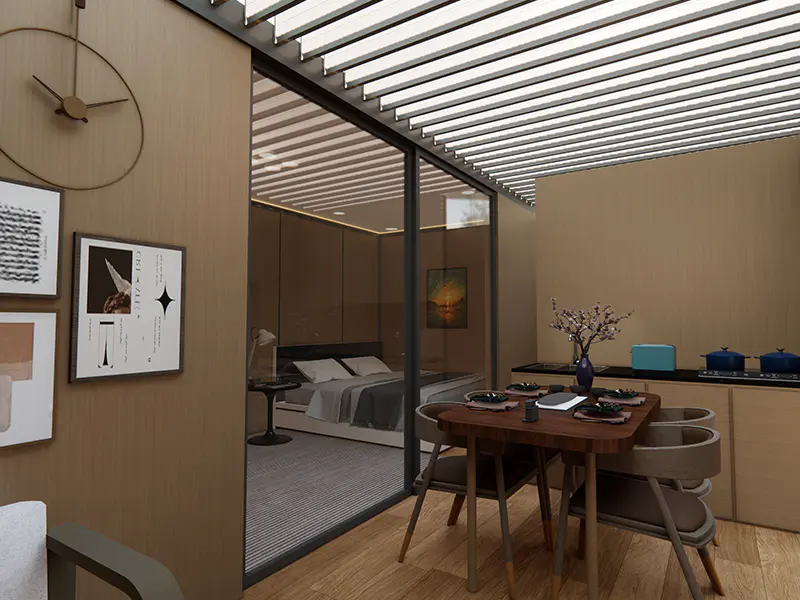
3D rendering can help project teams review the visual relationship between the louvers, pergola frame, glazing, furniture, lighting, and surrounding architecture. Project optimization may involve adjusting dimensions, installation orientation, drainage, control zones, material finishes, or the relationship between multiple shading products.
For dealers and installers, technical support can simplify product selection and reduce errors during the planning stage. For architects and developers, coordinated product information can assist with specification, budgeting, and visual approval. For homeowners, clear drawings and operating information can make the final installation easier to understand.
Electric Outdoor Louver with Adjustable Patio Window Control
Applications in Residential Projects
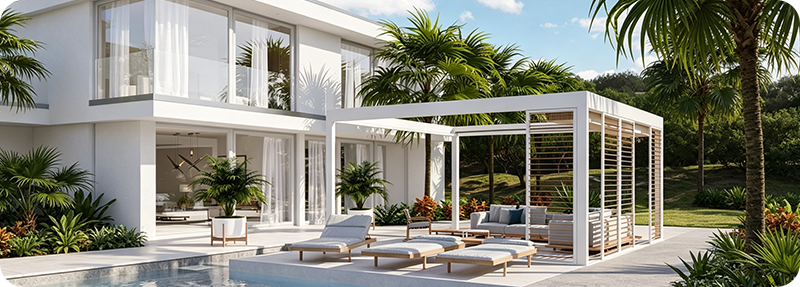
The F125 is suitable for residential patios, balconies, garden rooms, pool terraces, sunrooms, outdoor kitchens, and covered entertainment areas. In a private home, the system can extend the practical use of outdoor space beyond a narrow period of ideal weather.
On a patio, the louvers can provide shade during the hottest part of the day while remaining open in the morning or evening. Around a pool terrace, they can improve privacy and reduce glare from direct sunlight. Near an outdoor kitchen, the blades can help create a more comfortable cooking and dining environment without forming a permanent opaque wall.
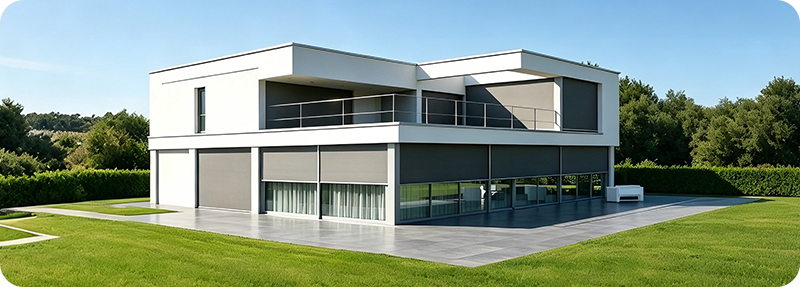
For balconies and apartment terraces, the facade installation option can create a controlled screen between the living space and the surrounding city. The louvers can be adjusted for privacy, airflow, and daylight. Because the system uses aluminum profiles, it can be coordinated with other metal, glass, and facade elements.
The product is also suitable for homeowners who want an automated outdoor environment. A waterproof motor allows adjustment without manually reaching across the opening. Depending on the selected control configuration, the system may be integrated into a broader smart shade or home automation concept.
Applications in Hospitality and Commercial Spaces
Restaurants, cafes, hotels, resorts, clubs, and commercial leisure venues often need outdoor areas that can operate in changing conditions. A terrace that is comfortable in the morning may receive strong sun in the afternoon or require privacy during an evening event. Adjustable louvers help operators change the character of the space without installing separate temporary screens for each condition.
Restaurants can use the F125 to divide outdoor dining areas into semi-private zones. Louvers may be opened during mild weather to create a more open dining atmosphere and closed when rain, glare, or nearby activity becomes distracting. The system can also support a consistent visual identity when multiple units are installed across a facade.
Hotels and resorts can use adjustable louvers around pool decks, guest terraces, spa areas, outdoor bars, and event spaces. The aluminum construction communicates a permanent architectural quality, while the electric operation makes it easier for staff to manage several areas.
Commercial developers may use the product in mixed-use projects, office terraces, retail promenades, and amenity spaces. By improving the usability of exterior areas, adjustable shading can support the broader value of outdoor design. It can help create places where people are more willing to stay, dine, work, socialize, or relax.
Applications with Pergolas and Outdoor Kitchen Systems
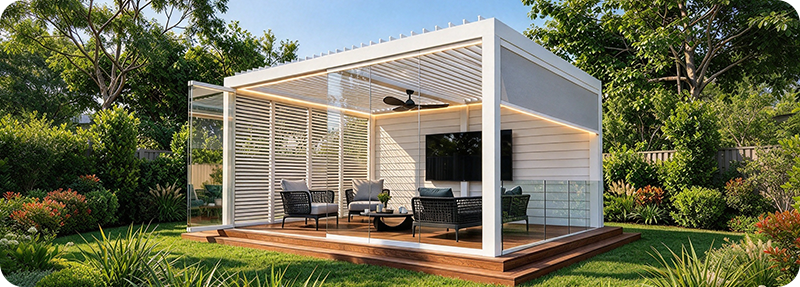
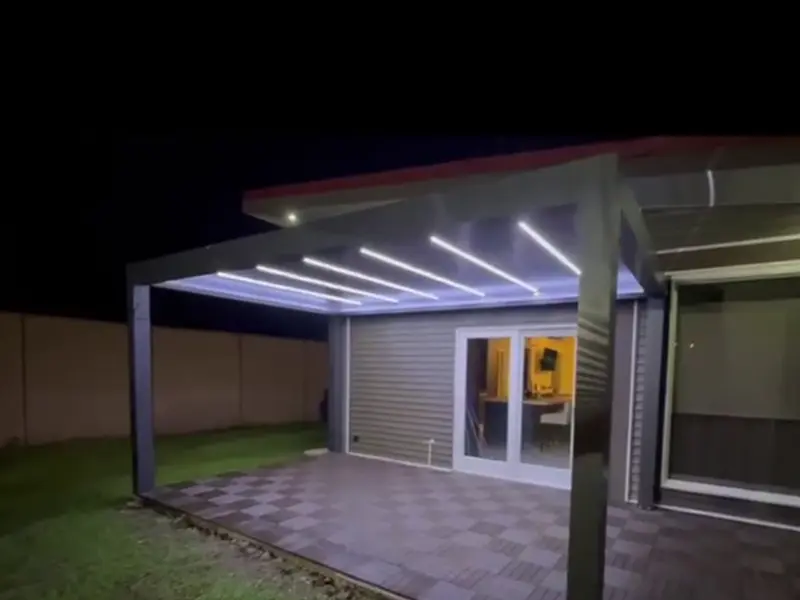
The F125 can complement aluminum pergolas and other overhead shading structures. A pergola roof can provide overhead protection, while side louvers control wind, low-angle sunlight, privacy, and lateral exposure. This combination can create a more complete outdoor room while preserving the option to open the sides when conditions are favorable.
Outdoor kitchens benefit from controlled shading because cooking, food preparation, dining, and cleaning can be uncomfortable under direct sun or light rain. The louver system can be positioned to reduce glare and protect equipment and occupants from changing weather. It also helps define the kitchen as a functional zone without requiring a permanent masonry wall.
When combining the F125 with a pergola, designers should coordinate the rail dimensions, motor access, drainage, electrical routes, lighting, ceiling accessories, and adjacent screens. Early coordination reduces the risk of conflicts between the louver movement and other components.
Installation Planning and Technical Considerations
Successful installation begins with an accurate survey. The opening width, length, height, supporting surfaces, drainage direction, electrical access, and nearby obstacles should be measured before the system is ordered. The stated maximum dimension per set is W ≤ 1500 mm and L ≤ 3000 mm, but the final configuration should be confirmed against the specific design and environmental conditions.
The supporting frame must be strong enough to hold the system and resist movement caused by operation and wind exposure. Anchors and fasteners should be selected according to the substrate, whether the system is attached to concrete, masonry, steel, aluminum, timber, or another construction material.
The motor should be protected from direct water accumulation, and cable routing should be planned so that wiring does not interfere with moving components. Service access should be retained where possible, allowing future inspection or replacement without unnecessary dismantling of the surrounding structure.
Drainage paths must remain clear. Sealing elements should be installed continuously and correctly, with corners and joints treated according to the technical instructions. The blades should be checked after installation to confirm that they rotate evenly and reach the intended open and closed positions.
For large or exposed projects, wind conditions require special attention. Adjustable louvers should not be operated outside their permitted environmental conditions. The project team should confirm local wind loads, building codes, structural requirements, and any required protective operating strategy.
Maintenance and Long-Term Use
Aluminum louver systems are generally designed for low-maintenance use, but regular care remains important. Dust, leaves, pollen, salt deposits, and airborne pollutants can accumulate on blades, rails, seals, and drainage channels. Periodic cleaning helps preserve appearance and supports smooth operation.
Cleaning can normally be performed with clean water, a soft cloth, and a mild non-abrasive detergent. Harsh chemicals, abrasive pads, and aggressive tools may damage the surface finish or sealing components. In coastal areas, more frequent rinsing may be beneficial because salt deposits can accelerate deterioration of exposed hardware and finishes.
The drainage grooves should be inspected to ensure that they are not blocked. Sealing strips should be checked for displacement, cracking, or excessive wear. The motor and electrical connections should be inspected by qualified personnel if unusual noise, slow movement, intermittent operation, or failure to reach the correct position occurs.
Users should avoid forcing the blades manually when the system is operating electrically. If the product includes a manual control mechanism, the operating instructions should be followed carefully to prevent damage to the motor or linkage. A maintenance schedule is especially valuable for commercial installations with frequent daily use.
Why Manufacturing Experience Matters to Buyers
The performance of an outdoor louver depends on the complete system rather than one individual component. A high-quality aluminum profile will not deliver the expected result if the blade alignment is inconsistent, the motor is poorly matched, the seals are incorrectly installed, or the frame lacks rigidity. This is why manufacturing experience in related outdoor shading products is valuable.
A company that develops pergolas, louvered roofs, zip screens, and other shading systems can draw on experience with outdoor materials, control systems, weather exposure, installation challenges, and project coordination. This broader knowledge supports more practical product development and better communication with dealers, contractors, architects, and end users.
SUNC’s reported production scale, export experience, product range, and OEM/ODM services position it to support projects of different sizes. A buyer can work with the manufacturer on a standard product specification or discuss a more customized solution based on the project’s dimensions and design requirements.
Manufacturing capability also affects delivery planning, spare parts coordination, packaging, documentation, and after-sales support. These factors may not be visible in a product photograph, but they influence the overall ownership experience and the efficiency of a construction project.
Selection Guide for Buyers and Project Designers
Before selecting the F125, buyers should define the main purpose of the louver. Is the priority daylight control, privacy, rain protection, ventilation, facade appearance, or integration with a pergola? Understanding the primary objective helps determine the best orientation, blade position, control method, and surrounding structure.
The next step is to confirm the opening dimensions and installation position. The system supports top and facade installation, but each arrangement requires different structural and drainage planning. The maximum stated dimensions should be respected, and larger openings should be divided into suitable sets if required by the project.
Buyers should also decide whether electric or manual operation is more appropriate. Electric control is recommended for high, wide, frequently used, or smart-home-integrated installations. Manual control may suit smaller openings, simpler projects, or locations where electrical access is limited.
Finish and color should be coordinated with the pergola, facade, windows, doors, outdoor furniture, and other shading products. Sample approval is recommended because screen appearance can vary according to lighting, viewing angle, and surface texture.
Finally, the buyer should confirm the complete supply scope. This may include blades, rails, motor, control equipment, fasteners, seals, drainage components, installation accessories, manuals, packaging, and technical drawings. Clear documentation reduces confusion during quotation and installation.
Frequently Asked Questions
What is the F125 Electric Outdoor Louver?
The F125 is an adjustable aluminum louver system designed for patio windows, facade openings, pergola sides, outdoor kitchens, terraces, and other outdoor or semi-outdoor spaces. It uses rotating blades that can be adjusted from 0 to 90 degrees.
Can the blades be adjusted electrically?
Yes. The system uses a waterproof push-rod DC motor for electric operation. It also supports manual control, depending on the selected configuration and installation requirements.
What material is used for the product?
The technical specification identifies aluminum alloy 6063-T5 as the overall material. The blades are double-layer hollow aluminum profiles with sealing strips, and the supporting rails are also aluminum components.
What are the maximum dimensions?
The stated maximum dimension per set is a width of up to 1500 mm and a length of up to 3000 mm. The final size should be confirmed according to the project structure, installation method, wind exposure, and technical quotation.
Can the system block rain completely?
When the blades are fully closed, waterproof grooves and sealing structures help reduce rain entry and provide weather protection. Actual performance depends on installation quality, wind-driven rain, drainage, surrounding construction, and local weather conditions. It should not automatically be treated as an airtight or fully watertight wall.
Where can the F125 be installed?
The system supports top installation and facade installation. It can be used for residential patios, balconies, outdoor kitchens, pool terraces, pergolas, restaurants, hotels, commercial leisure spaces, and selected facade applications.
Does the system help reduce heat gain?
Yes. The adjustable blades can reduce direct solar exposure, while the double-layer hollow aluminum construction supports thermal protection. The actual energy-saving effect depends on orientation, climate, glazing, insulation, operating habits, and the wider building design.
Can the louvers improve privacy?
Yes. Partially closed blades can screen sightlines while allowing some daylight, and fully closed blades provide a higher level of visual privacy. The system is designed for environmental and visual control, not as a certified security barrier.
Is the product suitable for smart control?
The waterproof DC push-rod motor can support automated adjustment and may be integrated with suitable smart control systems. The exact control interface, wiring, sensors, and automation compatibility should be confirmed for each project.
How does the F125 compare with fabric shades?
The F125 provides a more rigid architectural structure and adjustable aluminum blades. Fabric shades may be lighter and visually softer, but the F125 can offer stronger screening, more consistent blade positioning, and a more permanent appearance in demanding outdoor applications.
How should the product be maintained?
The blades, rails, drainage grooves, seals, and visible hardware should be cleaned and inspected periodically. Use water, a soft cloth, and mild non-abrasive detergent. Electrical or motor-related inspection should be performed by qualified personnel.
Can the product be customized?
The manufacturer provides OEM/ODM support, project optimization, and 3D rendering services. Customization may include dimensions, finishes, control arrangements, packaging, and project-specific configurations, subject to technical confirmation.
Is professional installation required?
Professional installation is strongly recommended. Accurate measurement, structural support, drainage, motor alignment, electrical safety, and sealing are all important to product performance and long-term reliability.
Conclusion
The F125 Electric Outdoor Louver with Adjustable Patio Window Control provides a practical way to make outdoor spaces more adaptable. Its 0–90-degree blade rotation supports flexible daylight and shading control, while its double-layer hollow aluminum blades and sealing structures contribute to thermal protection, privacy, and weather resistance.
The use of 6063-T5 aluminum alloy combines architectural appearance with low weight and outdoor durability. The waterproof push-rod DC motor enables convenient adjustment, while the option for manual operation gives designers flexibility for different project types. Top and facade installation expand the range of possible applications, from residential patios and balconies to hotels, restaurants, outdoor kitchens, and commercial terraces.
Compared with fixed louvers, fabric awnings, conventional blinds, and permanent walls, the F125 offers a balanced solution for users who want both openness and protection. It can help regulate daylight, reduce glare, improve privacy, moderate heat gain, and make outdoor living areas more comfortable throughout changing conditions.
Its value is strengthened by the manufacturer’s experience in intelligent outdoor shading, aluminum pergolas, louvered roof systems, zip screens, OEM/ODM services, project optimization, and international supply. For the best result, product selection should be combined with accurate site measurement, structural review, proper drainage, qualified installation, and regular maintenance.
As outdoor architecture continues to move toward flexible, energy-conscious, and technology-enabled environments, adjustable aluminum louvers offer an effective connection between open-air living and controlled architectural comfort. The F125 is designed to serve that connection with a durable structure, adjustable performance, and a manufacturing approach focused on practical project requirements.
References
1. Shanghai SUNC Intelligence Shade Technology Co., Ltd., F125 Electric Outdoor Louver Product Specification.
2. Architectural Aluminum Extrusion Design and Application Principles, technical reference material.
3. Aluminum Alloy 6063 Architectural Profile Properties and Processing Guidance, materials reference.
4. Outdoor Shading Systems: Solar Control, Thermal Comfort, and Architectural Integration, building design reference.
5. Motorized Exterior Shading Systems: Installation, Operation, and Maintenance Practices, technical guidance reference.
6. Principles of Rainwater Management for Exterior Building Components, construction detailing reference.
7. Sustainable Outdoor Space Design and Passive Solar Control, architectural planning reference.
8. General Guidance for Aluminum Facade and Outdoor Structure Maintenance, facilities management reference.
Product: Electric Outdoor Louver with Adjustable Patio Window Control
-
 2026.09.11
SUNC Aluminum Louver Pergola
-
 2026.09.11
Architectural facade cover sun louver system
-
 2026.09.11
Architectural Bespoke Blinds Systems
-
 2026.09.11
SUNC Collabration Partners
-
 2026.09.11
Outdoor Umbrella
-
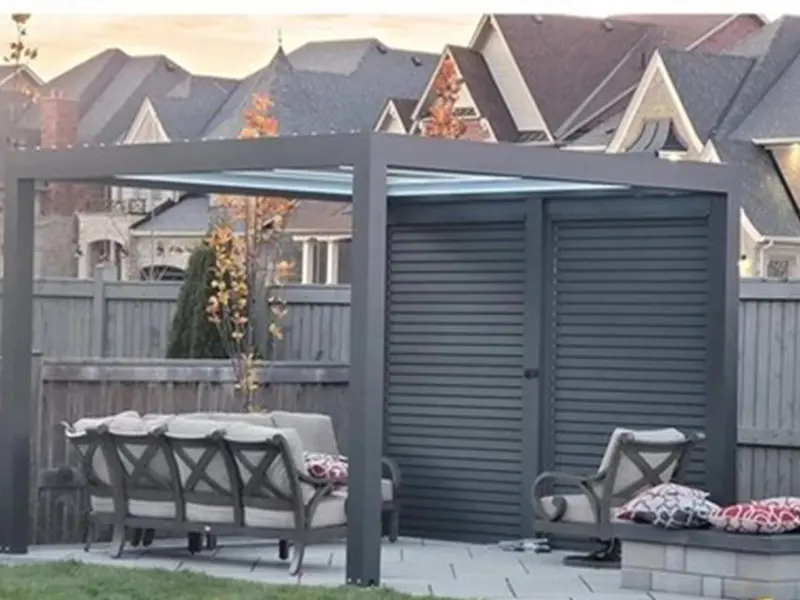 2026.09.11
Pergola Roof Ideas

Recommended Products
Get A Quote
You are warmly welcome to send us your inquiry! We will provide customized quotations or solutions tailored to your specific requirements and send the details directly to your email inbox.
-
Do You Like
Get A Quote
What You See? -
Quick link
Home About SUNC Custom Design Resources Become A Dealer Contact Us -
Pergolas
Louvered Pergolas Solar Pergolas PVC Pergolas -
Product
Zip Screens Outdoor Shades Awnings Aluminum Carports Indoor Blinds Glass Sliding Doors Outdoor Kitchen Systems Guillotine Windows Pergola Accessories -
Contact Information

Vivian:+86-18101873928

+86-021-59140027

yuanyuan.wei@sunctech.cn

A-2, No. 8 Baxiu West Road, Yongfeng Street, Songjiang District, Shanghai, China


Copyright © Shanghai SUNC Intelligence Shade Technology Co., Ltd. All Rights Reserved.
