

 English
 Français
 русский
 Español
 Português
 عربى

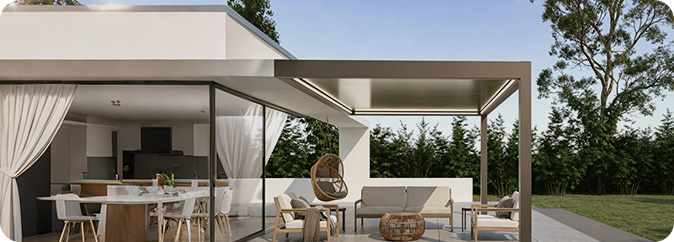
Motorized Outdoor Louver with Remote Control and UV Protection Slats
Motorized Outdoor Louver with Remote Control and UV Protection Slats
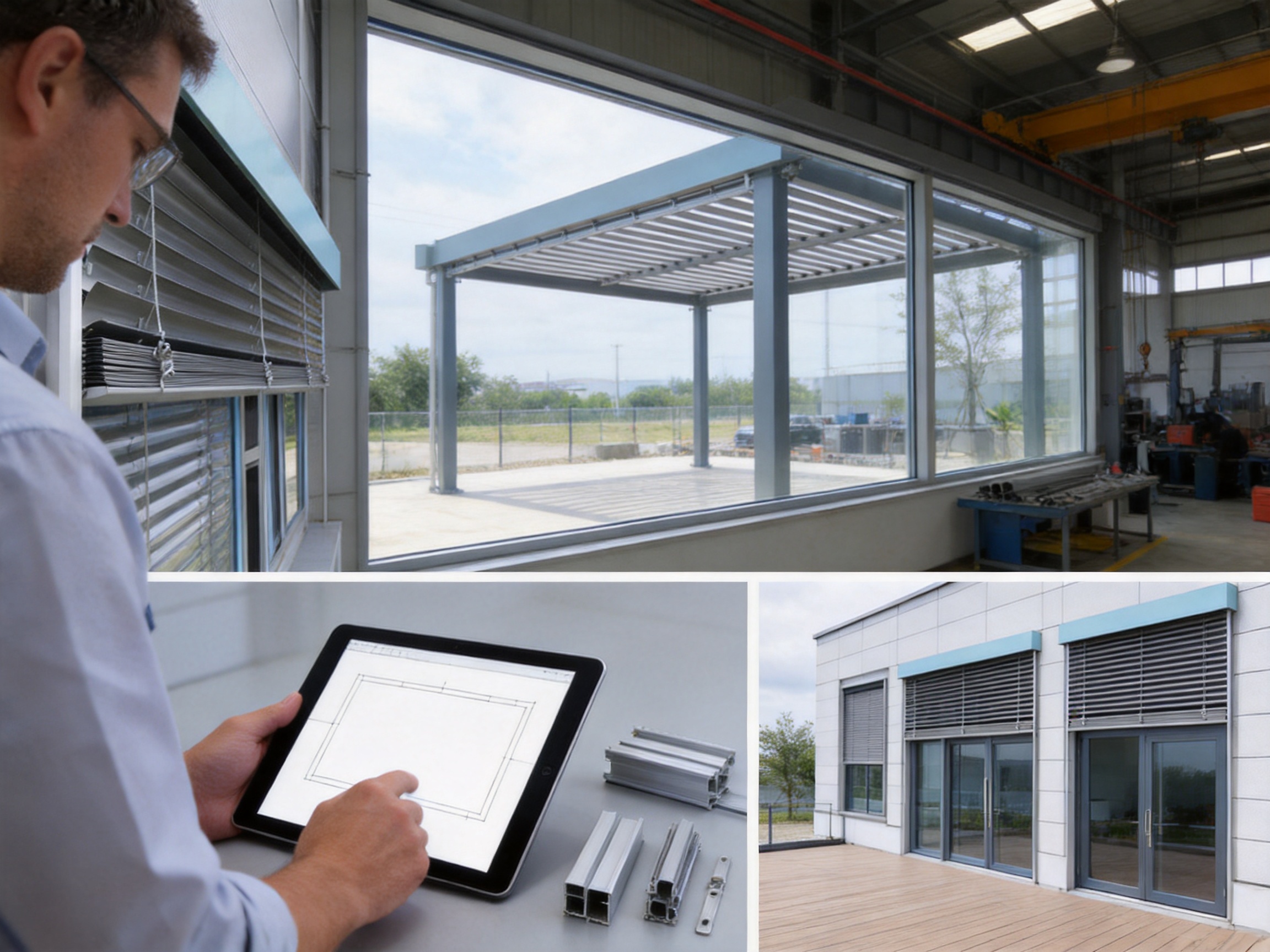
Outdoor shading has evolved from fixed awnings and manually adjusted shutters into intelligent architectural systems that can respond to changing sunlight, privacy requirements, and weather conditions. The motorized outdoor louver described in this article is designed for residential, hospitality, commercial, and leisure applications where adjustable shade, refined appearance, and dependable outdoor performance are essential. With aluminum alloy blades, 0–90-degree rotation, smart device connectivity, and remote operating convenience, the system provides a practical way to create more comfortable and adaptable exterior spaces.
The product, identified as the CR80, combines a compact louver design with flexible blade options, including 80 mm, 60 mm, and 50 mm widths. Its blades are manufactured from extruded aluminum alloy and are available in a roll-edge and non-roll-edge configuration according to the required application. A blade thickness of approximately 0.45 mm supports a lightweight structure while maintaining the rigidity required for routine outdoor use.
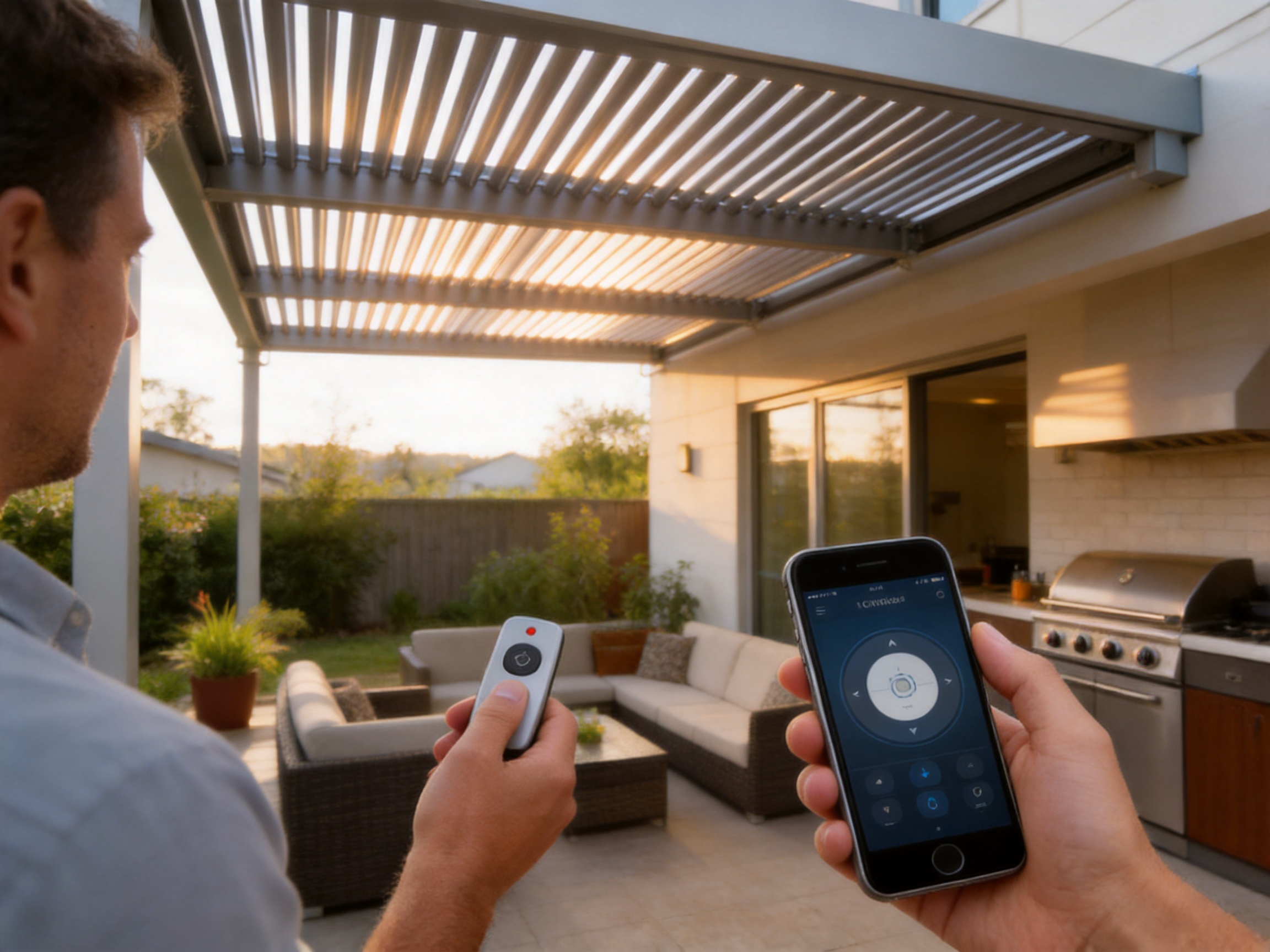
Unlike a static roof or fixed exterior screen, a motorized louver can be adjusted throughout the day. Users can open the blades to welcome daylight, partially close them to reduce glare, or fully close them to improve privacy and create a more sheltered environment. The system’s WiFi control function supports operation through smart devices, while remote-control functionality makes daily adjustment simple for residential users, restaurants, hotels, outdoor kitchens, terraces, and other exterior areas.
Why Adjustable Outdoor Louvers Matter
Outdoor spaces are often affected by rapidly changing environmental conditions. Morning sunlight may be comfortable, while intense afternoon radiation can make a terrace too hot for occupants. Wind direction, glare, privacy, and light levels can also change during the same day. A fixed shade solution cannot respond precisely to all of these conditions.
An adjustable louver system provides a more flexible approach. Its rotating blades allow users to regulate the angle of incoming sunlight without completely separating the outdoor area from the surrounding environment. This creates a balance between shade and openness. In a residential courtyard, the louvers can be opened for natural light and closed during the hottest part of the afternoon. In a restaurant, they can help reduce glare over dining tables while preserving an open-air atmosphere.
The adjustable design is also beneficial for transitional areas between indoor and outdoor living. Pool terraces, balconies, patios, garden rooms, outdoor kitchens, and hospitality spaces can all benefit from a roof or shading element that can be adjusted instead of remaining permanently open or closed.
Competitors that rely only on fabric awnings, fixed canopies, or manually operated louvers may provide basic shade but lack the same level of precision and convenience. The CR80 is positioned as an intelligent shading component that combines mechanical adjustability with connected control.
Core Product Design
The CR80 is built around a series of aluminum alloy slats that rotate from 0 to 90 degrees. This range provides a broad operating spectrum, from an open position that allows substantial daylight and airflow to a closed position that creates a stronger shading and privacy effect.
The system supports three blade width options: 80 mm, 60 mm, and 50 mm. These choices allow designers, fabricators, and project purchasers to match the louver appearance to the scale of the installation. Wider blades can create a bold architectural appearance and a more substantial visual rhythm, while narrower blades can support a lighter and more detailed appearance.
The aluminum blades use an extruded alloy construction. The stated blade thickness is approximately 0.45 mm, with a weight range of approximately 95–110 grams per meter according to blade type and specification. The product information also identifies both roll-edge and non-roll-edge blade forms. This gives project teams additional flexibility when selecting the appropriate profile for a particular frame, installation method, or visual design.
| Product characteristic | Specification or available option | Practical benefit |
|---|---|---|
| Blade rotation | 0–90 degrees | Adjustable light, glare, privacy, and shade control |
| Blade widths | 80 mm, 60 mm, and 50 mm | Choice of visual scale and design proportion |
| Blade material | Extruded aluminum alloy | Lightweight outdoor construction with corrosion resistance |
| Blade thickness | Approximately 0.45 mm | Practical balance between weight and structural performance |
| Blade weight | Approximately 95–110 g/m, depending on type | Supports manageable installation and motor operation |
| Operating control | Remote operation and WiFi smart control | Convenient adjustment from a remote or connected device |
| Wind performance | Grade 8 resistance as specified | Supports use in changing outdoor conditions |
| Service life | Up to 10 years under normal use | Reduces the frequency of replacement |
| Reference whole weight | Approximately 4 kg for H1000 mm × W1000 mm | Provides a useful planning reference for compact assemblies |
Motorized Control and Smart Operation
The main advantage of motorization is that users do not need to adjust each blade manually. A motorized mechanism can move the louvers as a coordinated system, creating a consistent angle across the installation. This improves convenience and helps produce a more uniform appearance.
Remote control is particularly useful for larger outdoor areas, high-level installations, and locations where the blades are difficult to reach. A homeowner can adjust a patio louver from a comfortable position. A restaurant operator can change the shading angle without interrupting service. A hotel or commercial facility can provide staff with a simple way to manage exterior comfort throughout the day.
The WiFi control function extends this convenience by enabling operation through compatible smart devices. Connected control can make it easier to manage shading from different locations within a property. It also supports a more modern user experience in projects where outdoor systems are coordinated with other intelligent building or home functions.
Smart control is not only about convenience. It can also support more precise shading management. Instead of choosing only between fully open and fully closed, users can select intermediate angles to reduce glare while maintaining daylight. This is valuable for outdoor dining, reading areas, poolside seating, and spaces containing screens or display equipment that can be affected by direct sun.
Compared with low-cost manual louvers, a motorized system provides better accessibility and more consistent adjustment. Compared with certain motorized shade products that use fabric, aluminum louvers offer a more solid architectural appearance and do not depend on fabric tension to maintain their visual form.
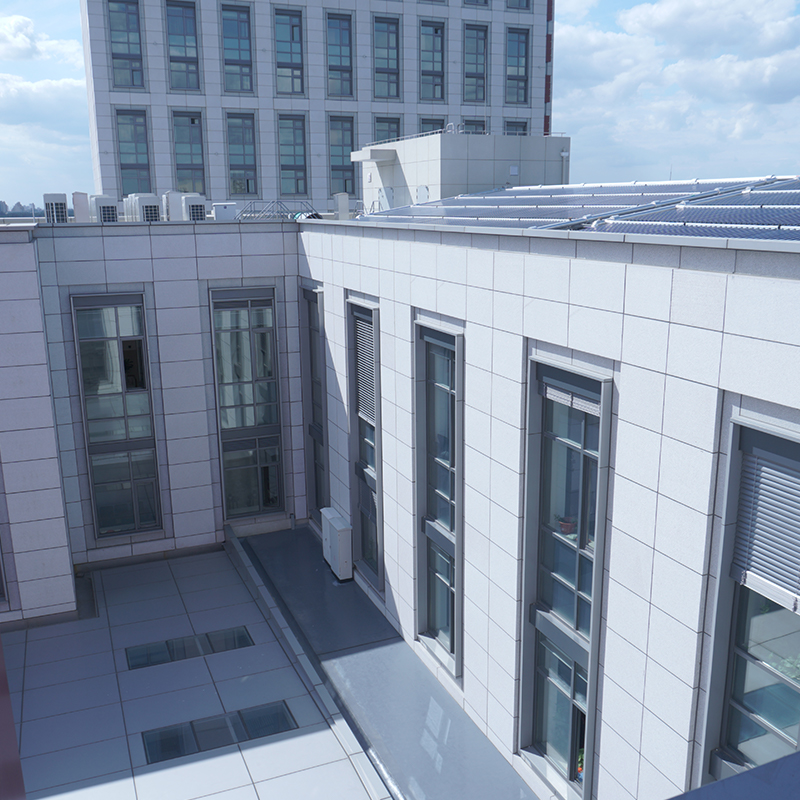
Motorized Outdoor Louver with Remote Control & UV Protection Slats
Flexible Light and Privacy Adjustment
The 0–90-degree rotation range is central to the product’s performance. When the blades are positioned more openly, daylight can enter the shaded area and the space can retain a stronger connection with the sky and surrounding landscape. As the blades rotate toward a closed position, direct sunlight and visual exposure can be reduced.
This flexibility allows one installation to serve different activities. A family may open the louvers during breakfast, reduce the angle during midday heat, and close them further in the evening for privacy. A hotel terrace may use a partially open setting to maintain a bright environment without exposing guests to excessive glare. An outdoor kitchen can benefit from adjustable shade while retaining a sense of openness.
Privacy management is another important advantage. Fixed canopies may block overhead sunlight but do not always address views from neighboring buildings or elevated positions. Adjustable louvers can alter the visual angle and reduce unwanted exposure from selected directions. The actual level of privacy will depend on installation orientation, blade spacing, surrounding buildings, and the selected angle, but the adjustment range provides more control than a fixed roof.
The louvers can also help reduce the visual discomfort caused by high-contrast sunlight. In outdoor hospitality environments, strong glare can affect guests and make screens, menus, and digital displays more difficult to see. By adjusting the blade angle, operators can create a more balanced lighting environment without eliminating all natural illumination.
Aluminum Alloy Construction for Outdoor Applications
Aluminum is widely used in exterior shading because it combines relatively low weight with useful strength, corrosion resistance, and design flexibility. The CR80 uses extruded aluminum alloy blades, allowing the product to maintain a consistent profile across production batches when manufactured under controlled conditions.
The product information identifies aluminum alloy extrusion as the blade-forming method. Extrusion is suitable for producing long, continuous profiles with repeatable cross-sectional geometry. This is important for louver systems because consistent blade dimensions help support smoother alignment, reliable rotation, and an even visual appearance across the installation.
The stated product material is also consistent with the wider manufacturing focus of the company, which uses high-strength 6063-T66 aluminum alloy for its aluminum pergola and outdoor shading products. This material approach supports the development of systems intended for residential and commercial exterior applications.
Aluminum alloy construction may provide important advantages over some competing materials. Steel can offer high strength but may add considerable weight and require careful protection against corrosion. Timber can create a warm appearance but may require more maintenance and can be affected by moisture, insects, and dimensional changes. Fabric canopies are lightweight but may be more vulnerable to staining, tearing, fading, and tension-related wear. Aluminum offers a practical compromise between durability, maintenance requirements, and modern architectural appearance.
The CR80 is not described as a maintenance-free product, and proper care remains important. Periodic cleaning, inspection of moving parts, checking of fasteners, and attention to drainage or water exposure can help maintain long-term performance. The specified service life of up to 10 years under normal use provides a useful reference for planning, although the actual life of a completed installation will depend on climate, frequency of operation, installation quality, cleaning, and maintenance.
Extrusion and Profile Consistency
In a louver system, profile consistency affects more than appearance. The blades must fit within the supporting structure and rotate without excessive friction. Variations in width, thickness, or edge form can influence the alignment of adjacent slats. Controlled extrusion and subsequent inspection therefore play an important role in producing a system that is easier to assemble and operate.
The availability of roll-edge and non-roll-edge blade forms allows the design team to select a profile that matches the intended assembly. This type of product flexibility is useful for manufacturers, distributors, and project contractors who may serve different markets with different visual or technical requirements.
Wind Performance and Outdoor Reliability
The product specification states wind resistance at Grade 8. Wind performance is an important consideration for any exterior shading system because open terraces, rooftops, pool decks, and commercial spaces may be exposed to changing airflow and gusts.
A wind-resistance rating should always be interpreted together with the complete installation design. The performance of an individual blade is only one part of the system. Frame dimensions, support spacing, motor capacity, anchoring, connection hardware, installation surface, local building requirements, and the orientation of the structure all influence the final result.
For professional projects, contractors and engineers should confirm the applicable wind requirements before placing an order. Local regulations and site conditions may require additional structural calculations or project-specific reinforcement. The stated Grade 8 performance provides a useful product reference, but it should not replace site assessment or engineering review.
Compared with lightweight fabric shading products, aluminum louvers can provide a more solid and stable architectural solution. The rigid slats maintain their form and do not depend on fabric tension. Compared with some basic aluminum blinds, the motorized CR80 combines the structural benefits of metal construction with connected operation and multiple blade-width choices.
UV Protection and Thermal Comfort
Outdoor shading is often selected to reduce exposure to direct sunlight and ultraviolet radiation. The CR80’s adjustable aluminum slats can be positioned to block or reduce direct solar exposure over seating areas, outdoor kitchens, walkways, and transitional spaces. This can help make an exterior area more comfortable during bright weather.
UV protection also supports the preservation of furniture, cushions, flooring, decorative materials, and other objects placed beneath the shading system. Continuous sunlight can contribute to fading and material deterioration. By allowing users to alter the louver angle according to the sun’s position, the system can help manage exposure more effectively than a fixed open roof.
Actual thermal performance depends on many factors, including geographic location, roof orientation, air movement, blade angle, surrounding surfaces, installation size, and the use of additional screens or curtains. The CR80 should therefore be viewed as one component of a complete outdoor comfort strategy rather than a substitute for all other environmental controls.
In many projects, louvers are combined with zip screens, outdoor shades, glass sliding doors, or other enclosure products. This layered approach allows users to control overhead sunlight, side glare, wind, insects, and privacy in different ways. The manufacturer’s broader product range makes it possible to coordinate several shading elements within a single project.
Design Options for Residential and Commercial Projects
The three blade-width choices provide designers with greater control over the visual character of the finished installation. The 80 mm blade can create a more pronounced louver rhythm and may be appropriate for larger pergola modules or bold architectural concepts. The 60 mm blade can provide a balanced appearance for general residential and commercial applications. The 50 mm option may be suitable where a finer pattern or lighter visual effect is preferred.
The selection should be made according to the scale of the opening, the surrounding architecture, the required shading effect, and the desired relationship between daylight and enclosure. A professional supplier can help evaluate blade proportions, support spacing, motor requirements, and color or finish options based on the project design.
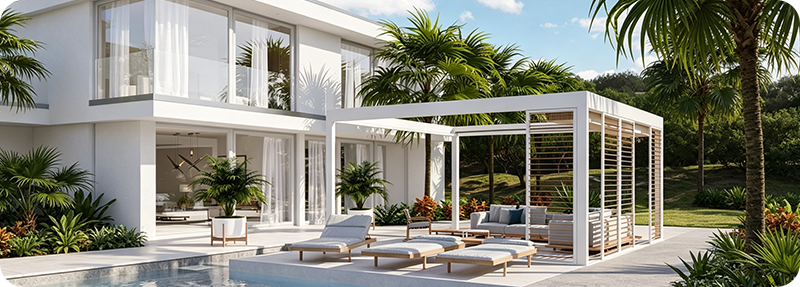
Although the technical information supplied for this product focuses on blade width, thickness, weight, rotation, and control, the system can be integrated into broader aluminum pergola and outdoor shading concepts. This makes it suitable for courtyards, pool terraces, garden lounges, rooftop spaces, restaurants, cafés, hotels, event venues, and commercial leisure areas.
Residential Applications
For residential users, the product can improve the daily usability of a patio, balcony, courtyard, or garden extension. A louver system can turn an exposed terrace into a more adaptable outdoor room. Users can choose an open setting when they want more daylight and a closed or partially closed setting when they want shade and privacy.
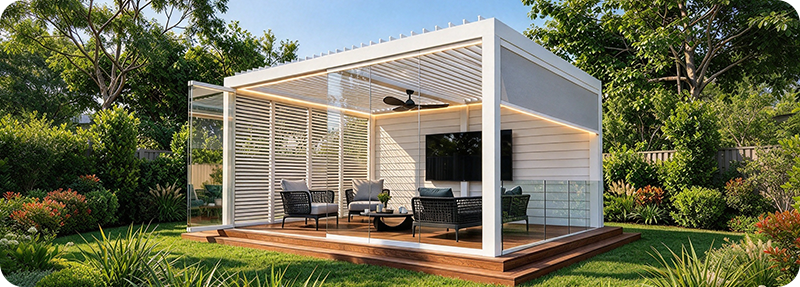
Outdoor kitchens are another suitable application. Food preparation and dining areas often require shade, but users may also want ventilation and a visual connection with the garden. Adjustable louvers offer more control than a permanent solid roof and can be coordinated with side screens, sliding doors, or other weather-management products.
Hospitality Applications
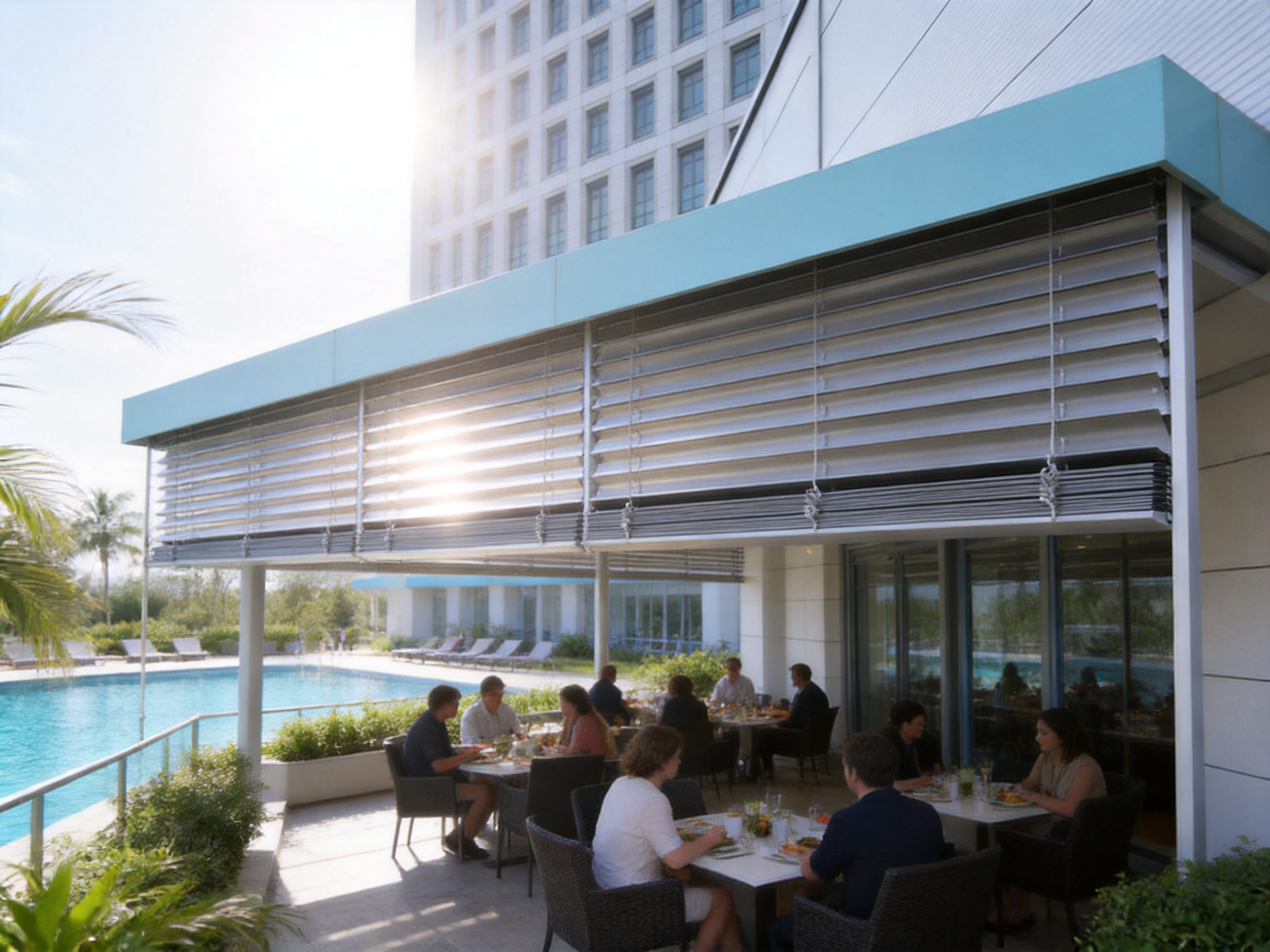
Restaurants, cafés, and hotels frequently need to increase the usable area of outdoor seating while maintaining guest comfort. A motorized louver system can support different operating modes during breakfast, lunch, dinner, and evening service. Staff can respond to changing sun angles and weather conditions without manually reaching the roof.
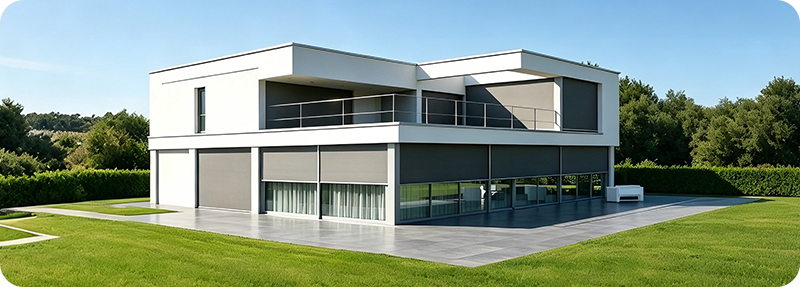
The architectural appearance of aluminum louvers can also support a clean and contemporary brand environment without relying on oversized fabric graphics or temporary shade structures. The precise blade alignment creates a finished appearance that can complement modern façades, pool areas, landscaped courtyards, and rooftop dining spaces.
Commercial and Leisure Applications
Commercial developments, clubs, sports facilities, and leisure venues can use adjustable louvers to create sheltered gathering areas. The system may be used over seating zones, entrance transitions, outdoor workspaces, or areas adjacent to swimming pools and recreational facilities.
For these applications, project planning should consider traffic flow, accessibility, control permissions, maintenance access, emergency procedures, and the relationship between the louver system and other building services. The connected control function may be particularly valuable where several units need to be managed by facility staff.
Manufacturing Capabilities and Project Support
The company behind the product is Shanghai SUNC Intelligence Shade Technology Co., Ltd., a manufacturer specializing in aluminum-alloy pavilions and intelligent outdoor shading systems. Established in 2008, the company has developed a product portfolio covering aluminum pergolas, louvered roof systems, zip screens, outdoor shades, awnings, aluminum carports, indoor blinds, glass sliding doors, outdoor kitchen systems, guillotine windows, and pergola accessories.
This broader product scope is significant for buyers seeking more than a single component. A project may require overhead louvers together with vertical screens, glazing, doors, or outdoor kitchen structures. A supplier with experience across multiple product categories can help coordinate dimensions, finishes, control concepts, and installation interfaces.
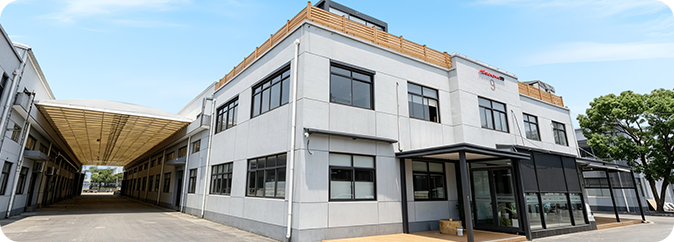
The company operates an approximately 8,000-square-meter manufacturing base and reports annual production of more than 100,000 aluminum pergola sets. It also offers more than 20 product types and exports to over 30 countries and regions. These capabilities indicate experience with standardized production, international project coordination, and the requirements of dealers and contractors serving different markets.
Use of High-Strength Aluminum Alloy
The company identifies high-strength 6063-T66 aluminum alloy as a key material used in its product development and manufacturing. Aluminum alloy selection affects the relationship between weight, rigidity, corrosion resistance, surface treatment, and fabrication efficiency. The use of a recognized architectural alloy can support consistent product engineering when combined with suitable extrusion, machining, assembly, and quality-control procedures.
For a louver system, material selection must be considered alongside profile geometry. A well-designed extrusion can improve strength and stability without adding unnecessary weight. The product’s specified blade weight range demonstrates attention to manageable component weight, which can benefit assembly, transport, installation, and motor operation.
OEM and ODM Services
The company provides OEM and ODM support for global dealers and project partners. OEM services can help customers purchase products under their own commercial programs, while ODM cooperation may support modifications or product development based on specific market requirements.
Customization is valuable in outdoor shading because each project can differ in size, climate, architectural style, control preferences, and local construction practices. Dealers may need a product adapted to a specific color system, packaging format, branding program, or installation method. Project developers may require non-standard dimensions, integrated screens, custom layouts, or coordinated accessories.
Any customization should be confirmed during technical review. Important items may include maximum module size, blade selection, motor capacity, drainage requirements, wind criteria, electrical supply, control compatibility, finish, packaging, and installation tolerances.
3D Rendering and Project Optimization
Design support is another stated company capability. Three-dimensional rendering can help architects, dealers, and end users visualize the relationship between a pergola, louver system, house, landscape, pool, restaurant, or commercial building before production begins.
Project optimization may involve reviewing the placement of support posts, roof modules, blade direction, screen integration, access routes, drainage, lighting, and installation sequence. Early design coordination can reduce the risk of dimensional conflicts and help the final installation appear more integrated with the surrounding architecture.
Advantages Compared with Alternative Shading Products
Compared with Fixed Roofs
A fixed roof provides consistent overhead coverage but offers limited control over daylight and ventilation. It may make an outdoor area feel enclosed even when users want an open-air experience. Motorized louvers provide a variable roof condition, allowing occupants to adjust the amount of sunlight and openness throughout the day.
Compared with Fabric Awnings
Fabric awnings are often lightweight and economical, but their performance may depend on tension, fabric quality, cleaning, and exposure to wind and ultraviolet radiation. Aluminum louvers create a more rigid architectural surface and can provide a long-term visual solution for projects where durability and structural appearance are priorities.
Compared with Manual Louvers
Manual louvers may have a lower initial equipment cost, but they require physical access and repeated adjustment. This can be inconvenient for high-level roofs, large terraces, or commercial installations. Motorized operation improves accessibility and supports more consistent positioning across the system.
Compared with Basic Roller Shades
Roller shades can provide excellent vertical solar control, but they do not replace overhead shading. A louvered roof can reduce direct overhead radiation while maintaining a more open architectural character. The two products can also be used together, with the louver regulating overhead light and a zip screen managing side glare, wind, and privacy.
Compared with Heavier Metal Systems
Some metal shading systems may deliver strength but add substantial weight to the supporting structure. The aluminum construction and stated blade weight of the CR80 support a more practical balance between outdoor durability and manageable system weight. This can simplify handling and contribute to efficient motor operation when the system is correctly designed.
Installation and Specification Considerations
Successful installation begins with accurate site measurement. The installer should verify the opening dimensions, supporting surfaces, drainage direction, electrical requirements, access for assembly, and the position of adjacent walls, doors, windows, screens, and furniture.
The selected blade width should be confirmed before manufacturing. The 80 mm, 60 mm, and 50 mm choices may produce different visual proportions and may influence the appearance of the roof module. Blade selection should be coordinated with the frame design and the intended rotation mechanism.
Motor and control planning is also important. The project team should confirm the power supply, control location, remote-control requirements, WiFi environment, and any desired integration with smart home or building-management systems. For commercial projects, it may be useful to establish which staff members can operate the system and whether several units should be controlled independently or as a group.
Wind conditions should be assessed before installation. The stated Grade 8 resistance is a product reference, but the complete structure must be designed for the local environment. Coastal areas, exposed rooftops, high-rise terraces, and locations subject to strong gusts may require additional engineering and anchoring provisions.
Installation should be performed by qualified professionals who understand aluminum structures, motorized shading equipment, electrical safety, and the applicable local regulations. Incorrect alignment or insufficient anchoring can reduce performance regardless of the quality of the manufactured components.
Maintenance and Service Life
The product is specified with a service life of up to 10 years under normal use. To help preserve this performance, owners should establish a routine maintenance plan. Dust, leaves, insects, airborne pollutants, and salt deposits can accumulate on outdoor components and should be removed using suitable cleaning methods.
Moving parts should be inspected periodically for unusual noise, uneven movement, excess resistance, or visible damage. Electrical connections and control components should be checked by qualified personnel when necessary. Fasteners and support connections should also be reviewed, particularly after severe weather or when the system is installed in a high-exposure location.
Cleaning products should be compatible with aluminum surfaces and any applied finish. Abrasive tools, aggressive chemicals, and high-pressure cleaning directed at sensitive electrical or mechanical components may cause damage. The maintenance instructions supplied for the specific installation should take priority.
A service-life estimate is not a guarantee of identical performance in every environment. Climate, frequency of operation, installation quality, wind exposure, cleaning, and maintenance all affect longevity. Nevertheless, the stated 10-year normal-use reference positions the system as a durable alternative to temporary or frequently replaced outdoor shading products.
Ordering and Custom Project Workflow
A professional ordering process normally begins with a project brief. This should identify the application, approximate dimensions, installation location, desired blade width, control method, expected weather conditions, and any requirement for screens, glazing, doors, lighting, or other accessories.
The next stage is technical confirmation. Drawings, renderings, or layout proposals can be reviewed to verify the position of support posts, blade direction, opening sizes, drainage, motor access, and connections to existing structures. If the product is being incorporated into a larger pergola or outdoor room, all related components should be coordinated before production.
For dealers and contractors, sample materials and finish references can help customers make decisions. A physical sample may also be useful for evaluating color, texture, blade proportion, and the relationship between the louver and surrounding architectural materials.
Production planning should include packaging and delivery requirements. Aluminum profiles and assembled components must be protected from impact, abrasion, and deformation during transportation. International projects may also require documentation concerning dimensions, installation, electrical specifications, packaging, and local compliance.
After delivery, the installation team should inspect the goods before assembly and report any visible transport damage. A structured installation and commissioning process helps verify blade movement, remote operation, WiFi control, alignment, drainage, and safety features before the system is handed over to the end user.
Questions and Answers
What is the main function of the motorized outdoor louver?
The main function is to provide adjustable overhead shade and light control. Its aluminum blades rotate from 0 to 90 degrees, allowing users to manage sunlight, glare, openness, and privacy according to changing outdoor conditions.
Can the louver be operated remotely?
Yes. The product is designed for remote operation and includes a WiFi control function for adjustment through compatible smart devices. The exact control configuration should be confirmed for each project.
What blade widths are available?
The specified options are 80 mm, 60 mm, and 50 mm. The appropriate width depends on the desired appearance, roof scale, project design, and technical configuration.
What material are the blades made from?
The blades are made from extruded aluminum alloy. The product information states a blade thickness of approximately 0.45 mm and identifies roll-edge and non-roll-edge blade forms.
Is the product suitable for residential use?
Yes. It can be used for patios, balconies, courtyards, pool terraces, garden rooms, outdoor kitchens, and other residential exterior spaces. Professional measurement and installation are recommended.
Can it be used in restaurants and hotels?
Yes. Motorized louvers are suitable for outdoor dining areas, hotel terraces, poolside spaces, and commercial leisure environments. Their adjustable operation allows staff to respond to changing light and comfort requirements.
How long is the expected service life?
The stated service life is up to 10 years under normal use. Actual service life depends on climate, operating frequency, installation, cleaning, maintenance, and exposure to severe weather.
What does Grade 8 wind resistance mean for a project?
Grade 8 is the wind-resistance specification provided for the product. It should be considered together with the complete structure, anchoring, local regulations, installation orientation, and site-specific engineering requirements.
Does the louver completely block sunlight?
When the blades are moved toward a closed position, they can substantially reduce direct sunlight and glare. The final level of shading depends on the blade angle, profile, installation direction, surrounding conditions, and any additional screens or enclosures.
Can the louver be combined with other products?
Yes. It can be coordinated with zip screens, outdoor shades, glass sliding doors, guillotine windows, pergola accessories, and outdoor kitchen systems. These products can provide additional control over wind, side glare, privacy, and enclosure.
Why is aluminum suitable for outdoor louvers?
Aluminum provides a useful combination of low weight, corrosion resistance, profile flexibility, and modern appearance. Extruded aluminum can also support consistent blade geometry for repeatable installation and smooth operation.
Does the manufacturer provide customization?
The company provides OEM and ODM support, project optimization, and 3D rendering services. Specific customization options should be reviewed with the technical and sales team before production.
What should be checked before ordering?
Buyers should confirm dimensions, blade width, control requirements, electrical supply, wind conditions, mounting surfaces, drainage, finish, installation access, and the integration of any screens, glazing, or other accessories.
Conclusion
The motorized outdoor louver with remote control and UV protection slats is designed for projects that require more flexibility than a fixed canopy or manual shade system can provide. Its 0–90-degree blade rotation allows users to adjust sunlight, glare, privacy, and openness throughout the day. Aluminum alloy extrusion, multiple blade-width options, remote operation, WiFi control, and a stated Grade 8 wind-resistance specification make the CR80 a practical choice for a wide range of exterior environments.
Its competitive value comes from the combination of architectural appearance, adjustable performance, lightweight aluminum construction, and intelligent operation. Instead of treating outdoor shade as a static covering, the product makes it an active part of the space. Residential users can improve patio comfort, while restaurants, hotels, and commercial venues can make outdoor areas more useful and adaptable.
The manufacturing capabilities of Shanghai SUNC Intelligence Shade Technology Co., Ltd. further support the product’s project potential. With experience in aluminum pergolas and intelligent shading systems, an approximately 8,000-square-meter manufacturing base, a broad product portfolio, OEM and ODM support, 3D rendering, and international project experience, the company can assist customers beyond the supply of individual louver components.
For the best result, the product should be specified as part of a complete design and installation process. Accurate measurements, suitable blade selection, professional anchoring, correct motor and control planning, site-specific wind assessment, and routine maintenance all contribute to long-term performance. When these factors are addressed, the motorized outdoor louver can help transform exposed terraces, courtyards, pool decks, restaurants, hotels, and outdoor kitchens into more comfortable and functional all-weather spaces.
References
1. Product specification sheet for the CR80 motorized outdoor louver, including blade rotation, blade widths, material, wind performance, service life, and weight information.
2. Manufacturer-provided technical information on aluminum alloy extrusion, roll-edge and non-roll-edge blade profiles, and smart control functions.
3. Manufacturer corporate profile describing aluminum pergola production, intelligent outdoor shading systems, OEM and ODM services, 3D rendering, and project support.
4. Architectural aluminum design principles concerning extrusion, profile consistency, corrosion resistance, and outdoor product maintenance.
5. General outdoor shading planning practices covering solar control, privacy management, wind assessment, installation coordination, and routine maintenance.
Product: Motorized Outdoor Louver with Remote Control & UV Protection Slats
-
 2026.09.11
SUNC Aluminum Louver Pergola
-
 2026.09.11
Architectural facade cover sun louver system
-
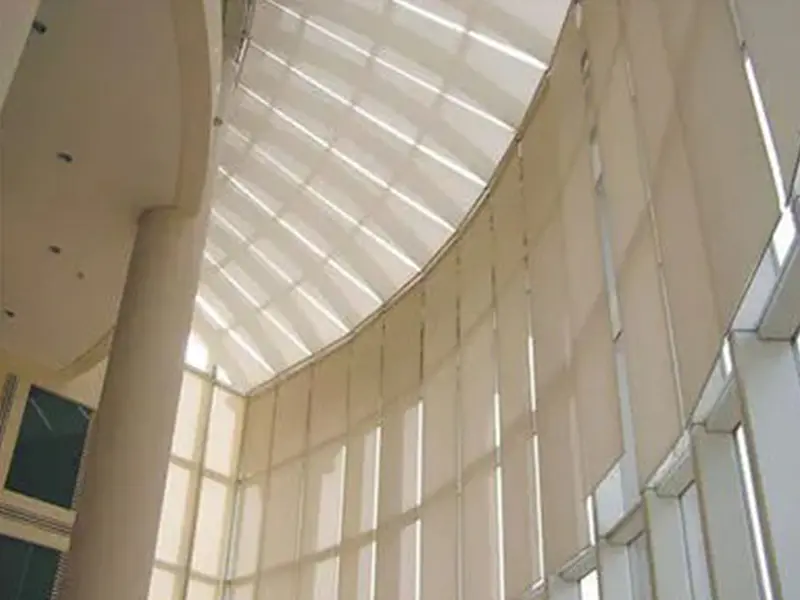 2026.09.11
Architectural Bespoke Blinds Systems
-
 2026.09.11
SUNC Collabration Partners
-
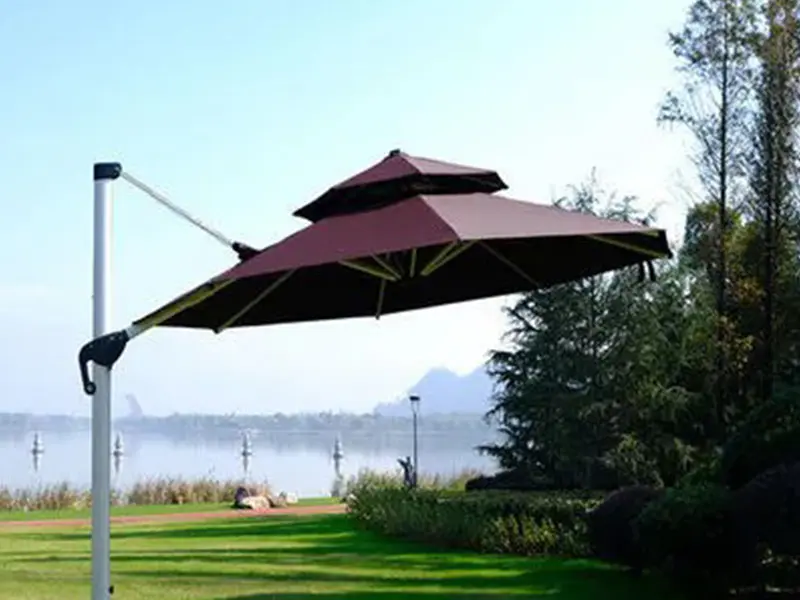 2026.09.11
Outdoor Umbrella
-
 2026.09.11
Pergola Roof Ideas

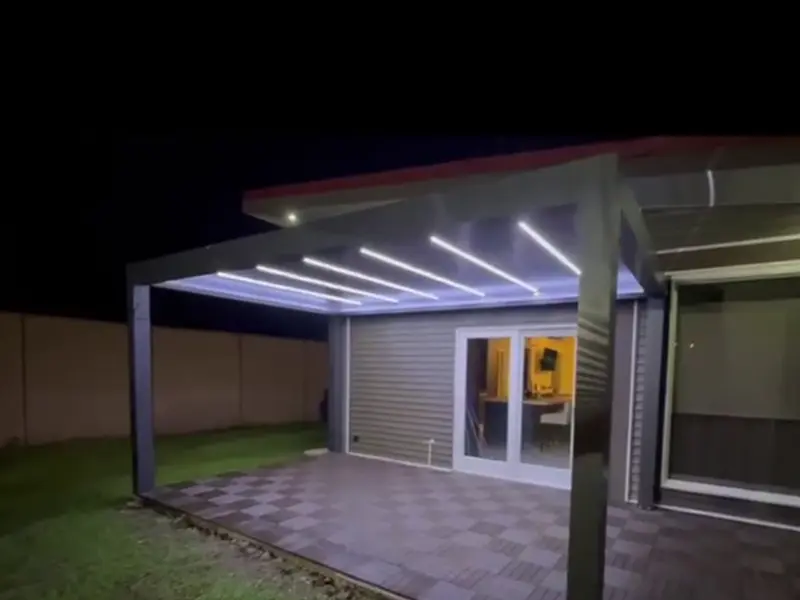
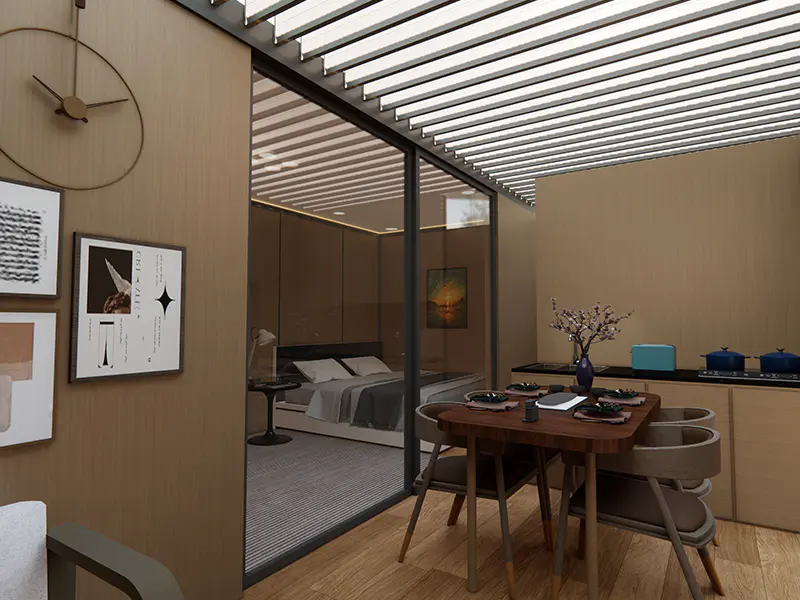
Recommended Products
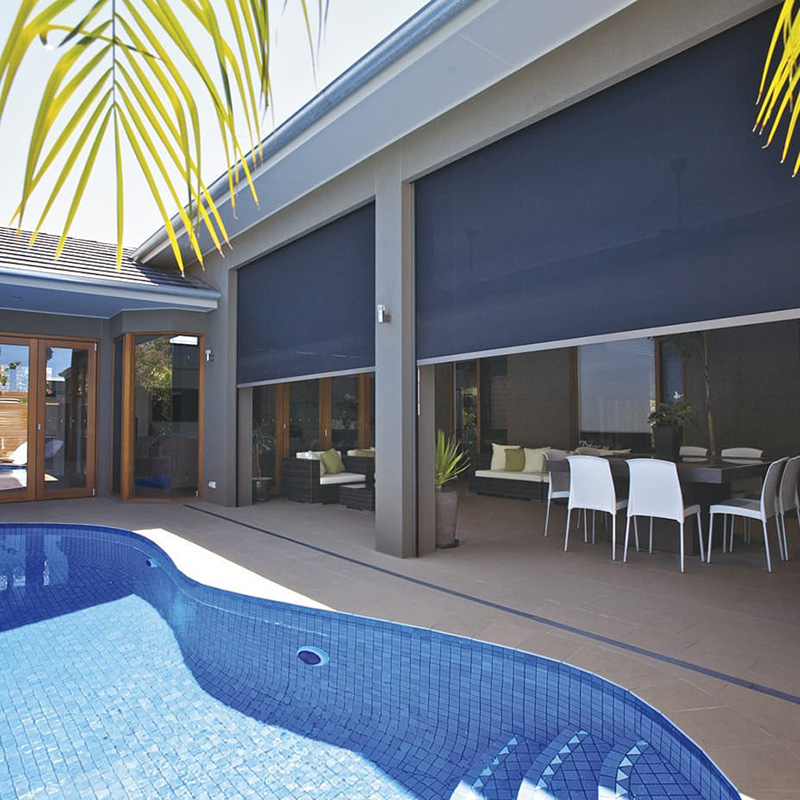
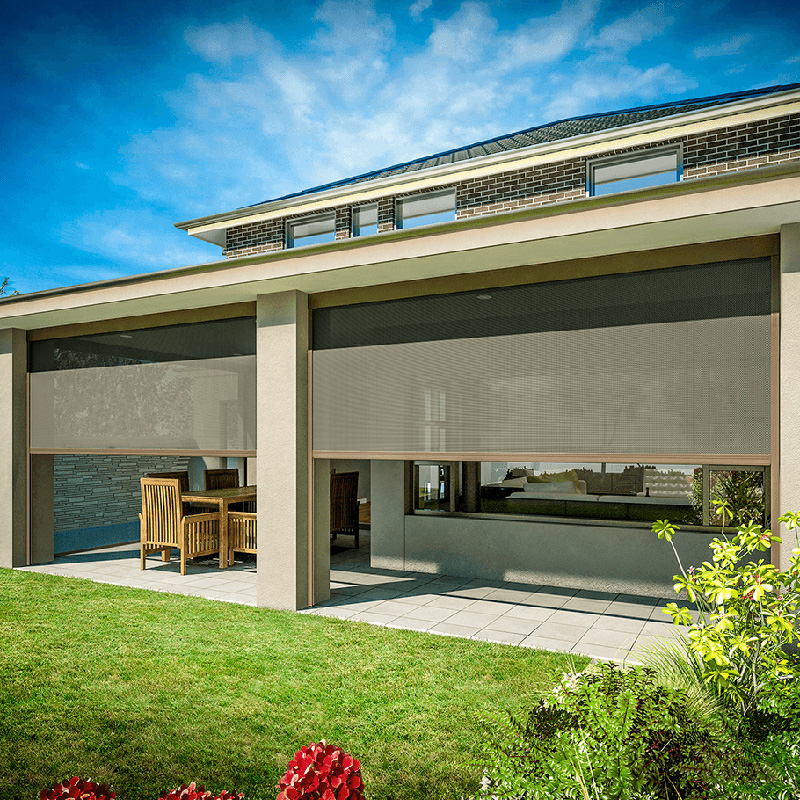
Get A Quote
You are warmly welcome to send us your inquiry! We will provide customized quotations or solutions tailored to your specific requirements and send the details directly to your email inbox.
-
Do You Like
Get A Quote
What You See? -
Quick link
Home About SUNC Custom Design Resources Become A Dealer Contact Us -
Pergolas
Louvered Pergolas Solar Pergolas PVC Pergolas -
Product
Zip Screens Outdoor Shades Awnings Aluminum Carports Indoor Blinds Glass Sliding Doors Outdoor Kitchen Systems Guillotine Windows Pergola Accessories -
Contact Information

Vivian:+86-18101873928

+86-021-59140027

yuanyuan.wei@sunctech.cn

A-2, No. 8 Baxiu West Road, Yongfeng Street, Songjiang District, Shanghai, China


Copyright © Shanghai SUNC Intelligence Shade Technology Co., Ltd. All Rights Reserved.
