

 English
 Français
 русский
 Español
 Português
 عربى

Motorized Outdoor Louvers with Remote Control and UV-Protection Slats: A Practical Guide to Intelligent Exterior Shading
Motorized Outdoor Louvers with Remote Control and UV-Protection Slats: A Practical Guide to Intelligent Exterior Shading
Outdoor living spaces are becoming an essential extension of the home, hospitality venue, restaurant, office, and commercial property. However, an attractive outdoor area must do more than provide visual appeal. It should help manage sunlight, glare, privacy, heat, and changing weather conditions while remaining simple to operate. Motorized outdoor louvers offer a practical way to achieve this balance.
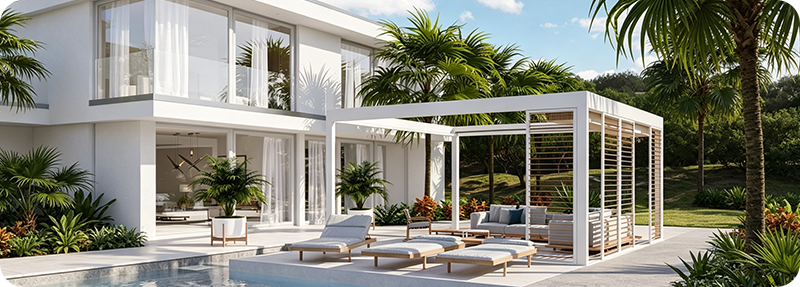
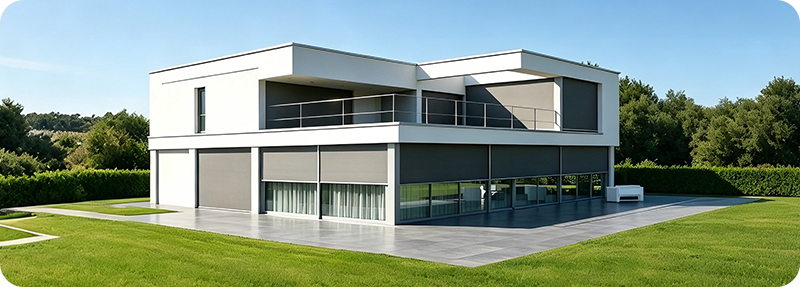
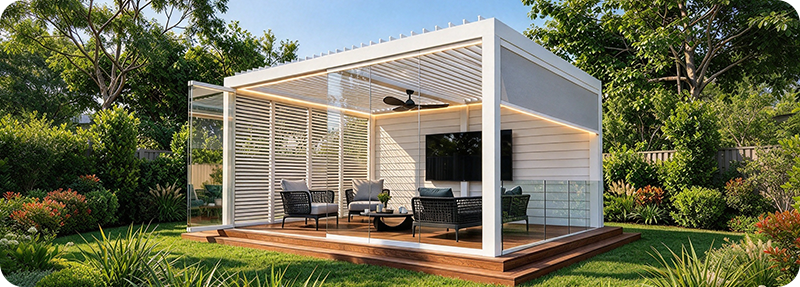
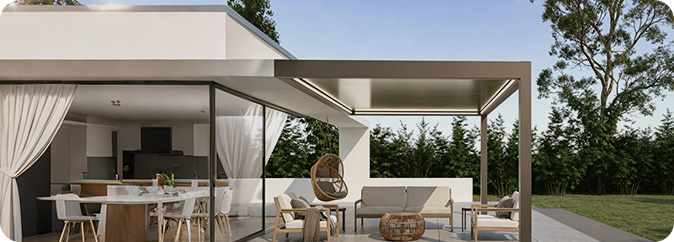
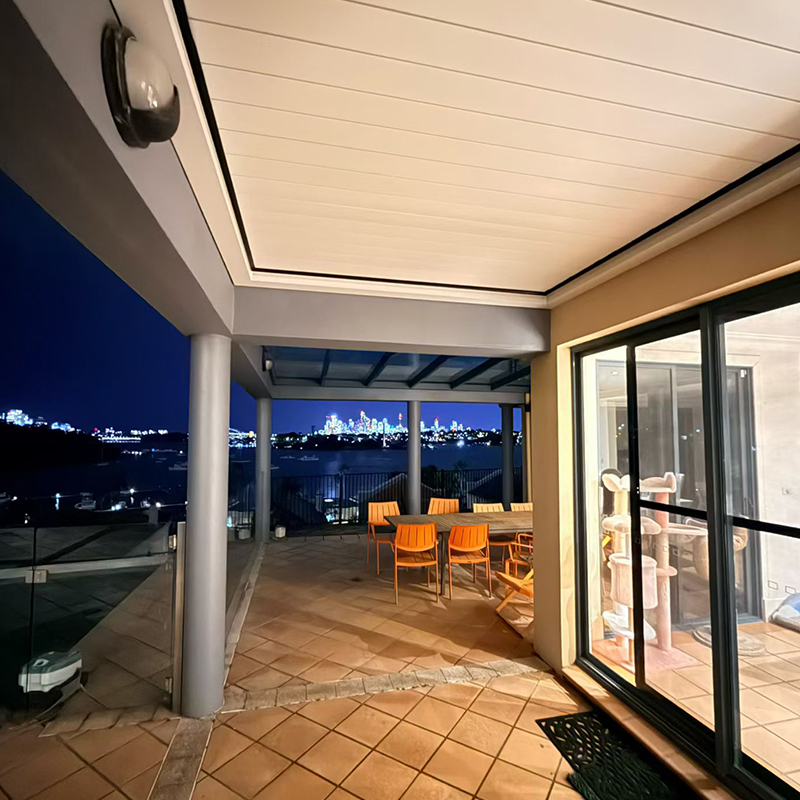
The motorized outdoor louver described in this article is designed around adjustable aluminum slats, remote operation, smart control convenience, and durable outdoor performance. Its blades can rotate from 0 to 90 degrees, allowing users to adjust the amount of sunlight and ventilation entering a covered or partially enclosed area. The system is suitable for pergolas, terraces, patios, poolside spaces, outdoor kitchens, restaurants, hotels, and other exterior environments where flexible shade control is important.
Unlike fixed canopies or permanently closed roofs, an adjustable louver system gives users direct control over the relationship between the outdoor environment and the sheltered space. The blades can be positioned to admit daylight, reduce glare, create shade, or improve privacy. When integrated with motorized controls, this adjustment can be performed conveniently from a remote control or compatible smart device, depending on the selected configuration.
The product is supported by Shanghai SUNC Intelligence Shade Technology Co., Ltd., a manufacturer focused on aluminum-alloy outdoor structures and intelligent shading systems. The company combines product development, aluminum fabrication, customization, project support, and international supply capabilities. Its broader product portfolio includes aluminum pergolas, louvered roof systems, zip screens, outdoor shades, awnings, glass sliding doors, outdoor kitchen systems, guillotine windows, and related accessories.
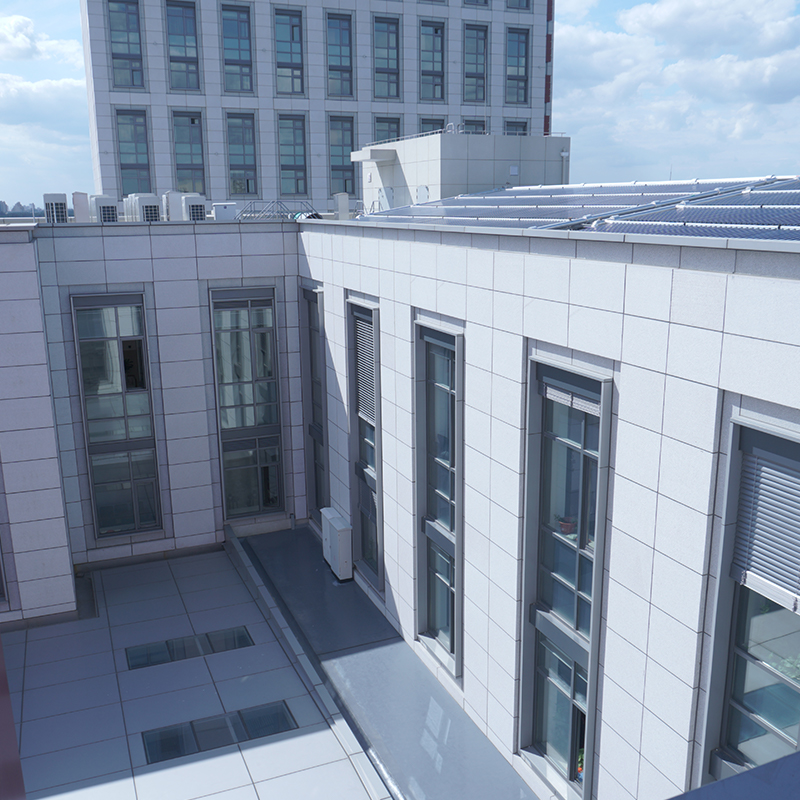
Motorized Outdoor Louver with Remote Control & UV Protection Slats
What Is a Motorized Outdoor Louver System?
A motorized outdoor louver system is an exterior shading structure fitted with movable horizontal blades. These blades are connected to an operating mechanism that allows them to rotate through a defined angle. In this model, the specified blade rotation range is 0–90 degrees.
At one position, the blades can create a more open configuration that allows daylight and air movement. At another position, they can overlap or align to provide stronger shade and improved protection from direct sunlight. Intermediate angles provide gradual adjustment rather than forcing users to choose between completely open and completely closed conditions.
The motorized function is particularly valuable for large outdoor installations. Manually adjusting a roof or series of louvers can be inconvenient, especially when the structure is installed above a dining area, pool terrace, or commercial seating zone. A motorized system allows the user to adjust the blades without climbing, reaching, or physically operating each section.
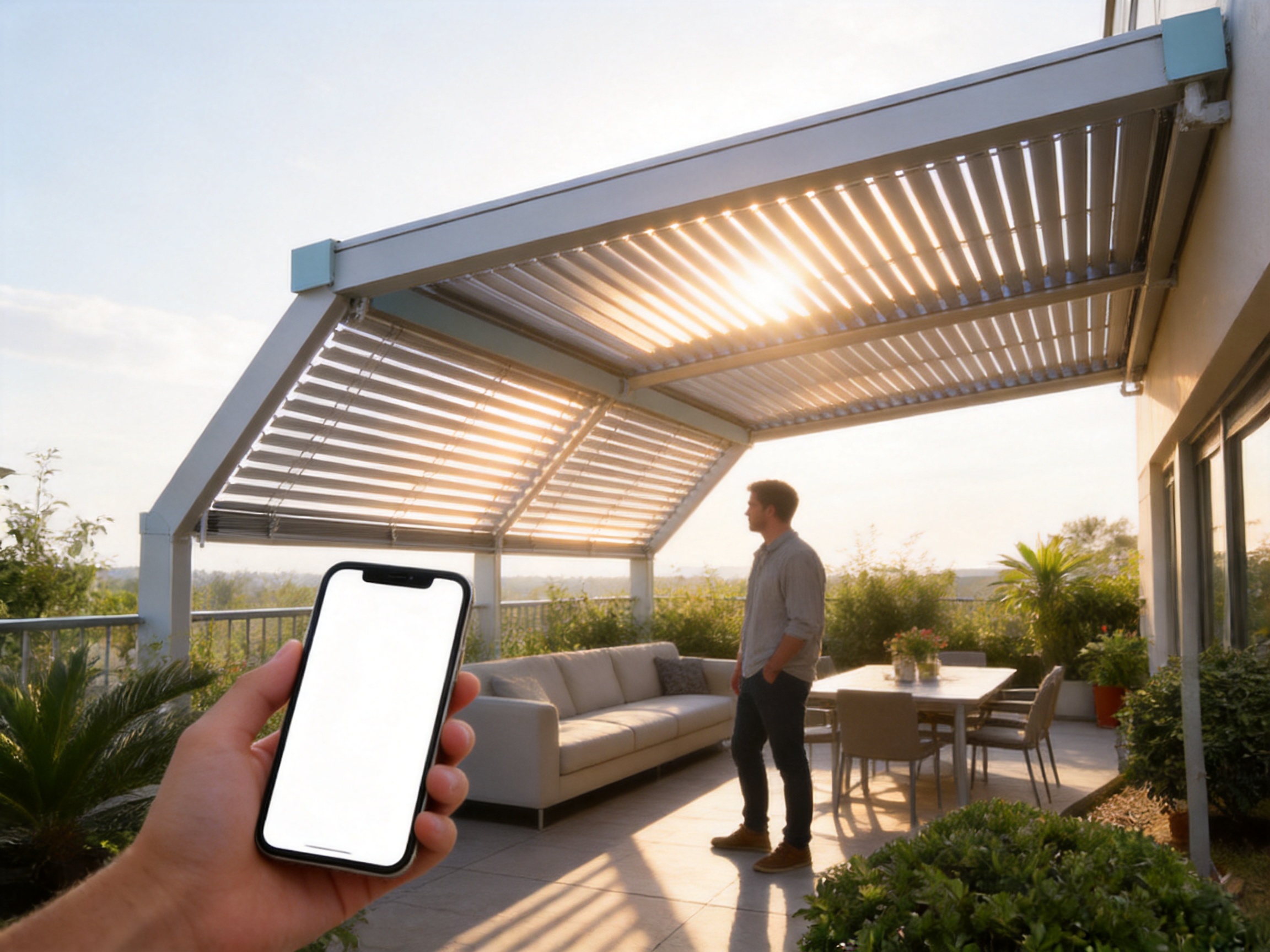
Remote control operation supports immediate adjustment from within the shaded area. The product information also identifies WiFi control functionality, enabling operation and shading management through smart devices when the appropriate smart control configuration is included. This creates a more convenient user experience and can make the system easier to integrate into modern outdoor living projects.
The system is based on aluminum alloy extrusion. The supplied specifications identify the blades as aluminum alloy extrusions formed with a roll edge and a non-roll edge. This construction approach provides a defined blade profile, supports consistent production, and contributes to the clean appearance expected from contemporary architectural shading systems.
Core Product Specifications
The following table summarizes the principal technical information supplied for the CR80 louver configuration. Final project specifications should always be confirmed against the approved quotation, engineering drawings, and installation documentation.
| Specification | Provided Information |
|---|---|
| Product type | Motorized outdoor louver system |
| Blade rotation | 0–90 degrees |
| Blade width options | 80 mm, 60 mm, and 50 mm |
| Blade thickness | 0.45 mm |
| Blade material | Extruded aluminum alloy |
| Blade profile | Roll-edge and non-roll-edge forms are available according to the specified profile |
| Wind resistance | Grade 8, according to the supplied product information |
| Reference whole weight | Approximately 4 kg for a 1000 mm × 1000 mm reference section |
| Stated service life | Up to 10 years under normal use |
| Control options | Remote control operation and WiFi-enabled smart control function |
| Primary applications | Pergolas, patios, terraces, outdoor kitchens, restaurants, hotels, pool areas, and commercial outdoor spaces |
The supplied information also gives a blade weight range of approximately 95–110 g per stated unit of length or area, depending on the blade type. Because technical documents may use different measurement conventions, buyers should confirm the exact unit and calculation method with the manufacturer before comparing component weights between suppliers.
Flexible Control of Sunlight and Glare
The central advantage of an adjustable louver is the ability to control sunlight with precision. A fixed roof may provide consistent shade, but it can also make an outdoor room feel dark or disconnected from the sky. A fully open roof can provide daylight, but it may expose occupants to excessive glare and heat. Adjustable louvers occupy the space between these two extremes.
With a 0–90-degree rotation range, users can select an angle appropriate to the time of day, season, activity, and weather conditions. In the morning, the blades may be adjusted to admit soft daylight. Around midday, they can be positioned to reduce direct solar exposure. In the late afternoon, the angle can be changed again to control low-angle glare.
This flexibility is useful for dining areas and outdoor kitchens. Strong sunlight can make it difficult to read menus, prepare food, use digital screens, or enjoy a meal comfortably. By changing the blade angle, users can reduce visual discomfort without completely blocking daylight.
The same principle applies to residential terraces and poolside spaces. Louvers can help define different comfort zones during the day, allowing one area to remain brighter while another receives deeper shade. This provides more control than a fixed awning or a fabric shade that is either extended or retracted.
Adjustable slats may also support privacy management. When neighboring buildings, roads, or elevated viewpoints overlook a terrace, the louver angle can be changed to reduce direct lines of sight. This does not make the space completely enclosed, but it can create a more private and comfortable atmosphere.
Advantages of UV-Protection Slats
Direct ultraviolet exposure can affect people, outdoor furniture, flooring, fabrics, decorative finishes, and certain equipment. A louver system with aluminum slats helps reduce the amount of direct solar radiation entering the covered zone when the blades are adjusted toward a shading position.
UV protection is especially important for outdoor dining and hospitality projects. Upholstered seating, cushions, table finishes, signage, and decorative materials can fade or deteriorate when exposed to strong sunlight for extended periods. By managing solar exposure, adjustable louvers can contribute to a more stable environment for furnishings and finishes.
For residential users, the system can help make terraces more usable during the brightest parts of the day. It can also reduce the contrast between bright exterior conditions and shaded interior-adjacent spaces, creating a more comfortable transition between indoor and outdoor areas.
The aluminum blades themselves are well suited to exterior applications because aluminum alloy is lightweight, corrosion resistant, and capable of being formed into consistent architectural profiles. The product information identifies a 0.45 mm blade thickness and an extruded aluminum alloy construction. The exact finish, coating, color, and surface treatment should be specified for each project according to local environmental conditions and design requirements.
Durable Aluminum Construction
Material selection is one of the most important differences between a dependable outdoor louver system and a short-term shading product. Exterior components must withstand repeated movement, temperature changes, humidity, sunlight, and exposure to airborne contaminants. Aluminum alloy is widely used in architectural applications because it combines low weight with useful structural and corrosion-resistant properties.
The company identifies high-strength 6063-T66 aluminum alloy as a material used in its aluminum-alloy outdoor structures. This alloy family is commonly associated with architectural extrusions because it can provide a balance of formability, surface quality, and mechanical performance. The specific alloy and temper used for each component should be verified in the final technical documentation.
Extrusion allows a profile to be formed with a controlled cross-section. This is important for louver blades because the blade must perform several functions simultaneously. It needs to present a clean visible surface, connect correctly with operating components, rotate consistently, and help direct water or sunlight according to its profile.
The stated roll-edge and non-roll-edge blade options provide flexibility for different construction and design requirements. Different profiles can influence the visual line of the roof, the relationship between adjacent blades, and the way the system is coordinated with frames, gutters, screens, and other accessories.
Aluminum construction also helps reduce the operating load compared with heavier materials. A lower component weight can be beneficial when the louver mechanism is required to move multiple blades repeatedly. It can also simplify handling during installation, although the total weight of the complete roof or pergola must be evaluated separately from the reference weight of an individual section.
Motorized Convenience for Residential and Commercial Projects
Convenience is a major reason to choose motorized louvers over manual exterior shading. A manually operated roof may be acceptable for a very small installation, but operation becomes more difficult as the structure increases in size or height. Motorization allows the system to be adjusted from a practical standing or seated position.
Remote control operation is useful for everyday changes. A homeowner can adjust the roof before dining outdoors, close the louvers when sunlight becomes intense, or reopen them when natural light is preferred. In a hospitality setting, staff can change the roof position efficiently without interrupting guests or moving furniture.
WiFi control adds another layer of convenience. When configured with compatible smart control equipment, users can manage the louvers through a smart device. This may be helpful for properties where the outdoor area is connected to a broader home automation or building management system.
Smart control can also support more organized operation across multiple zones. A large restaurant terrace, hotel pool area, or commercial courtyard may contain several louver sections. The control arrangement should be planned in advance so that each section can be operated independently, in groups, or through a centralized interface where appropriate.
The exact smart functions depend on the motor, control system, power supply, communication method, and project configuration selected. Buyers should request confirmation of compatibility, operating range, control grouping, emergency operation, and maintenance procedures before placing an order.
Wind Performance and Outdoor Reliability
The product information specifies Grade 8 wind resistance. This indicates that wind performance is an important part of the product design. Nevertheless, wind ratings should not be interpreted as a universal guarantee for every installation. Actual performance depends on the overall structure, dimensions, anchoring system, surrounding buildings, installation quality, blade position, and local wind conditions.
Outdoor louver systems should be engineered according to the intended location. A freestanding pergola in an exposed coastal area may experience very different forces from a louver installed against a building in a protected courtyard. Roof size, post spacing, beam configuration, foundation conditions, and connection details all influence structural behavior.
Users should follow the manufacturer’s operating instructions during severe weather. Depending on the project design and local conditions, the louvers may need to be placed in a specified position when strong wind is expected. A wind sensor, weather-control module, or other protective accessory may be considered where automated response is required.
Wind resistance is therefore best understood as one component of a complete system evaluation. The aluminum blades, drive mechanism, supporting beams, posts, fasteners, drainage elements, and foundations must work together. Professional installation and accurate site assessment remain essential.
Comparing Motorized Louvers with Common Competitor Solutions
Outdoor shading products vary widely in their operating method, material, adaptability, and durability. The motorized louver system offers several advantages over fixed roofs, fabric awnings, roller shades, and manually operated louvers.
Compared with Fixed Roofs
A fixed roof provides permanent coverage, but it does not allow users to adjust daylight or ventilation. It may create a darker area than desired in the morning or evening, while still allowing unwanted heat buildup during bright periods if it is made from a transparent or lightly shaded material.
Motorized louvers provide more control. The blades can be opened to improve daylight and create a stronger visual connection with the sky, or closed toward a shading position when glare and direct sunlight become uncomfortable. This adaptability is a significant advantage for spaces used throughout the day.
Compared with Fabric Awnings
Fabric awnings can provide attractive shade and are available in many colors. However, fabric can be vulnerable to staining, fading, stretching, moisture retention, and damage from wind or prolonged exposure. The service life and appearance of fabric products may vary considerably depending on quality and maintenance.
Aluminum louvers offer a more architectural and permanent appearance. They are not dependent on a flexible textile membrane and can be integrated with frames, screens, sliding doors, and outdoor room systems. Their rigid slats also provide a more structured visual design for modern residential and commercial projects.
Compared with Manual Louvers
Manual louvers may have a lower initial equipment cost in some applications, but they can be inconvenient to adjust, especially when installed over a large area. Motorized operation improves ease of use and makes frequent adjustment more realistic.
Remote and smart control also make the system more accessible for users with limited mobility. In commercial settings, motorization can reduce the time required to manage several shaded areas and help staff maintain a consistent guest environment.
Compared with Simple Roller Shades
Roller shades and zip screens are valuable accessories for controlling low-angle sunlight, insects, wind, and privacy at the sides of a structure. However, they do not replace the roof-level control offered by adjustable louvers. A louvered roof manages sunlight from above, while vertical screens address exposure from the sides.
The strongest outdoor living designs may combine both systems. For example, motorized louvers can provide overhead shade while zip screens or glass sliding doors create additional enclosure when the wind, temperature, or privacy conditions change.
Manufacturing Strengths and Production Capabilities
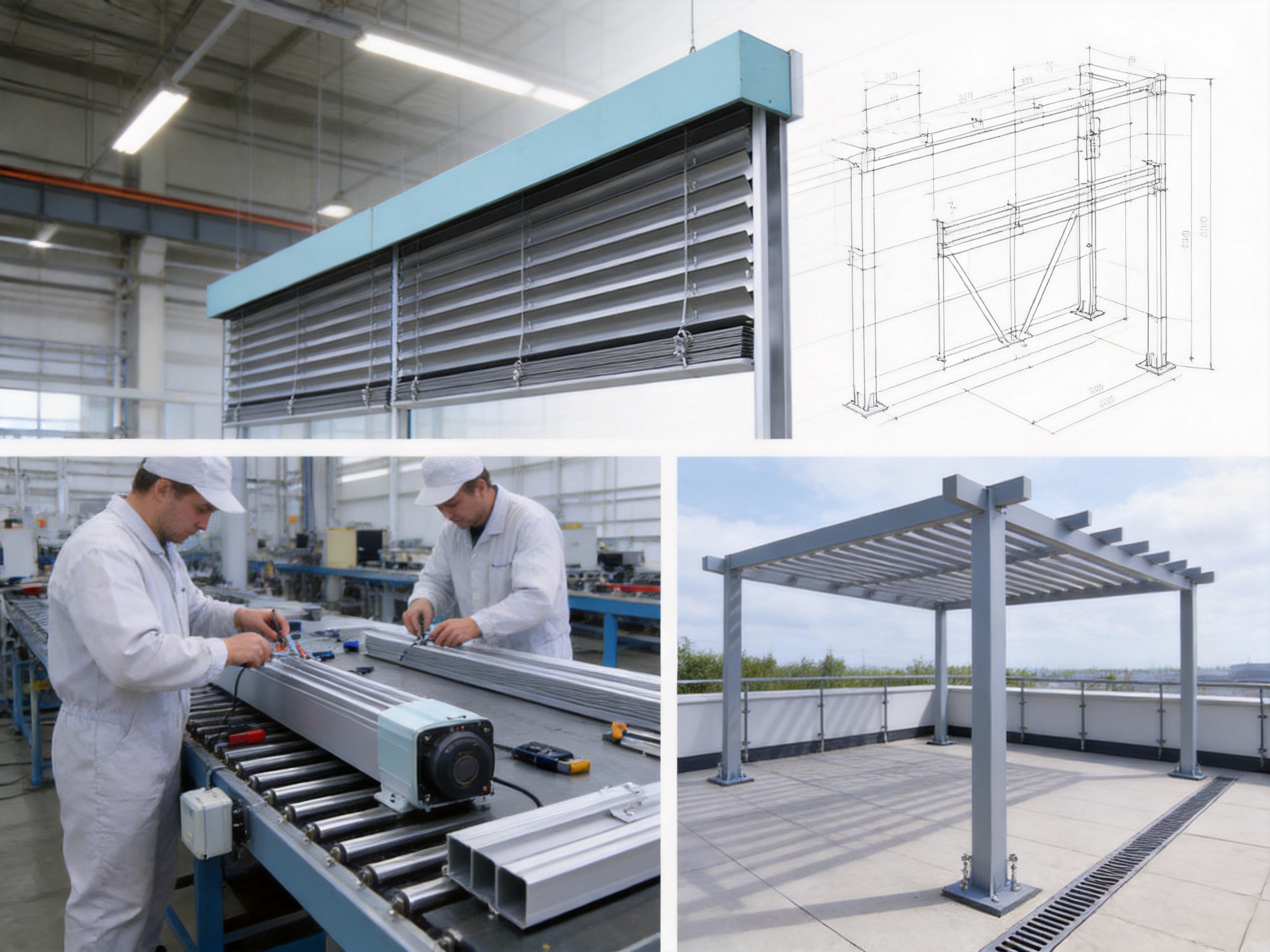
Product performance is influenced not only by the design but also by the manufacturer’s ability to control materials, fabrication, assembly, inspection, packaging, and technical support. Shanghai SUNC Intelligence Shade Technology Co., Ltd. states that it specializes in the research, development, and manufacturing of aluminum-alloy pavilions and intelligent outdoor shading systems.
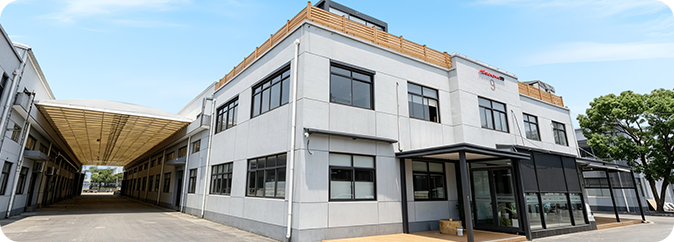
The company was established in 2008 and operates an approximately 8,000-square-meter manufacturing base. According to the supplied company information, it offers more than 20 product types and produces over 100,000 aluminum pergola sets annually. It also exports to more than 30 countries and regions.
These capabilities are relevant to international buyers because outdoor shading projects often require more than a standard product. Dealers, contractors, architects, and property developers may need assistance with dimensions, layouts, finishes, control zones, drainage, accessories, packaging, and installation planning.
A manufacturer with a broad product range can coordinate related systems through one supply chain. A project may combine aluminum pergolas, motorized louver roofs, zip screens, awnings, glass sliding doors, outdoor kitchens, guillotine windows, and lighting or drainage accessories. Coordinating these elements can simplify design communication and reduce the risk of incompatible components.
Research and Development
Research and development are important in intelligent shading because the product must combine mechanical movement, architectural appearance, weather performance, and user-friendly control. The blade profile, frame design, operating mechanism, drainage arrangement, and control interface must work together rather than being developed as isolated parts.
Continuous product development can also support different market requirements. A residential terrace may prioritize appearance and quiet operation, while a restaurant may prioritize daily cycling, service access, and easy zone management. A hotel or commercial project may require custom dimensions, branded finishes, integrated screens, and detailed installation documentation.
Aluminum Processing
Aluminum extrusion and related fabrication processes allow the manufacturer to create repeatable profiles for blades, beams, posts, frames, and accessory components. Consistent profile dimensions are important for assembly accuracy and the smooth movement of the louver blades.
Processing may include cutting, drilling, machining, surface finishing, component preparation, and assembly. Although the precise production sequence depends on the ordered configuration, a controlled manufacturing workflow helps reduce variation between batches and supports more predictable project installation.
Customization and OEM/ODM Support
The company provides OEM and ODM customization support. For dealers and project partners, this can be valuable when a standard catalog configuration does not fully match the market or project requirements. Customization may involve dimensions, colors, blade options, control arrangements, accessories, packaging, documentation, or product presentation.
Customization should be managed through approved drawings and written specifications. Important items include overall dimensions, post and beam positions, blade width, blade profile, finish, drainage direction, motor location, control type, electrical requirements, wind conditions, and connection details.
3D Rendering and Project Optimization
Outdoor structures affect the appearance and function of a property. The company identifies 3D rendering and project optimization as part of its service capabilities. Visual planning can help clients understand how the louver system will relate to a building facade, pool, garden, terrace, outdoor kitchen, or commercial seating arrangement.
Project optimization may also identify opportunities to improve post locations, roof proportions, drainage, screen integration, circulation space, and furniture placement. Such coordination is particularly important when the louver system is being added to an existing building or when several outdoor products must be combined.
Applications Across Different Outdoor Environments
Residential Courtyards and Terraces
For residential users, motorized outdoor louvers can transform an underused patio into a more flexible living area. The space may serve as a dining room, lounge, play area, entertainment zone, or quiet retreat depending on the time of day. Adjustable shade enables the area to be used in a wider range of sunlight conditions.
Homeowners can coordinate the roof with outdoor furniture, lighting, heaters, screens, and sliding doors. The aluminum structure also provides a contemporary architectural element that can complement modern, minimalist, industrial, or resort-inspired designs.
Poolside Areas
Pool terraces often experience intense sunlight and glare from water surfaces. Motorized louvers can provide a shaded area for resting, changing, dining, or supervising children while still allowing users to open the roof when a brighter atmosphere is preferred.
Because poolside locations may have increased humidity and exposure to cleaning chemicals or salt, buyers should discuss the appropriate finish, corrosion protection, fasteners, and maintenance requirements for the specific site.
Outdoor Kitchens
Outdoor kitchens benefit from overhead shade because cooking and food preparation can become uncomfortable under direct sunlight. A louvered roof can help define the kitchen zone while maintaining an open-air atmosphere.
The roof should be coordinated with ventilation, smoke management, lighting, electrical equipment, plumbing, cabinetry, and appliance clearances. The louver system itself should not be treated as a replacement for purpose-designed exhaust equipment where cooking creates significant heat or smoke.
Restaurants and Cafés
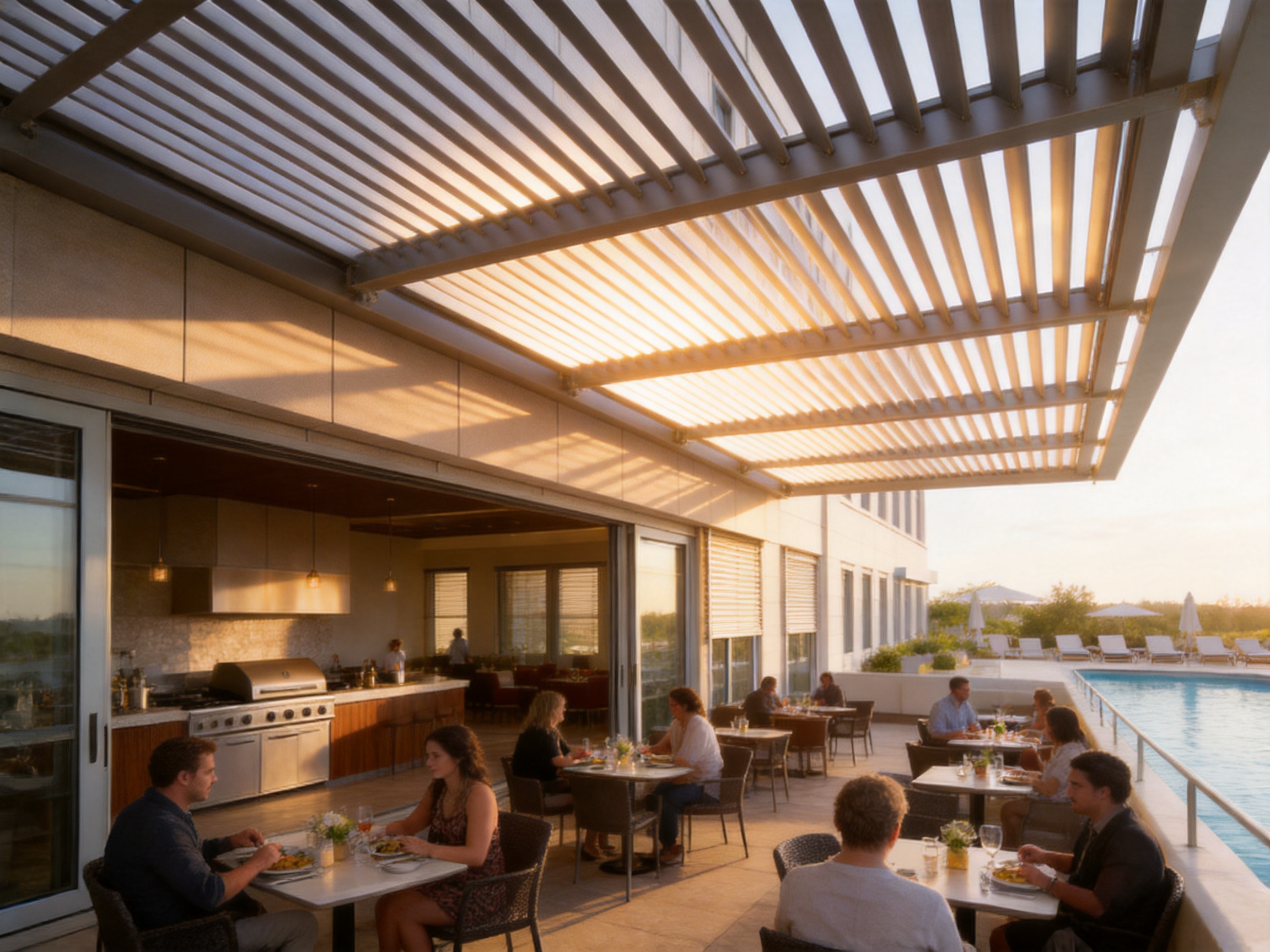
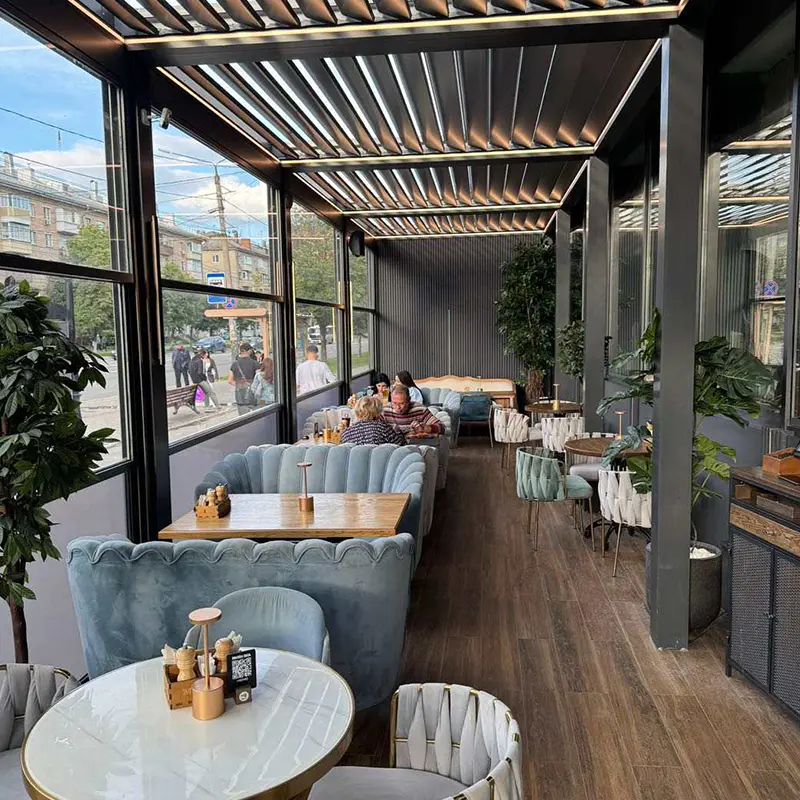
Restaurants can use motorized louvers to create additional seating capacity and improve the comfort of outdoor dining. Staff can adjust the blades according to sun position, customer requests, and changing conditions.
A well-designed louvered terrace can also strengthen a restaurant’s identity. The structure provides a defined architectural frame for lighting, signage, planting, furniture, and vertical screens. Because customer comfort influences how long guests remain in an outdoor seating area, adaptable shade can support the practical value of the space.
Hotels and Resorts
Hotels and resorts often need outdoor areas that feel comfortable, attractive, and easy to manage. Louvered roofs can be used above pool lounges, dining terraces, event areas, private cabanas, and recreational spaces.
For hospitality projects, control zoning is particularly important. A property may require separate operation for multiple terraces or different time-of-day settings. The final system should be planned with service access, staff training, cleaning, drainage, and long-term maintenance in mind.
Commercial and Sports Facilities
Commercial leisure spaces and sports venues can benefit from shade systems that create comfortable waiting, viewing, dining, and gathering areas. Motorized louvers offer more flexibility than a permanent roof when the space must support different activities and occupancy patterns.
Design Integration with Other SUNC Solutions
A louvered roof is often most effective when considered as part of a complete outdoor enclosure system. Side screens can reduce crosswind and low-angle sunlight, while glass sliding doors can create a more enclosed room when temperature or privacy requirements change.
Zip screens are especially useful as complementary elements. They can be lowered when the sun is near the horizon, when insects become a concern, or when users want greater privacy. When raised, the sides remain open and maintain a stronger connection with the landscape.
Outdoor shades and awnings can extend protection beyond the main pergola footprint. Guillotine windows can provide adjustable openings in more enclosed outdoor kitchens, restaurants, or service areas. Pergola accessories can contribute to lighting, drainage, heating, or other project functions, depending on the selected configuration.
This coordinated approach gives designers more control over the complete outdoor environment. Instead of selecting unrelated products from several sources, a project partner may obtain compatible shading and enclosure elements from a manufacturer with experience across multiple product categories.
Installation and Project Planning Considerations
Correct installation is essential for the safety, appearance, and operating life of any motorized louver system. Before ordering, the project team should confirm the site dimensions, substrate conditions, foundation requirements, access route, electrical supply, drainage route, and local permitting obligations.
The structure should be installed on a stable and appropriately prepared base. Posts may require concrete foundations, structural anchors, or connection to an existing building. The correct approach depends on the site and must be confirmed by the responsible engineer or qualified installer.
Electrical planning should include the motor, control equipment, power supply, cable routing, protection devices, and access for future service. The location of control components should be selected to reduce exposure to water and make maintenance practical.
Drainage should also be reviewed at the design stage. Depending on the roof and frame design, rainwater may be directed through integrated channels, posts, outlets, or external drainage connections. The final arrangement should prevent uncontrolled discharge onto walkways, furniture, walls, or adjacent property.
Where the louver system is installed near a building, the connection between the structure and the facade must be carefully considered. Waterproofing, thermal movement, flashing, and facade materials can affect the installation method. A professional installer should coordinate these details before work begins.
For larger commercial projects, a pre-installation review is recommended. This may include a dimension check, delivery plan, lifting or handling plan, component inventory, assembly sequence, and inspection checklist. Organized preparation can reduce installation delays and protect the finished surfaces.
Maintenance and Expected Service Life
The product information states a service life of up to 10 years under normal use. Actual service life depends on climate, operating frequency, installation quality, cleaning, maintenance, electrical protection, and exposure to unusual conditions.
Routine maintenance should include visual inspection of the blades, frame, fasteners, drainage outlets, seals, control components, and moving connections. Leaves, dirt, dust, and other debris should be removed before they accumulate in channels or interfere with movement.
The blades should be operated periodically if the system remains unused for a long time. This can help identify unusual noise, resistance, uneven movement, or control problems at an early stage. Any abnormal condition should be investigated rather than ignored.
Cleaning methods should follow the manufacturer’s recommendations. In general, harsh chemicals, abrasive tools, and aggressive pressure washing should be avoided unless specifically approved. A mild cleaning solution and soft equipment are usually more appropriate for finished aluminum surfaces.
Users should also inspect the system after severe weather. Look for displaced blades, damaged finishes, loose fasteners, blocked drainage paths, or unusual operating behavior. If damage is found, the system should be taken out of operation until it has been assessed by a qualified technician.
How to Specify the Right Configuration
Every outdoor project has different performance and design priorities. Buyers should begin by defining the intended use of the space. A private terrace, restaurant, hotel pool deck, and commercial courtyard may require different dimensions, control zones, accessories, and levels of enclosure.
The next step is to confirm the required roof size and blade width. The product supports 80 mm, 60 mm, and 50 mm blade options. The choice may influence the visual rhythm of the roof, daylight control, appearance, and compatibility with the selected frame or operating system.
Users should identify the preferred control method. Remote control may be sufficient for a single residential zone. WiFi or smart-device operation may be more suitable for a larger property or a project that requires centralized management. If multiple systems are being installed, control grouping should be established before production.
Environmental conditions should be documented. Relevant information includes local wind exposure, rainfall, humidity, proximity to the sea, temperature range, snow conditions where applicable, and the presence of industrial pollutants. These factors can influence finish selection, structural design, maintenance intervals, and installation requirements.
Finally, the buyer should request complete technical documentation. This should include approved dimensions, material information, finish details, motor and control specifications, installation instructions, warranty conditions, maintenance guidance, and any applicable test information.
Questions and Answers
What is the main purpose of the motorized outdoor louver?
The main purpose is to provide adjustable exterior shade and sunlight control. The aluminum blades rotate from 0 to 90 degrees, allowing users to manage daylight, glare, privacy, and the amount of direct solar exposure entering the covered area.
Can the louvers be operated remotely?
Yes. The product is described as supporting remote control operation. The supplied information also identifies WiFi control functionality for operation through compatible smart devices. The exact control functions should be confirmed according to the selected system configuration.
What blade widths are available?
The stated blade width options are 80 mm, 60 mm, and 50 mm. The appropriate size depends on the desired visual design, project dimensions, and approved technical configuration.
Are the blades made from aluminum?
Yes. The blades are identified as extruded aluminum alloy components with a stated thickness of 0.45 mm. The supplied information also refers to roll-edge and non-roll-edge blade forms.
How does the system help with UV exposure?
When the blades are adjusted toward a shading position, they reduce direct sunlight entering the space. This can help improve occupant comfort and reduce exposure of furniture, fabrics, and finishes to strong sunlight. The exact level of UV reduction depends on blade position, roof design, sunlight angle, and installation conditions.
Is the product suitable for restaurants and hotels?
Yes. The system is suitable for outdoor dining areas, hotel terraces, poolside spaces, commercial courtyards, and other hospitality applications. Commercial projects should receive a detailed review of dimensions, wind exposure, control zoning, drainage, electrical requirements, and maintenance access.
How long is the expected service life?
The supplied specification states a service life of up to 10 years under normal use. Actual service life depends on climate, installation, maintenance, operating frequency, and the quality of the complete system installation.
Does the wind-resistance rating apply to every installation?
No. The product information specifies Grade 8 wind resistance, but actual performance depends on the complete structure and site conditions. Engineering review, suitable anchoring, correct installation, and adherence to operating instructions are necessary.
Can the louver system be combined with screens or doors?
Yes. It can be coordinated with zip screens, outdoor shades, awnings, glass sliding doors, guillotine windows, and other pergola accessories. Combining overhead and vertical shading can improve protection from different sun angles, wind directions, and privacy conditions.
Does the manufacturer offer customization?
The company states that it provides OEM/ODM customization, 3D rendering, and project optimization services. Customization should be confirmed through project drawings and a written technical specification before production.
What should be checked before ordering?
Buyers should confirm the overall dimensions, blade width, finish, motor and control system, power requirements, drainage, wind conditions, foundation or anchoring method, accessories, delivery scope, installation requirements, warranty, and maintenance procedures.
Conclusion
Motorized outdoor louvers provide a flexible and durable approach to exterior shade control. Their adjustable aluminum blades allow users to manage sunlight, glare, privacy, and outdoor comfort more precisely than fixed roofs or simple retractable shades. With a 0–90-degree rotation range, remote operation, and WiFi-enabled smart control functionality, the system is designed for both everyday convenience and broader intelligent-shading applications.
The product’s aluminum alloy construction, available blade widths, stated Grade 8 wind resistance, and expected service life of up to 10 years under normal use make it suitable for a wide range of residential, hospitality, commercial, and leisure environments. Its benefits become even more significant when combined with compatible screens, sliding doors, awnings, outdoor kitchens, and other outdoor enclosure products.
Shanghai SUNC Intelligence Shade Technology Co., Ltd. adds value through its manufacturing base, aluminum processing capabilities, product development experience, OEM/ODM support, international supply capacity, 3D rendering, and project optimization services. These strengths can help dealers, architects, contractors, and property owners move from a basic shading requirement to a coordinated outdoor-living solution.
The best results depend on careful project planning. Site conditions, structural requirements, wind exposure, drainage, controls, electrical systems, finishes, and maintenance should all be reviewed before production and installation. When properly specified and maintained, a motorized outdoor louver system can create a more comfortable, adaptable, and visually refined outdoor environment for many years.
References
1. Manufacturer-supplied CR80 louver technical specification sheet.
2. Manufacturer-supplied product description for motorized outdoor louvers with remote control and smart WiFi operation.
3. Manufacturer-supplied information on aluminum pergola manufacturing, OEM/ODM services, project support, and product categories.
4. General architectural guidance on exterior solar shading, adjustable louvers, aluminum extrusions, and outdoor enclosure design.
5. General maintenance principles for powder-coated and finished aluminum architectural systems.
Product: Motorized Outdoor Louver with Remote Control & UV Protection Slats
-
 2026.09.11
SUNC Aluminum Louver Pergola
-
 2026.09.11
Architectural facade cover sun louver system
-
 2026.09.11
Architectural Bespoke Blinds Systems
-
 2026.09.11
SUNC Collabration Partners
-
 2026.09.11
Outdoor Umbrella
-
 2026.09.11
Pergola Roof Ideas

Recommended Products
Get A Quote
You are warmly welcome to send us your inquiry! We will provide customized quotations or solutions tailored to your specific requirements and send the details directly to your email inbox.
-
Do You Like
Get A Quote
What You See? -
Quick link
Home About SUNC Custom Design Resources Become A Dealer Contact Us -
Pergolas
Louvered Pergolas Solar Pergolas PVC Pergolas -
Product
Zip Screens Outdoor Shades Awnings Aluminum Carports Indoor Blinds Glass Sliding Doors Outdoor Kitchen Systems Guillotine Windows Pergola Accessories -
Contact Information

Vivian:+86-18101873928

+86-021-59140027

yuanyuan.wei@sunctech.cn

A-2, No. 8 Baxiu West Road, Yongfeng Street, Songjiang District, Shanghai, China


Copyright © Shanghai SUNC Intelligence Shade Technology Co., Ltd. All Rights Reserved.
