

 English
 Français
 русский
 Español
 Português
 عربى

Louvered Pergolas are versatile outdoor shading systems featuring aluminum roofs with rotating louvers that can be adjusted to control sunlight, ventilation, and rain protection. Available in motorized or manual operation, they create adaptable outdoor shelters for residential and commercial spaces.
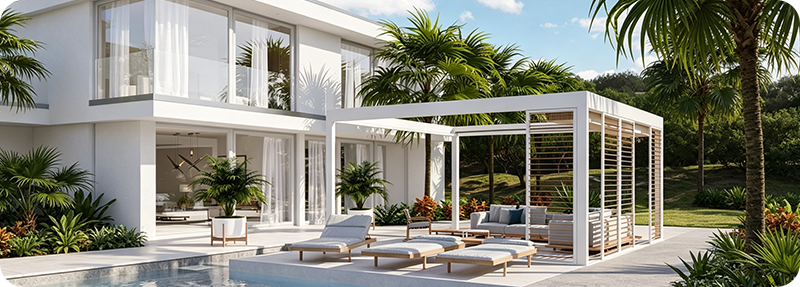
Zip Screens are outdoor screening systems with zippered side channels that keep the fabric securely tensioned, protecting against insects, wind, UV rays, and unwanted views while maintaining outdoor visibility. They create a comfortable and private environment for various outdoor spaces.
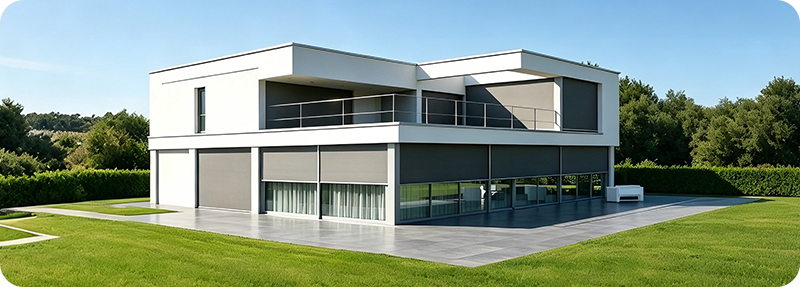
SUNC specializes in the R&D and manufacturing of high-end aluminum alloy pavilions and intelligent outdoor shading systems.
Crafted from high-strength 6063-T66 aluminum alloy, we deliver flexible, customized solutions and professional project support for residential courtyards, pool terraces, outdoor kitchens, as well as open-air dining areas of restaurants, lounge zones of boutique hotels, commercial leisure spaces and various sports venues. Our products create an all-weather, usable outdoor living experience.
Crafted from high-strength 6063-T66 aluminum alloy, we deliver flexible, customized solutions and professional project support for residential courtyards, pool terraces, outdoor kitchens, as well as open-air dining areas of restaurants, lounge zones of boutique hotels, commercial leisure spaces and various sports venues. Our products create an all-weather, usable outdoor living experience.
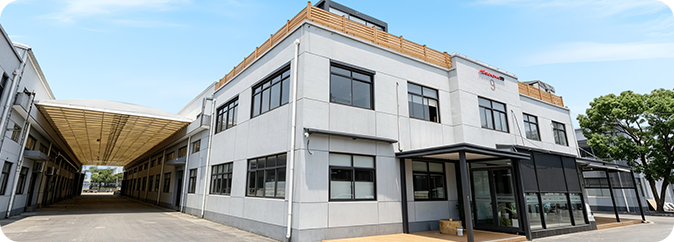
Enhance Your Qutdoor Experience.
Upgrade your pergola with smart features and premium accessories designed for year-round comfort, privacy, and functionality.
Upgrade your pergola with smart features and premium accessories designed for year-round comfort, privacy, and functionality.
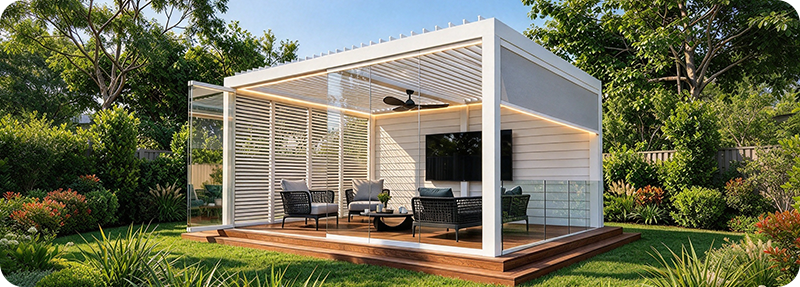
Whether it is villa courtyards, commercial terraces or outdoor leisure areas, SUNC adopts minimalist structural design and reliable sun-shading performance to help users create comfortable, tidy and high-quality outdoor living spaces.
-
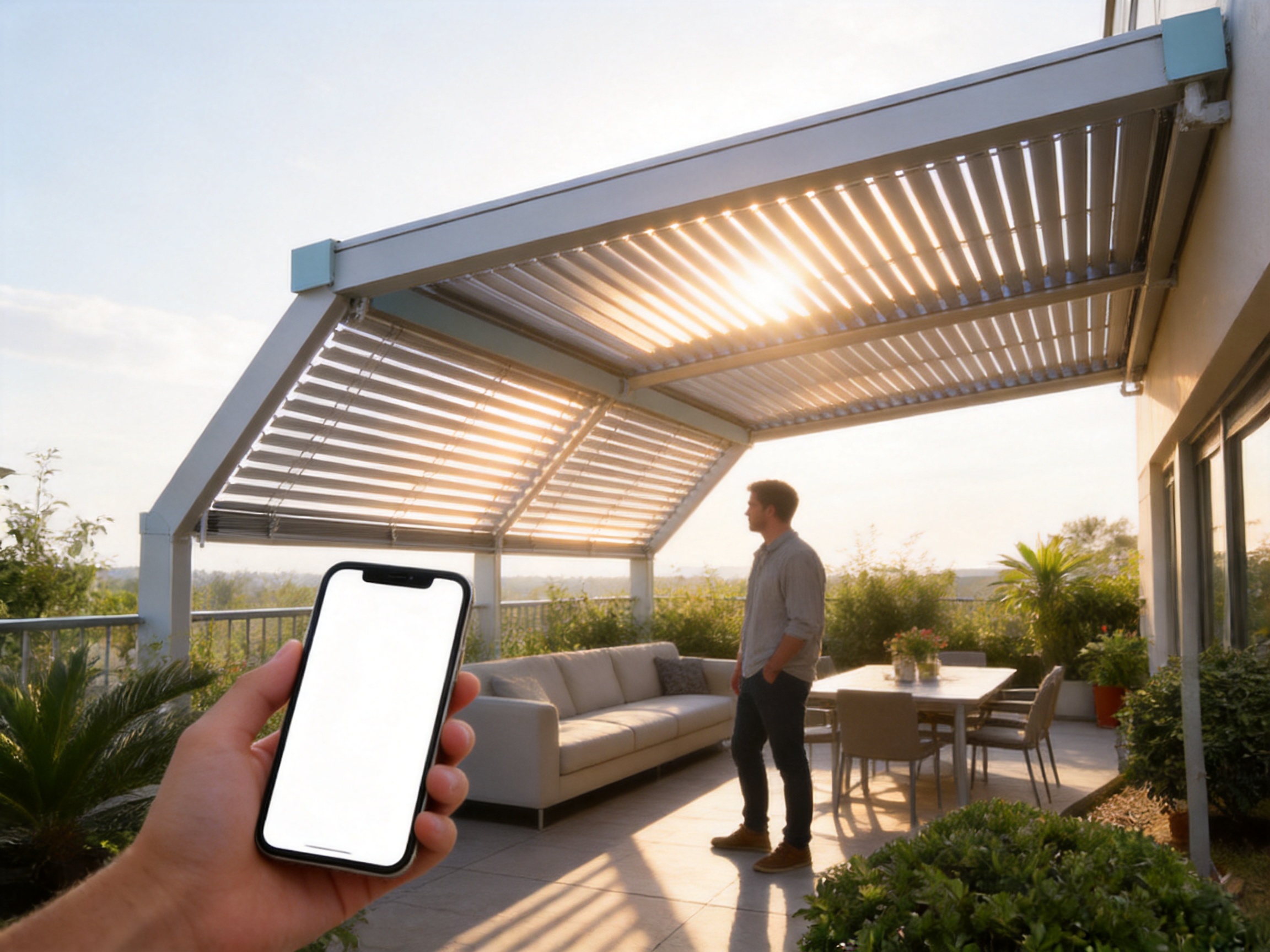 2026.11.10
Motorized Outdoor Louvers with Remote Control and UV-Protection Slats: A Practical Guide to Intelligent Exterior Shading
Outdoor living spaces are becoming an essential extension of the home, hospitality venue, restaurant, office, and commercial property. However, an attractive outdoor area must do more than provide visual appeal. It should help manage sunlight, glare, privacy, heat, and changing weather conditions while remaining simple to operate. Motorized outdoor louvers offer a practical way to achieve this balance. The motorized outdoor louver described in this article is designed around adjustable aluminum slats, remote operation, smart control convenience, and durable outdoor performance. Its blades can rotate from 0 to 90 degrees, allowing users to adjust the amount of sunlight and ventilation entering a covered or partially enclosed area. The system is suitable for pergolas, terraces, patios, poolside spaces, outdoor kitchens, restaurants, hotels, and other exterior environments where flexible shade control is important. Unlike fixed canopies or permanently closed roofs, an adjustable louver system gives users direct control over the relationship between the outdoor environment and the sheltered space. The blades can be positioned to admit daylight, reduce glare, create shade, or improve privacy. When integrated with motorized controls, this adjustment can be performed conveniently from a remote control or compatible smart device, depending on the selected configuration. The product is supported by Shanghai SUNC Intelligence Shade Technology Co., Ltd., a manufacturer focused on aluminum-alloy outdoor structures and intelligent shading systems. The company combines product development, aluminum fabrication, customization, project support, and international supply capabilities. Its broader product portfolio includes aluminum pergolas, louvered roof systems, zip screens, outdoor shades, awnings, glass sliding doors, outdoor kitchen systems, guillotine windows, and related accessories. Motorized Outdoor Louver with Remote Control & UV Protection Slats What Is a Motorized Outdoor Louver System? A motorized outdoor louver system is an exterior shading structure fitted with movable horizontal blades. These blades are connected to an operating mechanism that allows them to rotate through a defined angle. In this model, the specified blade rotation range is 0–90 degrees. At one position, the blades can create a more open configuration that allows daylight and air movement. At another position, they can overlap or align to provide stronger shade and improved protection from direct sunlight. Intermediate angles provide gradual adjustment rather than forcing users to choose between completely open and completely closed conditions. The motorized function is particularly valuable for large outdoor installations. Manually adjusting a roof or series of louvers can be inconvenient, especially when the structure is installed above a dining area, pool terrace, or commercial seating zone. A motorized system allows the user to adjust the blades without climbing, reaching, or physically operating each section. Remote control operation supports immediate adjustment from within the shaded area. The product information also identifies WiFi control functionality, enabling operation and shading management through smart devices when the appropriate smart control configuration is included. This creates a more convenient user experience and can make the system easier to integrate into modern outdoor living projects. The system is based on aluminum alloy extrusion. The supplied specifications identify the blades as aluminum alloy extrusions formed with a roll edge and a non-roll edge. This construction approach provides a defined blade profile, supports consistent production, and contributes to the clean appearance expected from contemporary architectural shading systems. Core Product Specifications The following table summarizes the principal technical information supplied for the CR80 louver configuration. Final project specifications should always be confirmed against the approved quotation, engineering drawings, and installation documentation. Specification Provided Information Product type Motorized outdoor louver system Blade rotation 0–90 degrees Blade width options 80 mm, 60 mm, and 50 mm Blade thickness 0.45 mm Blade material Extruded aluminum alloy Blade profile Roll-edge and non-roll-edge forms are available according to the specified profile Wind resistance Grade 8, according to the supplied product information Reference whole weight Approximately 4 kg for a 1000 mm × 1000 mm reference section Stated service life Up to 10 years under normal use Control options Remote control operation and WiFi-enabled smart control function Primary applications Pergolas, patios, terraces, outdoor kitchens, restaurants, hotels, pool areas, and commercial outdoor spaces The supplied information also gives a blade weight range of approximately 95–110 g per stated unit of length or area, depending on the blade type. Because technical documents may use different measurement conventions, buyers should confirm the exact unit and calculation method with the manufacturer before comparing component weights between suppliers. Flexible Control of Sunlight and Glare The central advantage of an adjustable louver is the ability to control sunlight with precision. A fixed roof may provide consistent shade, but it can also make an outdoor room feel dark or disconnected from the sky. A fully open roof can provide daylight, but it may expose occupants to excessive glare and heat. Adjustable louvers occupy the space between these two extremes. With a 0–90-degree rotation range, users can select an angle appropriate to the time of day, season, activity, and weather conditions. In the morning, the blades may be adjusted to admit soft daylight. Around midday, they can be positioned to reduce direct solar exposure. In the late afternoon, the angle can be changed again to control low-angle glare. This flexibility is useful for dining areas and outdoor kitchens. Strong sunlight can make it difficult to read menus, prepare food, use digital screens, or enjoy a meal comfortably. By changing the blade angle, users can reduce visual discomfort without completely blocking daylight. The same principle applies to residential terraces and poolside spaces. Louvers can help define different comfort zones during the day, allowing one area to remain brighter while another receives deeper shade. This provides more control than a fixed awning or a fabric shade that is either extended or retracted. Adjustable slats may also support privacy management. When neighboring buildings, roads, or elevated viewpoints overlook a terrace, the louver angle can be changed to reduce direct lines of sight. This does not make the space completely enclosed, but it can create a more private and comfortable atmosphere. Advantages of UV-Protection Slats Direct ultraviolet exposure can affect people, outdoor furniture, flooring, fabrics, decorative finishes, and certain equipment. A louver system with aluminum slats helps reduce the amount of direct solar radiation entering the covered zone when the blades are adjusted toward a shading position. UV protection is especially important for outdoor dining and hospitality projects. Upholstered seating, cushions, table finishes, signage, and decorative materials can fade or deteriorate when exposed to strong sunlight for extended periods. By managing solar exposure, adjustable louvers can contribute to a more stable environment for furnishings and finishes. For residential users, the system can help make terraces more usable during the brightest parts of the day. It can also reduce the contrast between bright exterior conditions and shaded interior-adjacent spaces, creating a more comfortable transition between indoor and outdoor areas. The aluminum blades themselves are well suited to exterior applications because aluminum alloy is lightweight, corrosion resistant, and capable of being formed into consistent architectural profiles. The product information identifies a 0.45 mm blade thickness and an extruded aluminum alloy construction. The exact finish, coating, color, and surface treatment should be specified for each project according to local environmental conditions and design requirements. Durable Aluminum Construction Material selection is one of the most important differences between a dependable outdoor louver system and a short-term shading product. Exterior components must withstand repeated movement, temperature changes, humidity, sunlight, and exposure to airborne contaminants. Aluminum alloy is widely used in architectural applications because it combines low weight with useful structural and corrosion-resistant properties. The company identifies high-strength 6063-T66 aluminum alloy as a material used in its aluminum-alloy outdoor structures. This alloy family is commonly associated with architectural extrusions because it can provide a balance of formability, surface quality, and mechanical performance. The specific alloy and temper used for each component should be verified in the final technical documentation. Extrusion allows a profile to be formed with a controlled cross-section. This is important for louver blades because the blade must perform several functions simultaneously. It needs to present a clean visible surface, connect correctly with operating components, rotate consistently, and help direct water or sunlight according to its profile. The stated roll-edge and non-roll-edge blade options provide flexibility for different construction and design requirements. Different profiles can influence the visual line of the roof, the relationship between adjacent blades, and the way the system is coordinated with frames, gutters, screens, and other accessories. Aluminum construction also helps reduce the operating load compared with heavier materials. A lower component weight can be beneficial when the louver mechanism is required to move multiple blades repeatedly. It can also simplify handling during installation, although the total weight of the complete roof or pergola must be evaluated separately from the reference weight of an individual section. Motorized Convenience for Residential and Commercial Projects Convenience is a major reason to choose motorized louvers over manual exterior shading. A manually operated roof may be acceptable for a very small installation, but operation becomes more difficult as the structure increases in size or height. Motorization allows the system to be adjusted from a practical standing or seated position. Remote control operation is useful for everyday changes. A homeowner can adjust the roof before dining outdoors, close the louvers when sunlight becomes intense, or reopen them when natural light is preferred. In a hospitality setting, staff can change the roof position efficiently without interrupting guests or moving furniture. WiFi control adds another layer of convenience. When configured with compatible smart control equipment, users can manage the louvers through a smart device. This may be helpful for properties where the outdoor area is connected to a broader home automation or building management system. Smart control can also support more organized operation across multiple zones. A large restaurant terrace, hotel pool area, or commercial courtyard may contain several louver sections. The control arrangement should be planned in advance so that each section can be operated independently, in groups, or through a centralized interface where appropriate. The exact smart functions depend on the motor, control system, power supply, communication method, and project configuration selected. Buyers should request confirmation of compatibility, operating range, control grouping, emergency operation, and maintenance procedures before placing an order. Wind Performance and Outdoor Reliability The product information specifies Grade 8 wind resistance. This indicates that wind performance is an important part of the product design. Nevertheless, wind ratings should not be interpreted as a universal guarantee for every installation. Actual performance depends on the overall structure, dimensions, anchoring system, surrounding buildings, installation quality, blade position, and local wind conditions. Outdoor louver systems should be engineered according to the intended location. A freestanding pergola in an exposed coastal area may experience very different forces from a louver installed against a building in a protected courtyard. Roof size, post spacing, beam configuration, foundation conditions, and connection details all influence structural behavior. Users should follow the manufacturer’s operating instructions during severe weather. Depending on the project design and local conditions, the louvers may need to be placed in a specified position when strong wind is expected. A wind sensor, weather-control module, or other protective accessory may be considered where automated response is required. Wind resistance is therefore best understood as one component of a complete system evaluation. The aluminum blades, drive mechanism, supporting beams, posts, fasteners, drainage elements, and foundations must work together. Professional installation and accurate site assessment remain essential. Comparing Motorized Louvers with Common Competitor Solutions Outdoor shading products vary widely in their operating method, material, adaptability, and durability. The motorized louver system offers several advantages over fixed roofs, fabric awnings, roller shades, and manually operated louvers. Compared with Fixed Roofs A fixed roof provides permanent coverage, but it does not allow users to adjust daylight or ventilation. It may create a darker area than desired in the morning or evening, while still allowing unwanted heat buildup during bright periods if it is made from a transparent or lightly shaded material. Motorized louvers provide more control. The blades can be opened to improve daylight and create a stronger visual connection with the sky, or closed toward a shading position when glare and direct sunlight become uncomfortable. This adaptability is a significant advantage for spaces used throughout the day. Compared with Fabric Awnings Fabric awnings can provide attractive shade and are available in many colors. However, fabric can be vulnerable to staining, fading, stretching, moisture retention, and damage from wind or prolonged exposure. The service life and appearance of fabric products may vary considerably depending on quality and maintenance. Aluminum louvers offer a more architectural and permanent appearance. They are not dependent on a flexible textile membrane and can be integrated with frames, screens, sliding doors, and outdoor room systems. Their rigid slats also provide a more structured visual design for modern residential and commercial projects. Compared with Manual Louvers Manual louvers may have a lower initial equipment cost in some applications, but they can be inconvenient to adjust, especially when installed over a large area. Motorized operation improves ease of use and makes frequent adjustment more realistic. Remote and smart control also make the system more accessible for users with limited mobility. In commercial settings, motorization can reduce the time required to manage several shaded areas and help staff maintain a consistent guest environment. Compared with Simple Roller Shades Roller shades and zip screens are valuable accessories for controlling low-angle sunlight, insects, wind, and privacy at the sides of a structure. However, they do not replace the roof-level control offered by adjustable louvers. A louvered roof manages sunlight from above, while vertical screens address exposure from the sides. The strongest outdoor living designs may combine both systems. For example, motorized louvers can provide overhead shade while zip screens or glass sliding doors create additional enclosure when the wind, temperature, or privacy conditions change. Manufacturing Strengths and Production Capabilities Product performance is influenced not only by the design but also by the manufacturer’s ability to control materials, fabrication, assembly, inspection, packaging, and technical support. Shanghai SUNC Intelligence Shade Technology Co., Ltd. states that it specializes in the research, development, and manufacturing of aluminum-alloy pavilions and intelligent outdoor shading systems. The company was established in 2008 and operates an approximately 8,000-square-meter manufacturing base. According to the supplied company information, it offers more than 20 product types and produces over 100,000 aluminum pergola sets annually. It also exports to more than 30 countries and regions. These capabilities are relevant to international buyers because outdoor shading projects often require more than a standard product. Dealers, contractors, architects, and property developers may need assistance with dimensions, layouts, finishes, control zones, drainage, accessories, packaging, and installation planning. A manufacturer with a broad product range can coordinate related systems through one supply chain. A project may combine aluminum pergolas, motorized louver roofs, zip screens, awnings, glass sliding doors, outdoor kitchens, guillotine windows, and lighting or drainage accessories. Coordinating these elements can simplify design communication and reduce the risk of incompatible components. Research and Development Research and development are important in intelligent shading because the product must combine mechanical movement, architectural appearance, weather performance, and user-friendly control. The blade profile, frame design, operating mechanism, drainage arrangement, and control interface must work together rather than being developed as isolated parts. Continuous product development can also support different market requirements. A residential terrace may prioritize appearance and quiet operation, while a restaurant may prioritize daily cycling, service access, and easy zone management. A hotel or commercial project may require custom dimensions, branded finishes, integrated screens, and detailed installation documentation. Aluminum Processing Aluminum extrusion and related fabrication processes allow the manufacturer to create repeatable profiles for blades, beams, posts, frames, and accessory components. Consistent profile dimensions are important for assembly accuracy and the smooth movement of the louver blades. Processing may include cutting, drilling, machining, surface finishing, component preparation, and assembly. Although the precise production sequence depends on the ordered configuration, a controlled manufacturing workflow helps reduce variation between batches and supports more predictable project installation. Customization and OEM/ODM Support The company provides OEM and ODM customization support. For dealers and project partners, this can be valuable when a standard catalog configuration does not fully match the market or project requirements. Customization may involve dimensions, colors, blade options, control arrangements, accessories, packaging, documentation, or product presentation. Customization should be managed through approved drawings and written specifications. Important items include overall dimensions, post and beam positions, blade width, blade profile, finish, drainage direction, motor location, control type, electrical requirements, wind conditions, and connection details. 3D Rendering and Project Optimization Outdoor structures affect the appearance and function of a property. The company identifies 3D rendering and project optimization as part of its service capabilities. Visual planning can help clients understand how the louver system will relate to a building facade, pool, garden, terrace, outdoor kitchen, or commercial seating arrangement. Project optimization may also identify opportunities to improve post locations, roof proportions, drainage, screen integration, circulation space, and furniture placement. Such coordination is particularly important when the louver system is being added to an existing building or when several outdoor products must be combined. Applications Across Different Outdoor Environments Residential Courtyards and Terraces For residential users, motorized outdoor louvers can transform an underused patio into a more flexible living area. The space may serve as a dining room, lounge, play area, entertainment zone, or quiet retreat depending on the time of day. Adjustable shade enables the area to be used in a wider range of sunlight conditions. Homeowners can coordinate the roof with outdoor furniture, lighting, heaters, screens, and sliding doors. The aluminum structure also provides a contemporary architectural element that can complement modern, minimalist, industrial, or resort-inspired designs. Poolside Areas Pool terraces often experience intense sunlight and glare from water surfaces. Motorized louvers can provide a shaded area for resting, changing, dining, or supervising children while still allowing users to open the roof when a brighter atmosphere is preferred. Because poolside locations may have increased humidity and exposure to cleaning chemicals or salt, buyers should discuss the appropriate finish, corrosion protection, fasteners, and maintenance requirements for the specific site. Outdoor Kitchens Outdoor kitchens benefit from overhead shade because cooking and food preparation can become uncomfortable under direct sunlight. A louvered roof can help define the kitchen zone while maintaining an open-air atmosphere. The roof should be coordinated with ventilation, smoke management, lighting, electrical equipment, plumbing, cabinetry, and appliance clearances. The louver system itself should not be treated as a replacement for purpose-designed exhaust equipment where cooking creates significant heat or smoke. Restaurants and Cafés Restaurants can use motorized louvers to create additional seating capacity and improve the comfort of outdoor dining. Staff can adjust the blades according to sun position, customer requests, and changing conditions. A well-designed louvered terrace can also strengthen a restaurant’s identity. The structure provides a defined architectural frame for lighting, signage, planting, furniture, and vertical screens. Because customer comfort influences how long guests remain in an outdoor seating area, adaptable shade can support the practical value of the space. Hotels and Resorts Hotels and resorts often need outdoor areas that feel comfortable, attractive, and easy to manage. Louvered roofs can be used above pool lounges, dining terraces, event areas, private cabanas, and recreational spaces. For hospitality projects, control zoning is particularly important. A property may require separate operation for multiple terraces or different time-of-day settings. The final system should be planned with service access, staff training, cleaning, drainage, and long-term maintenance in mind. Commercial and Sports Facilities Commercial leisure spaces and sports venues can benefit from shade systems that create comfortable waiting, viewing, dining, and gathering areas. Motorized louvers offer more flexibility than a permanent roof when the space must support different activities and occupancy patterns. Design Integration with Other SUNC Solutions A louvered roof is often most effective when considered as part of a complete outdoor enclosure system. Side screens can reduce crosswind and low-angle sunlight, while glass sliding doors can create a more enclosed room when temperature or privacy requirements change. Zip screens are especially useful as complementary elements. They can be lowered when the sun is near the horizon, when insects become a concern, or when users want greater privacy. When raised, the sides remain open and maintain a stronger connection with the landscape. Outdoor shades and awnings can extend protection beyond the main pergola footprint. Guillotine windows can provide adjustable openings in more enclosed outdoor kitchens, restaurants, or service areas. Pergola accessories can contribute to lighting, drainage, heating, or other project functions, depending on the selected configuration. This coordinated approach gives designers more control over the complete outdoor environment. Instead of selecting unrelated products from several sources, a project partner may obtain compatible shading and enclosure elements from a manufacturer with experience across multiple product categories. Installation and Project Planning Considerations Correct installation is essential for the safety, appearance, and operating life of any motorized louver system. Before ordering, the project team should confirm the site dimensions, substrate conditions, foundation requirements, access route, electrical supply, drainage route, and local permitting obligations. The structure should be installed on a stable and appropriately prepared base. Posts may require concrete foundations, structural anchors, or connection to an existing building. The correct approach depends on the site and must be confirmed by the responsible engineer or qualified installer. Electrical planning should include the motor, control equipment, power supply, cable routing, protection devices, and access for future service. The location of control components should be selected to reduce exposure to water and make maintenance practical. Drainage should also be reviewed at the design stage. Depending on the roof and frame design, rainwater may be directed through integrated channels, posts, outlets, or external drainage connections. The final arrangement should prevent uncontrolled discharge onto walkways, furniture, walls, or adjacent property. Where the louver system is installed near a building, the connection between the structure and the facade must be carefully considered. Waterproofing, thermal movement, flashing, and facade materials can affect the installation method. A professional installer should coordinate these details before work begins. For larger commercial projects, a pre-installation review is recommended. This may include a dimension check, delivery plan, lifting or handling plan, component inventory, assembly sequence, and inspection checklist. Organized preparation can reduce installation delays and protect the finished surfaces. Maintenance and Expected Service Life The product information states a service life of up to 10 years under normal use. Actual service life depends on climate, operating frequency, installation quality, cleaning, maintenance, electrical protection, and exposure to unusual conditions. Routine maintenance should include visual inspection of the blades, frame, fasteners, drainage outlets, seals, control components, and moving connections. Leaves, dirt, dust, and other debris should be removed before they accumulate in channels or interfere with movement. The blades should be operated periodically if the system remains unused for a long time. This can help identify unusual noise, resistance, uneven movement, or control problems at an early stage. Any abnormal condition should be investigated rather than ignored. Cleaning methods should follow the manufacturer’s recommendations. In general, harsh chemicals, abrasive tools, and aggressive pressure washing should be avoided unless specifically approved. A mild cleaning solution and soft equipment are usually more appropriate for finished aluminum surfaces. Users should also inspect the system after severe weather. Look for displaced blades, damaged finishes, loose fasteners, blocked drainage paths, or unusual operating behavior. If damage is found, the system should be taken out of operation until it has been assessed by a qualified technician. How to Specify the Right Configuration Every outdoor project has different performance and design priorities. Buyers should begin by defining the intended use of the space. A private terrace, restaurant, hotel pool deck, and commercial courtyard may require different dimensions, control zones, accessories, and levels of enclosure. The next step is to confirm the required roof size and blade width. The product supports 80 mm, 60 mm, and 50 mm blade options. The choice may influence the visual rhythm of the roof, daylight control, appearance, and compatibility with the selected frame or operating system. Users should identify the preferred control method. Remote control may be sufficient for a single residential zone. WiFi or smart-device operation may be more suitable for a larger property or a project that requires centralized management. If multiple systems are being installed, control grouping should be established before production. Environmental conditions should be documented. Relevant information includes local wind exposure, rainfall, humidity, proximity to the sea, temperature range, snow conditions where applicable, and the presence of industrial pollutants. These factors can influence finish selection, structural design, maintenance intervals, and installation requirements. Finally, the buyer should request complete technical documentation. This should include approved dimensions, material information, finish details, motor and control specifications, installation instructions, warranty conditions, maintenance guidance, and any applicable test information. Questions and Answers What is the main purpose of the motorized outdoor louver? The main purpose is to provide adjustable exterior shade and sunlight control. The aluminum blades rotate from 0 to 90 degrees, allowing users to manage daylight, glare, privacy, and the amount of direct solar exposure entering the covered area. Can the louvers be operated remotely? Yes. The product is described as supporting remote control operation. The supplied information also identifies WiFi control functionality for operation through compatible smart devices. The exact control functions should be confirmed according to the selected system configuration. What blade widths are available? The stated blade width options are 80 mm, 60 mm, and 50 mm. The appropriate size depends on the desired visual design, project dimensions, and approved technical configuration. Are the blades made from aluminum? Yes. The blades are identified as extruded aluminum alloy components with a stated thickness of 0.45 mm. The supplied information also refers to roll-edge and non-roll-edge blade forms. How does the system help with UV exposure? When the blades are adjusted toward a shading position, they reduce direct sunlight entering the space. This can help improve occupant comfort and reduce exposure of furniture, fabrics, and finishes to strong sunlight. The exact level of UV reduction depends on blade position, roof design, sunlight angle, and installation conditions. Is the product suitable for restaurants and hotels? Yes. The system is suitable for outdoor dining areas, hotel terraces, poolside spaces, commercial courtyards, and other hospitality applications. Commercial projects should receive a detailed review of dimensions, wind exposure, control zoning, drainage, electrical requirements, and maintenance access. How long is the expected service life? The supplied specification states a service life of up to 10 years under normal use. Actual service life depends on climate, installation, maintenance, operating frequency, and the quality of the complete system installation. Does the wind-resistance rating apply to every installation? No. The product information specifies Grade 8 wind resistance, but actual performance depends on the complete structure and site conditions. Engineering review, suitable anchoring, correct installation, and adherence to operating instructions are necessary. Can the louver system be combined with screens or doors? Yes. It can be coordinated with zip screens, outdoor shades, awnings, glass sliding doors, guillotine windows, and other pergola accessories. Combining overhead and vertical shading can improve protection from different sun angles, wind directions, and privacy conditions. Does the manufacturer offer customization? The company states that it provides OEM/ODM customization, 3D rendering, and project optimization services. Customization should be confirmed through project drawings and a written technical specification before production. What should be checked before ordering? Buyers should confirm the overall dimensions, blade width, finish, motor and control system, power requirements, drainage, wind conditions, foundation or anchoring method, accessories, delivery scope, installation requirements, warranty, and maintenance procedures. Conclusion Motorized outdoor louvers provide a flexible and durable approach to exterior shade control. Their adjustable aluminum blades allow users to manage sunlight, glare, privacy, and outdoor comfort more precisely than fixed roofs or simple retractable shades. With a 0–90-degree rotation range, remote operation, and WiFi-enabled smart control functionality, the system is designed for both everyday convenience and broader intelligent-shading applications. The product’s aluminum alloy construction, available blade widths, stated Grade 8 wind resistance, and expected service life of up to 10 years under normal use make it suitable for a wide range of residential, hospitality, commercial, and leisure environments. Its benefits become even more significant when combined with compatible screens, sliding doors, awnings, outdoor kitchens, and other outdoor enclosure products. Shanghai SUNC Intelligence Shade Technology Co., Ltd. adds value through its manufacturing base, aluminum processing capabilities, product development experience, OEM/ODM support, international supply capacity, 3D rendering, and project optimization services. These strengths can help dealers, architects, contractors, and property owners move from a basic shading requirement to a coordinated outdoor-living solution. The best results depend on careful project planning. Site conditions, structural requirements, wind exposure, drainage, controls, electrical systems, finishes, and maintenance should all be reviewed before production and installation. When properly specified and maintained, a motorized outdoor louver system can create a more comfortable, adaptable, and visually refined outdoor environment for many years. References 1. Manufacturer-supplied CR80 louver technical specification sheet. 2. Manufacturer-supplied product description for motorized outdoor louvers with remote control and smart WiFi operation. 3. Manufacturer-supplied information on aluminum pergola manufacturing, OEM/ODM services, project support, and product categories. 4. General architectural guidance on exterior solar shading, adjustable louvers, aluminum extrusions, and outdoor enclosure design. 5. General maintenance principles for powder-coated and finished aluminum architectural systems. Product: Motorized Outdoor Louver with Remote Control & UV Protection Slats .profile-card { display: flex; align-items: flex-start; gap: 2rem; background-color: white; padding: 2rem; border-radius: 12px; box-shadow: 0 2px 10px rgba(0,0,0,0.05); } .profile-avatar { width: 120px; height: 120px; border-radius: 50%; overflow: hidden; flex-shrink: 0; } .profile-avatar img { width: 100%; height: 100%; object-fit: cover; display: block; } .profile-info { flex-grow: 1; } .profile-name { font-size:27px; font-weight: 900; margin-bottom: 1rem; color: #1a1a1a; } .profile-bio { line-height: 1.6; color: #333; } @media (max-width: 600px) { .profile-card { flex-direction: column; align-items: center; text-align: center; gap: 1.5rem; } } Zhao Yutong — Technical Support Specialist With six years of experience supporting customized outdoor construction projects, she provides product selection advice, 3D rendering coordination, installation documentation, and after-sales solutions for residential, hospitality, and commercial applications. -
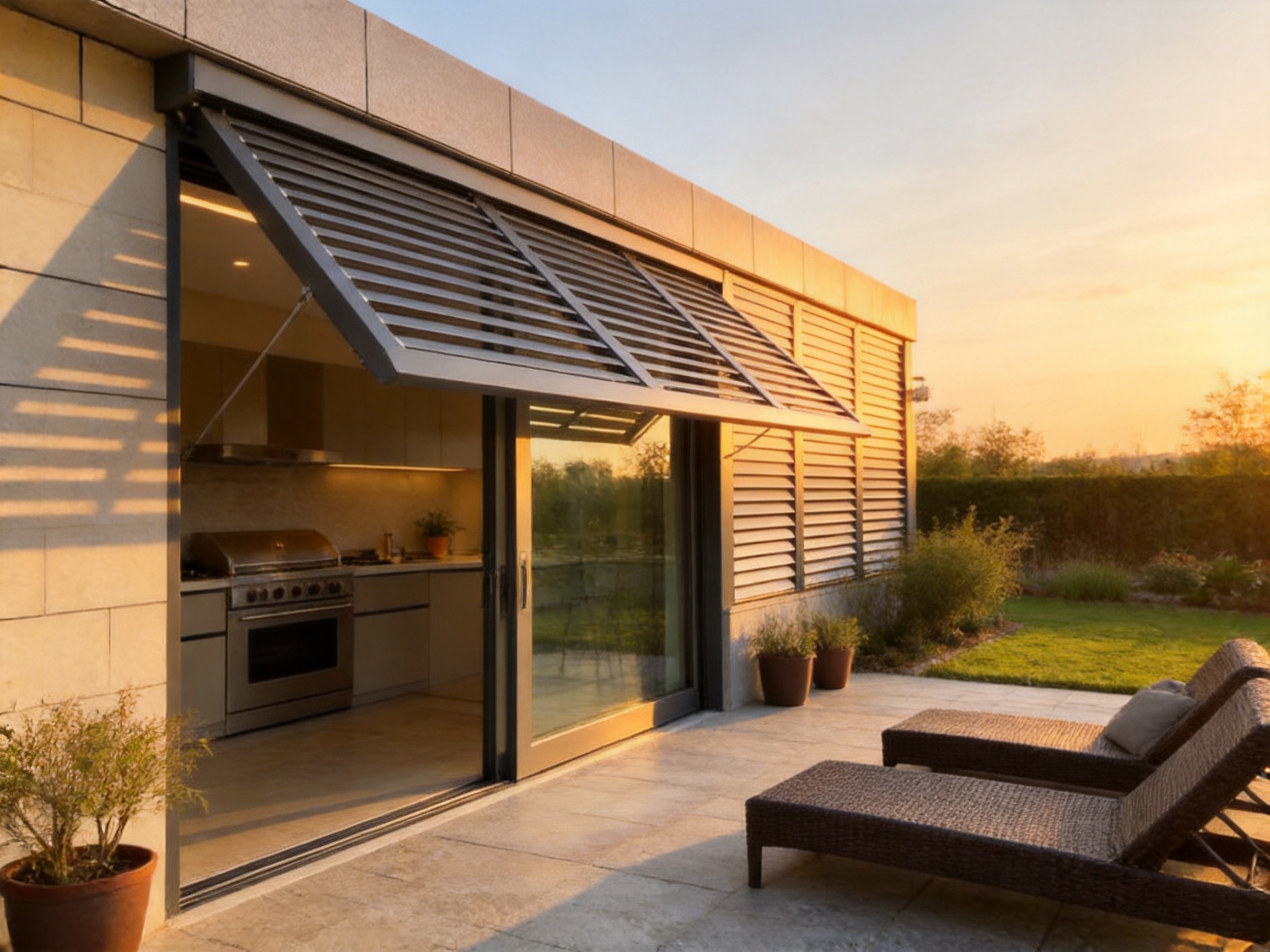 2026.11.06
Electric Outdoor Louvers with Adjustable Patio Window Control: A Complete Guide to Performance, Design, and Manufacturing Quality
Outdoor living spaces increasingly require more than simple shade. Homeowners, architects, hospitality operators, and commercial developers want systems that can control sunlight, reduce heat, protect interiors from changing weather, and preserve a clean architectural appearance. Electric outdoor louvers with adjustable patio window control address these needs by combining movable aluminum blades, weather-resistant construction, and automated operation in one adaptable system. The F125 electric outdoor louver is designed for applications where flexible daylight management, ventilation, privacy, and weather protection are important. Its adjustable blades rotate from 0° to 90°, allowing users to modify the amount of sunlight and visual exposure entering a patio, enclosed terrace, balcony, sunroom, outdoor kitchen, or other semi-outdoor area. When the blades are closed, the system creates a more sheltered environment. When they are opened or partially tilted, the louver helps introduce daylight and airflow while maintaining a degree of solar control. Unlike fixed architectural screens, the F125 can respond to changing conditions throughout the day. Unlike fabric shades, it provides a rigid aluminum barrier with a more permanent appearance and strong resistance to outdoor exposure. Its waterproof push-rod DC motor supports convenient electric adjustment, while a manual operating option provides flexibility for projects with different control requirements. This article examines the product’s construction, technical performance, operating advantages, installation possibilities, manufacturing background, customization potential, and suitability for different projects. It also explains why a carefully engineered aluminum louver can offer important advantages over lower-cost or less integrated alternatives. Electric Outdoor Louver with Adjustable Patio Window Control What Is an Electric Outdoor Louver? An electric outdoor louver is a movable shading and screening system made from horizontal aluminum blades mounted within a structural frame. The blades rotate around their individual axes, changing their angle in response to manual or motorized control. This movement enables the system to regulate daylight, heat, visibility, ventilation, and weather exposure more effectively than a fixed screen. The F125 model uses a 125 mm wide aluminum blade with a specified blade profile of 125×13.6×1.0 mm. The profile is engineered to combine a practical shading surface with a relatively streamlined visual appearance. The blades are installed between side rails and connected to an operating mechanism that allows synchronized adjustment. The system is intended for outdoor and semi-outdoor architectural openings. Typical applications include patio windows, balcony enclosures, pergola sides, outdoor dining areas, pool terraces, garden rooms, restaurant extensions, hotel terraces, and outdoor kitchens. It can also be used as part of a larger intelligent shading solution alongside pergolas, zip screens, glass sliding doors, indoor blinds, and other architectural products. Because the louver is adjustable, it can provide different functions at different times. During bright midday conditions, the blades can be positioned to limit direct solar radiation. During cooler periods, they can be opened to improve daylight and visual connection with the surrounding landscape. In the evening, closed blades can enhance privacy and create a more enclosed atmosphere. Core Product Specifications The F125 system is manufactured from aluminum alloy 6063-T5. This alloy is widely used in architectural applications because it offers a useful balance of corrosion resistance, formability, surface quality, and structural performance. The material is suitable for extrusion-based profiles and can be finished for use in a range of architectural environments. Product Item Specification Product Type Electric outdoor adjustable louver Blade Specification 125×13.6×1.0 mm Side Rail Specification 80×61×1.2 mm Upper Rail Specification 48×59×1.0 mm Lower Rail Specification 48×59×1.0 mm Overall Material Aluminum alloy 6063-T5 Maximum Dimension per Set Width up to 1500 mm; length up to 3000 mm Motor Waterproof push-rod DC motor Control Mode Electric or manual Blade Rotation 0°–90° Installation Options Top installation or facade installation The stated maximum dimensions help define the practical design range for a single set. Larger openings may be divided into multiple coordinated units, depending on the project layout, structural conditions, control strategy, and architectural requirements. Early consultation is recommended when the system is required to cover unusually wide or tall openings. Adjustable Daylight and Solar Control One of the principal benefits of the F125 louver is its adjustable light-control function. A blade rotation range of 0° to 90° allows the user to select a position between open and closed. This is more versatile than a fixed screen because the shading level can be changed as the sun moves across the sky. At a more open angle, the system permits greater daylight penetration and maintains a stronger visual connection between the interior and exterior. At a more closed angle, the blades reduce direct light and limit glare. Fully closed blades can create a more private and sheltered environment for occupants. Adjustable shading is valuable in spaces where lighting conditions change frequently. A restaurant terrace may require a bright, open atmosphere in the morning, moderate glare reduction at lunchtime, and increased privacy during evening service. A residential patio may be opened for a clear view of the garden and closed when the sun becomes intense. A hotel terrace may need several different shade positions depending on guest activity and weather conditions. The louver does not need to remain in only two positions. Intermediate angles allow the user to make gradual adjustments. This helps avoid the abrupt contrast between complete exposure and complete enclosure found in some fixed or binary shading systems. By reducing direct solar exposure before heat reaches the enclosed space, an adjustable louver may also support a more comfortable indoor or semi-outdoor temperature. Its performance will depend on orientation, climate, glazing, surrounding structures, ventilation, and installation quality, but the ability to adjust the blades provides a practical method for responding to local conditions. Thermal Protection and Energy Considerations The F125 uses double-layer hollow aluminum blades with sealing strips. This construction is intended to improve insulation compared with a basic single-layer blade. The hollow internal structure creates a separated profile, while the sealing elements help reduce uncontrolled air movement and improve contact between adjoining components when the blades are closed. Outdoor louvers cannot replace a complete building envelope, and their exact thermal results depend on the complete project design. Nevertheless, external shading can play an important role in controlling heat gain. When direct sunlight is moderated before it reaches patio glazing or an enclosed opening, the cooling load in the associated space may be reduced. This is particularly relevant for glass-covered patios, sunrooms, outdoor kitchens with enclosed sections, and commercial spaces that use large glazed openings. Uncontrolled solar radiation can increase interior temperatures, cause visual discomfort, and place additional demand on air-conditioning equipment. Adjustable louvers allow the operator to react to these conditions without permanently blocking daylight. The thermal value of the system is also connected to the quality of the surrounding frame, drainage, sealing, and installation. A well-designed opening should consider the relationship between the louver, adjacent walls, glass sliding doors, roof systems, and any other shading products. When the components are coordinated, the system can contribute to a more comfortable and energy-conscious outdoor living environment. Weather Protection in Outdoor Applications Outdoor shading products must withstand exposure to rain, wind, sunlight, dust, humidity, and temperature changes. The F125 includes waterproof grooves and sealing structures designed to help block rain, wind, and dust when the blades are fully closed. When rain begins, the blades can be adjusted toward the closed position to create a more protected area. This can be useful for outdoor dining, residential patios, poolside seating, and hospitality spaces where users do not want to abandon the area immediately after a weather change. The louver can help reduce direct rain entry, although the final level of weather protection depends on the opening orientation, drainage design, wind conditions, adjacent roof structures, and local rainfall intensity. Water management should be considered during project planning. The structure should be installed level and securely fixed, with appropriate attention to the direction of water flow. Surrounding construction should not obstruct drainage channels. Correct sealing at joints and connections is also essential to achieving the intended performance. The system’s aluminum construction offers an important advantage in wet or coastal environments. Aluminum does not rot like untreated timber and does not absorb water like some porous materials. Its corrosion resistance makes it suitable for many outdoor applications, although surface treatment, fastener selection, cleaning routines, and local environmental conditions still influence long-term appearance and service life. Durable 6063-T5 Aluminum Construction Aluminum alloy 6063-T5 is commonly selected for architectural extrusions because it can produce clean, precise profiles with a smooth surface. The material supports the creation of blades, rails, frames, and related components that combine functional performance with a modern architectural appearance. The T5 temper indicates that the aluminum has been cooled from an elevated-temperature shaping process and artificially aged. In practical terms, this provides a useful level of strength for architectural components while preserving the extrusion characteristics needed for detailed profiles. The side rail uses an 80×61×1.2 mm specification, while the upper and lower rails use 48×59×1.0 mm specifications. These profiles form the structural boundaries of the louver assembly and provide support for the blades and operating components. Consistent profile dimensions help the manufacturer maintain repeatable assembly quality across different production batches. Aluminum also offers a favorable strength-to-weight ratio. A louver made from aluminum can provide rigidity without imposing the same weight as a comparable steel structure. Lower weight can simplify transportation, handling, installation, and load management, especially where the system is attached to existing architectural structures. For architectural projects, appearance is as important as durability. Aluminum profiles can be finished in a variety of colors and surface treatments according to the manufacturer’s available options. The clean lines of a louver system can complement contemporary buildings, garden structures, pergolas, glass walls, and outdoor kitchens without creating a visually heavy enclosure. Electric Operation with a Waterproof DC Push-Rod Motor The F125 is equipped with a waterproof push-rod DC motor. This motor converts electrical energy into linear movement, which is transferred to the louver mechanism to rotate the blades. The push-rod design is suitable for applications where controlled movement and a compact operating arrangement are needed within a framed outdoor system. Water resistance is a critical requirement for motorized outdoor products. The motor is designed for outdoor operation, but it should still be installed according to the manufacturer’s instructions, with appropriate protection for electrical connections, wiring, and control components. Professional installation helps ensure that the motor, power supply, and control system are correctly coordinated. Electric operation provides convenience for both residential and commercial users. A wall switch, remote control, centralized control system, or compatible smart-building arrangement may be used depending on the project configuration. The supplied product information states that the motor can be integrated with smart control systems, allowing the louver to form part of a broader automated shading strategy. For a residential patio, automated adjustment can make daily use easier. For a restaurant or hotel, centralized operation can help staff manage several openings efficiently. In larger developments, coordinated control may allow multiple louver units to respond to schedules, user commands, or environmental conditions. Motorized operation also improves accessibility. Users do not need to reach across a wide opening or manually adjust every blade. This is especially useful for high-level installations, large glazed areas, commercial terraces, and spaces used by people with limited mobility. Manual and Electric Control Options The system supports both electric and manual control modes. Offering two operating methods gives project designers more flexibility when selecting the right configuration for the building and budget. Electric control is appropriate when convenience, centralized operation, or smart integration is a priority. It is particularly useful for multiple louver units installed across a large property. Motorization can reduce the time required to adjust the system and helps maintain consistent blade positions across different sections. Manual control may be suitable for smaller openings, low-frequency use, or projects where the owner prefers a simpler operating arrangement. It can also provide an alternative approach where electrical access is limited or where the system is being installed in a location that does not require automation. The availability of both options allows the basic louver structure to serve different market segments. A residential homeowner may choose manual operation for a compact patio, while a hotel, restaurant, or commercial project may specify motorized control for convenience and centralized management. Advantages over Fixed Screens Fixed screens offer continuous screening but cannot adapt to changing sunlight, weather, or privacy requirements. Once installed, their performance remains constant regardless of the time of day. The adjustable F125 louver provides a broader range of operating conditions because its blades can be tilted according to immediate needs. A fixed screen may block too much daylight during some periods and too little shade during others. By contrast, adjustable blades enable more precise light management. Users can create an open view when desired, then reduce glare or solar exposure without removing or replacing the screen. Fixed screens can also limit ventilation. Depending on their material and design, they may create a permanent visual or physical barrier. The F125 allows the user to open the blade angle, supporting a more open relationship between indoor and outdoor areas. The rigid aluminum construction also provides a more permanent architectural finish than many temporary screening products. It can be coordinated with structural frames, glazing, pergolas, and facade elements rather than appearing as an added fabric accessory. Advantages over Fabric Shades Fabric awnings and roller shades remain useful in many applications, but they have different performance characteristics. Fabric can provide excellent solar shading and a soft appearance, yet it may be more vulnerable to staining, moisture retention, wind movement, and long-term ultraviolet exposure depending on the material and installation. An aluminum louver offers a rigid alternative. Its blades do not sag like fabric, and they maintain a consistent geometric profile. The system can deliver a strong architectural appearance for projects that require durable lines and a coordinated aluminum finish. Fabric systems often need to be retracted during strong wind or severe weather to protect the material and mechanism. An adjustable aluminum louver may provide a more permanent outdoor installation, although users must still follow site-specific wind and weather recommendations. The F125’s waterproof grooves and sealing structures also provide a more integrated approach to rain and dust management than a basic open fabric shade. Another distinction is privacy control. Fabric screens generally offer a broad opaque or translucent surface. Louvers can provide graduated privacy by changing blade angles. This allows users to maintain partial visibility while reducing direct views into the patio or room. Advantages over Basic Fixed Louvers Basic fixed louvers can provide ventilation, visual screening, and a degree of solar control, but their performance is predetermined by the installation angle. If the angle is selected for morning sunlight, it may not provide the same result in the afternoon. Adjustable blades are more adaptable because the shading direction can be changed. The F125 combines adjustable movement with motorization, sealing structures, and a defined aluminum rail system. This makes it more than a decorative louver. It is designed as a functional outdoor shading component with light control, weather protection, privacy, and automation as related objectives. The 0°–90° rotation range also provides a broad operating spectrum. The system can be positioned for openness, partial shade, reduced glare, or closure. This flexibility can make it a better fit for buildings with varied orientations or spaces that are used at different times of day. Installation Flexibility The F125 supports both top installation and facade installation. This flexibility allows the product to be adapted to different architectural structures and project layouts. Top installation may be appropriate below a roof, within a pergola frame, beneath an overhang, or across the upper section of a patio structure. In these cases, the louver can act as a horizontal or overhead screening element, subject to the project’s structural and drainage design. Facade installation may be used across vertical openings, patio windows, balcony sides, or building elevations. The system can help control sunlight entering through glazed openings while also improving privacy and visual consistency across the facade. Installation planning should consider the direction of the sun, prevailing wind, rain exposure, access for maintenance, motor location, electrical routing, fixing points, and the condition of the supporting structure. The maximum dimension per set is specified as a width of up to 1500 mm and a length of up to 3000 mm. Where an opening exceeds these dimensions, multiple modules may be planned as part of a coordinated system. Accurate site measurement is essential. The installer should verify opening dimensions, squareness, level, depth, clearances, and any conflict with doors, windows, roof components, lighting, drainage, or structural members. Correct measurement reduces installation problems and supports smooth blade movement. Applications for Residential Outdoor Living Residential patios are one of the most suitable applications for adjustable outdoor louvers. Homeowners increasingly want outdoor areas that can be used in more seasons and under a wider range of weather conditions. A louver system can help transform a simple patio into a more controlled extension of the home. When connected to a patio window or glass sliding door, the louver can reduce glare and solar exposure while preserving access to daylight. The blades can be opened when the family wants a clear garden view and closed when privacy is required. The product can also support outdoor kitchens. Cooking and dining areas often benefit from shade, reduced wind exposure, and protection from light rain. The louver’s aluminum construction is visually compatible with metal kitchen cabinets, stone worktops, glass doors, and modern pergola structures. For pool terraces, adjustable louvers can provide a degree of privacy and sunlight management without creating a completely enclosed environment. They can be positioned to reduce direct glare from the water surface or to create a more comfortable seating area during peak sun hours. Applications for Restaurants, Hotels, and Commercial Spaces Commercial outdoor spaces must balance comfort, appearance, durability, and operational efficiency. Restaurants and cafés use terraces to increase seating capacity, but the value of that space depends on whether customers can remain comfortable when sunlight, wind, or light rain changes. Motorized louvers can help staff adjust several openings quickly. The system may be integrated into a broader outdoor shading plan that includes pergola roofs, zip screens, glass sliding doors, and other enclosure components. A coordinated design can create a consistent visual identity across the venue. Hotels may use adjustable louvers on balconies, poolside lounges, rooftop terraces, outdoor restaurants, and event spaces. Privacy is often important in hospitality projects, and the ability to change blade angles gives staff or guests more control over visual exposure. Commercial leisure spaces can also benefit from the product’s architectural appearance. A rigid aluminum louver communicates permanence and quality, which may be more appropriate for a premium project than temporary umbrellas or basic fabric screens. For these projects, the design team should review the expected usage frequency, control zones, maintenance access, emergency procedures, electrical requirements, and local wind and building regulations. Commercial installations may require detailed drawings, samples, color approval, and project-specific engineering support. Manufacturing Strength and Engineering Capability The performance of an outdoor louver depends not only on its published specifications but also on how consistently the product is manufactured. Profile accuracy, blade alignment, sealing quality, motor installation, surface treatment, and packaging all influence the finished result. Shanghai SUNC Intelligence Shade Technology Co., Ltd. specializes in the research, development, and manufacturing of aluminum-alloy pavilions and intelligent outdoor shading systems. Established in 2008, the company has developed experience in aluminum pergolas, louvered roof systems, zip screens, outdoor shades, and related architectural products. The company operates an 8,000-square-meter manufacturing base and produces more than 100,000 aluminum pergola sets annually. This production scale indicates an established manufacturing infrastructure capable of supporting repeat orders, dealer programs, and large project requirements. Its product portfolio includes more than 20 product types, providing a broader platform for integrated outdoor-space solutions. Customers may be able to coordinate the F125 louver with pergolas, roof systems, zip screens, sliding glass doors, indoor blinds, outdoor kitchens, and other products according to project needs. The company also states that it exports to more than 30 countries and regions. International project experience can be valuable because outdoor shading products must often be adapted to different climates, architectural styles, installation practices, and customer expectations. Advanced Material and Profile Processing Aluminum louver production begins with accurate material selection and profile development. The blade, side rail, upper rail, and lower rail each have a specific function, so their dimensions must be controlled during extrusion, cutting, machining, and assembly. The stated use of 6063-T5 aluminum alloy supports the production of profiles with consistent geometry and a clean surface. Precision profile processing helps ensure that blades rotate smoothly and that the frame remains aligned after assembly. Manufacturing quality also involves cutting profiles to the correct length, preparing connection points, creating drainage paths, and machining locations for hardware and motor components. Small inaccuracies may create friction, uneven gaps, water leakage, or visible misalignment. For this reason, production control is especially important for systems with multiple moving blades. Surface finishing is another important stage. Outdoor aluminum profiles require a finish appropriate to the intended environment. The finishing method should be selected according to appearance, corrosion exposure, color consistency, cleaning requirements, and customer expectations. Consistent surface quality helps different components appear as one integrated architectural system. Quality Control and Assembly Considerations A finished louver assembly should be checked at several stages rather than only after final packaging. Incoming material inspection helps confirm alloy and profile quality. Process inspection can verify dimensions, hole positions, cuts, and machining. Assembly inspection should confirm blade alignment, frame squareness, operating movement, sealing placement, and motor connection. Functional testing is particularly important for electric models. The motor should be checked for correct movement, smooth operation, blade synchronization, and response to the control system. The system should be examined through the available movement range to ensure that the blades can travel between their intended positions without abnormal resistance. Sealing and drainage components should also be inspected. A louver can only provide its intended weather protection if the grooves, strips, joints, and frame connections are correctly assembled. Packaging must protect finished profiles and hardware from scratching, bending, contamination, and moisture during transport. Manufacturing consistency is an important advantage over unstructured or low-volume production. A supplier with an established facility, defined product families, and project-support capabilities is better positioned to maintain repeatability across multiple orders. This is especially valuable for dealers, architects, contractors, and developers who need matching products for several sites. OEM, ODM, and Project Support The company provides OEM and ODM customization support. OEM service may be useful for distributors or brands that require products manufactured according to an established specification. ODM support can assist customers who need help developing or adapting an outdoor shading product for a particular market or project. Customization may involve dimensions, colors, control arrangements, packaging, product combinations, or project-specific configurations. The feasible range depends on technical requirements, production quantities, tooling, compliance needs, and the final installation environment. Professional project support can include 3D rendering and project optimization. Three-dimensional visualization helps designers and end users understand how a louver will appear within a patio, facade, pergola, or commercial terrace. It can also help identify potential conflicts before construction begins. Project optimization involves reviewing the opening size, product arrangement, shading objective, installation method, and relationship with other building components. An optimized design can improve the appearance and use of the system while reducing unnecessary revisions during installation. Integration with Intelligent Shade Systems The F125 is suitable for integration into a broader intelligent outdoor shading strategy. A modern outdoor living space may include several products operating together: an aluminum pergola can provide overhead protection, zip screens can enclose side openings, glass sliding doors can separate interior and exterior areas, and adjustable louvers can control light and privacy at specific windows or facade sections. Combining products can create more precise environmental control than relying on one system alone. For example, the louver may manage direct sunlight while a zip screen reduces lateral wind. A pergola roof can provide overhead shade while a glass door preserves weather separation. Each product performs a distinct function within the overall design. Smart control can also improve user convenience. Depending on the selected control architecture, users may operate individual units, groups of units, or an entire outdoor zone. Automated scheduling may be considered for commercial properties, while residential users may prefer remote or app-based operation. Any smart integration should be planned with attention to compatibility, power supply, communication protocols, installation responsibility, and long-term service. The motorized louver should be treated as part of the building’s electrical and control infrastructure rather than as an isolated accessory. Designing for Comfort, Privacy, and Visual Quality Outdoor comfort is influenced by sunlight, air movement, temperature, glare, noise, privacy, and the quality of the surrounding architecture. The F125 contributes to several of these factors through its adjustable blade system and rigid aluminum construction. Closed blades can help reduce direct visual exposure from neighboring buildings, roads, or adjacent properties. Partial blade positions can maintain a sense of openness while limiting direct sightlines. This makes the system suitable for urban patios, apartment balconies, hospitality terraces, and closely spaced residential developments. Closed louver blades may also help reduce the influence of external noise, although the system should not be considered a complete acoustic barrier. Noise performance depends on the surrounding walls, glazing, joints, openings, and the frequency and direction of the sound source. Visual quality depends on proportion and coordination. The 125 mm blade width creates a recognizable horizontal rhythm. The frame should be aligned with nearby window lines, roof edges, pergola beams, and facade joints where possible. Color coordination can further integrate the product into the architecture. A well-designed louver installation should look intentional from both sides. In residential projects, this means considering the appearance from inside the patio as well as from the garden or street. In commercial projects, it means ensuring that multiple units maintain consistent alignment across the facade. Maintenance and Long-Term Care Regular maintenance helps preserve the appearance and operation of an outdoor louver. Dust, leaves, salt deposits, and other contaminants should be removed from the blades, grooves, rails, and drainage paths. Cleaning frequency should be increased in coastal, industrial, dusty, or heavily polluted environments. Cleaning should normally use appropriate water and mild cleaning methods that do not damage the surface finish. Abrasive tools, aggressive chemicals, and unsuitable solvents may affect the appearance of aluminum profiles or sealing materials. Users should periodically inspect the system for unusual noise, uneven movement, loose fasteners, damaged seals, blocked drainage paths, or visible deformation. If the blades do not move correctly, the system should not be forced. A qualified technician should examine the motor, linkage, frame alignment, and electrical connections. Motorized systems should be operated within their intended conditions. Severe weather procedures should be established for each project based on local recommendations and the installation environment. The product’s weather protection function does not eliminate the need for responsible operation during extreme wind, storms, or unusual conditions. Proper maintenance is easier when access has been considered during the design stage. Commercial installations should include a service plan, especially where multiple motorized units are installed at height or in frequently used public areas. Installation Planning Checklist Before ordering or installing an F125 louver, the project team should confirm the exact opening dimensions and determine whether the opening can be served by one set or requires multiple units. Planning Area Key Question Opening Size Does the opening fit within the maximum recommended dimensions for one set? Installation Position Will the system be installed at the top of an opening or on a facade? Structural Support Can the supporting wall, roof, post, or frame carry the system securely? Weather Exposure What are the local wind, rain, humidity, and solar conditions? Drainage Where will water flow when the blades are closed? Power Supply Is a suitable electrical connection available for the motor? Control Strategy Will the product be manual, individually motorized, or integrated into a smart system? Adjacent Products Will the louver connect with pergolas, screens, glass doors, or other shading systems? Maintenance Access Can the blades, motor, seals, and drainage areas be inspected and serviced? These questions help prevent common problems such as insufficient fixing depth, blocked movement, poor drainage, incompatible electrical controls, or conflicts with adjacent doors and windows. Why Product Integration Matters to Dealers and Contractors Dealers and contractors often prefer suppliers that can provide more than one isolated product. Outdoor living projects commonly require a combination of shade, enclosure, privacy, and architectural elements. A manufacturer with a broad portfolio can simplify sourcing and improve coordination between related components. The F125 can be positioned within a wider product offering that includes aluminum pergolas, louvered roof systems, zip screens, outdoor shades, awnings, aluminum carports, indoor blinds, glass sliding doors, outdoor kitchen systems, guillotine windows, and pergola accessories. This range creates opportunities for complete outdoor-space packages. For dealers, a broader product line may support more project types and customer budgets. For contractors, it may reduce the number of separate suppliers involved in a project. For architects, it can make it easier to develop a consistent material and color language across multiple outdoor elements. Integrated sourcing does not remove the need to evaluate each product independently. Structural requirements, performance data, installation procedures, warranties, and local compliance should still be reviewed for every component. However, a coordinated manufacturer can provide practical advantages in communication, project documentation, and product matching. How the F125 Supports Sustainable Outdoor Design Durable outdoor products can support more sustainable design by extending the useful life of buildings and outdoor spaces. A robust aluminum louver can be maintained and reused over many years rather than replaced frequently like lower-durability temporary shade products. External shading may also support energy-conscious operation by reducing direct solar heat gain. The actual energy effect will vary according to climate, building orientation, glazing area, control behavior, and HVAC design. Nevertheless, adjustable shading gives occupants a practical tool for moderating solar exposure. Aluminum is also a material with established recycling potential. Responsible manufacturing and end-of-life handling can allow aluminum components to re-enter material streams. Product longevity, repairability, efficient packaging, and proper recycling all contribute to a more responsible product lifecycle. Sustainable design should not be measured only by the material itself. The complete project should consider transport, installation, maintenance, energy use, replacement frequency, and the service life of the shading system. A product that performs reliably and remains attractive can reduce the likelihood of premature replacement. Selection Guidance for Different Project Types For a compact residential patio, the main priorities may be appearance, easy adjustment, privacy, and simple maintenance. A single F125 unit within the stated size range may provide an effective solution, with manual or motorized operation selected according to the homeowner’s preference. For a large villa or multi-zone outdoor living project, the design may combine several louver units with a pergola roof, zip screens, and glass sliding doors. In this case, motorized control and coordinated installation become more important. For a restaurant, the operator should evaluate daily usage, customer comfort, control speed, service access, and the effect of the louver on seating capacity. Motorized units may be preferred because staff can adjust them quickly as weather and sunlight change. For a hotel or resort, visual consistency and long-term durability may be major priorities. The product should be evaluated across balconies, pool terraces, outdoor restaurants, and common areas to ensure that the selected dimensions, finishes, and control methods are suitable for the full property. For an architectural facade, the designer should focus on alignment, proportions, opening depth, drainage, color, and the relationship between the louver and glazing. Facade-mounted installation can provide valuable solar control, but it requires accurate detailing and secure structural attachment. Frequently Asked Questions What is the blade rotation range? The F125 blades can rotate from 0° to 90°. This range allows users to select open, partially angled, or closed positions for daylight, shade, privacy, and weather management. Is the louver electrically operated? Yes. The system uses a waterproof push-rod DC motor for electric operation. It also supports manual control, allowing the configuration to be selected according to project requirements. What material is used for the system? The overall system uses aluminum alloy 6063-T5. The material is suitable for architectural outdoor applications and provides corrosion resistance, stable strength, and a clean extruded appearance. What are the maximum dimensions for one set? The stated maximum dimension per set is a width of up to 1500 mm and a length of up to 3000 mm. Larger openings may require multiple coordinated units, subject to project review. Can the louver be used with patio windows? Yes. The product is suitable for patio windows and other glazed openings where users want adjustable solar control, privacy, and weather protection. The relationship between the louver and the window should be reviewed during measurement and installation. Can it be installed on a facade? Yes. The system supports facade installation as well as top installation. The supporting structure, fixing points, drainage, and access for maintenance should be checked before installation. Does the system completely block rain? Waterproof grooves and sealing structures help block rain when the blades are fully closed. Actual performance depends on installation quality, wind direction, rainfall intensity, opening orientation, drainage, and adjacent construction. It should not be treated as an absolute guarantee against all weather conditions. Can it help reduce indoor heat? By limiting direct solar exposure before sunlight reaches an opening, the louver may help reduce heat gain and support lower air-conditioning demand. Results depend on the building design, climate, glazing, orientation, and how the blades are operated. Is the product suitable for coastal areas? Aluminum alloy construction provides useful corrosion resistance for outdoor environments, including many coastal applications. However, coastal projects require appropriate surface treatment, compatible fasteners, regular cleaning, and maintenance to manage salt exposure. Can the motor be connected to a smart control system? The waterproof DC push-rod motor supports automated adjustment and can be integrated with smart control systems. The specific control method and compatibility should be confirmed during project planning. What types of projects can use this product? Applications include residential patios, balconies, sunrooms, outdoor kitchens, pool terraces, restaurants, cafés, hotels, commercial leisure spaces, and architectural facade openings. How does it compare with a fabric awning? The aluminum louver provides rigid construction, adjustable blade control, graduated privacy, and a permanent architectural appearance. Fabric awnings may offer different advantages, such as softness and compact retraction. The best choice depends on the project’s weather exposure, appearance, control needs, and maintenance expectations. Can the product be customized? The manufacturer provides OEM and ODM support, as well as project optimization and 3D rendering services. Customization possibilities should be discussed according to dimensions, finish, control requirements, order quantity, and technical conditions. What should be checked before installation? Important checks include opening dimensions, structural support, installation position, drainage, electrical access, control strategy, adjacent doors and windows, weather exposure, and future maintenance access. Conclusion The F125 electric outdoor louver provides a practical way to manage light, shade, privacy, ventilation, and weather exposure around patios and architectural openings. Its 0°–90° adjustable blades offer more flexibility than fixed screens, while its rigid aluminum construction provides a more permanent alternative to many fabric shading products. The system combines 6063-T5 aluminum alloy profiles, double-layer hollow blades, sealing structures, waterproof grooves, and a waterproof push-rod DC motor. These features are designed to support durable outdoor use, convenient operation, thermal protection, and adaptable installation. Manual and electric control options allow the product to serve both small residential projects and larger commercial applications. Its advantages are strengthened by the manufacturer’s broader capabilities in aluminum pergolas, intelligent shade systems, OEM/ODM production, project optimization, 3D visualization, and international supply. An 8,000-square-meter manufacturing base, a portfolio of more than 20 product types, annual production exceeding 100,000 aluminum pergola sets, and exports to more than 30 countries and regions provide a foundation for repeatable project support. For the best result, the louver should be selected as part of a complete architectural design rather than treated as an isolated accessory. Correct measurement, structural planning, drainage, electrical coordination, control integration, and maintenance access all contribute to long-term performance. When these factors are addressed, the F125 can help create outdoor spaces that are more comfortable, adaptable, private, and visually integrated throughout the year. References Architectural Aluminum Extrusion Design Principles, technical reference materials for profiles, frames, and outdoor architectural systems. Aluminum Alloy Selection for Outdoor Construction, reference information concerning 6063-series aluminum, corrosion resistance, and architectural applications. External Solar Shading and Building Energy Performance, guidance on the relationship between shading, daylight, heat gain, glare, and cooling demand. Outdoor Motorized Shading System Installation Practices, technical guidance covering motorized controls, electrical planning, commissioning, and maintenance. Building Envelope Weather Management, reference materials concerning drainage, sealing, rain exposure, ventilation, and facade-integrated shading. Outdoor Living Space Design and Environmental Comfort, professional guidance on privacy, thermal comfort, daylight control, and architectural coordination. Manufacturer-provided F125 product specifications, technical parameters, product features, manufacturing information, and project-support capabilities. Product: Electric Outdoor Louver with Adjustable Patio Window Control .profile-card { display: flex; align-items: flex-start; gap: 2rem; background-color: white; padding: 2rem; border-radius: 12px; box-shadow: 0 2px 10px rgba(0,0,0,0.05); } .profile-avatar { width: 120px; height: 120px; border-radius: 50%; overflow: hidden; flex-shrink: 0; } .profile-avatar img { width: 100%; height: 100%; object-fit: cover; display: block; } .profile-info { flex-grow: 1; } .profile-name { font-size:27px; font-weight: 900; margin-bottom: 1rem; color: #1a1a1a; } .profile-bio { line-height: 1.6; color: #333; } @media (max-width: 600px) { .profile-card { flex-direction: column; align-items: center; text-align: center; gap: 1.5rem; } } Zhao Yutong — Technical Support Specialist With six years of experience supporting customized outdoor construction projects, she provides product selection advice, 3D rendering coordination, installation documentation, and after-sales solutions for residential, hospitality, and commercial applications.
-
Do You Like
Get A Quote
What You See? -
Quick link
Home About SUNC Custom Design Resources Become A Dealer Contact Us -
Pergolas
Louvered Pergolas Solar Pergolas PVC Pergolas -
Product
Zip Screens Outdoor Shades Awnings Aluminum Carports Indoor Blinds Glass Sliding Doors Outdoor Kitchen Systems Guillotine Windows Pergola Accessories -
Contact Information

Vivian:+86-18101873928

+86-021-59140027

yuanyuan.wei@sunctech.cn

A-2, No. 8 Baxiu West Road, Yongfeng Street, Songjiang District, Shanghai, China


Copyright © Shanghai SUNC Intelligence Shade Technology Co., Ltd. All Rights Reserved.
